
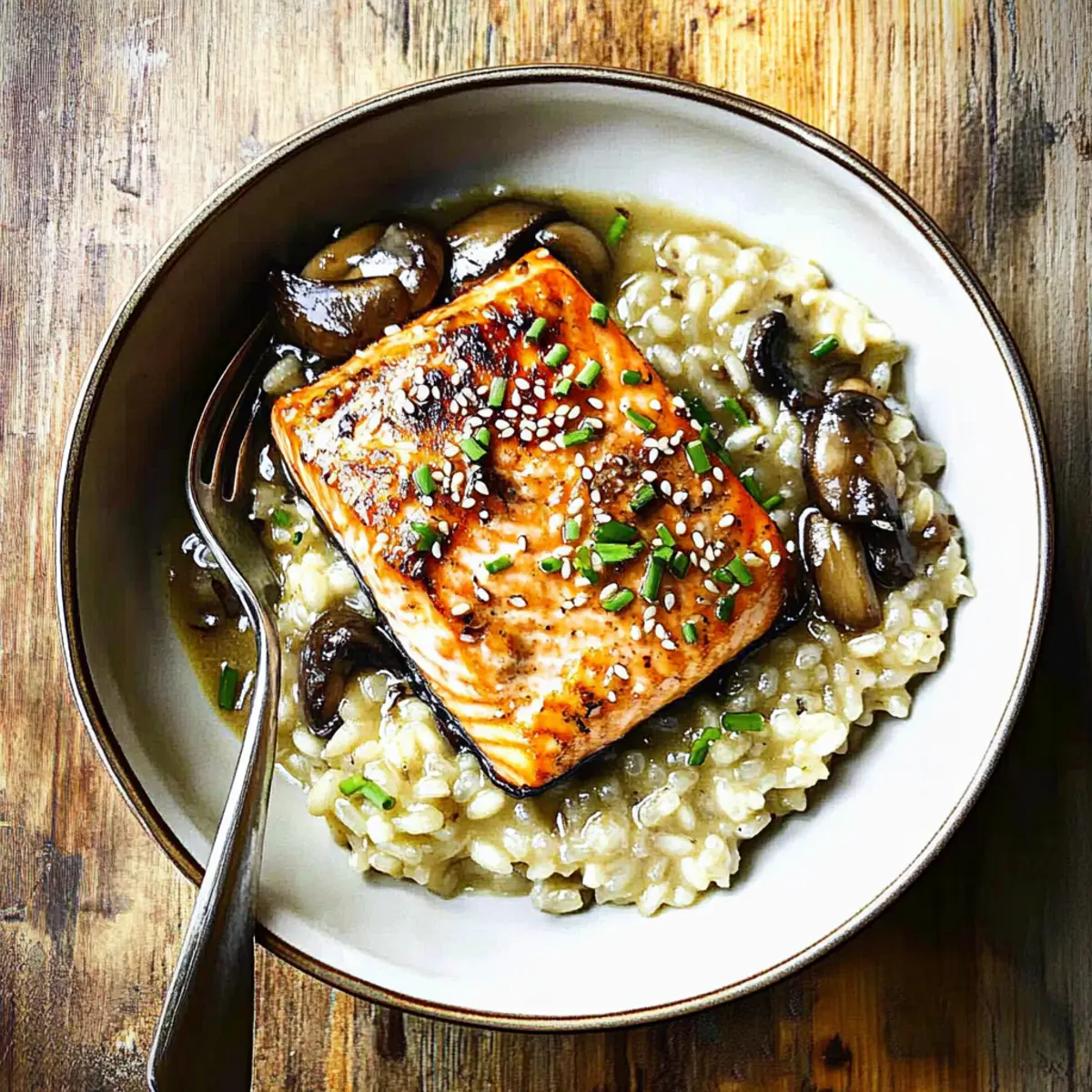
As I sautéed the shiitake mushrooms and inhaled their earthy aroma, I couldn’t help but feel a wave of nostalgia wash over me. Entering my kitchen felt like a time capsule, where traditional Italian comfort food meets the umami richness of Japan. This Japanese Style Risotto with Seared Salmon is not only a feast for the senses but also a perfect quick meal that you can whip up in just 40 minutes. Creamy miso-flavored risotto pairs beautifully with perfectly seared salmon, creating a comforting dish that impresses guests while being simple enough for weeknight dinners. Plus, it’s packed with nutrients and flavors that will keep you coming back for seconds. Curious about how to bring this delightful fusion dish to life? Let’s dive into the recipe!
Why is This Risotto So Special?
Quick Meal, perfect for busy weeknights, this Japanese Style Risotto with Seared Salmon brings flavorful comfort to your table in just 40 minutes. Savory Umami, the blend of creamy miso-flavored risotto and soy-glazed salmon warms your soul with every bite. Nutrient-Packed, packed with shiitake mushrooms and omega-rich salmon, it’s a health-conscious choice that doesn’t skimp on taste. Impressive Presentation, serve this dish to guests, and they’ll rave about the incredible flavors and textures. Pair it with a light salad or some steamed vegetables for a complete meal, and don’t forget to check out my delicious Baked Boursin Salmon for another great seafood option!
Japanese Style Risotto with Seared Salmon Ingredients
For the Risotto
- Olive Oil – Adds fat for cooking and flavor; consider using sesame oil for a deeper Asian flavor.
- Shiitake Mushrooms (10.5 ounces) – Provide earthy flavors and meatiness to the risotto; if unavailable, substitute with cremini mushrooms.
- Low Sodium Soy Sauce (1 tbsp + 5 tbsp) – Adds saltiness and umami depth; tamari can be used for a gluten-free alternative.
- Yellow Onion (1 small, diced) – Contributes sweetness and forms a fragrant aromatic base.
- Celery Stalk (1, diced) – Adds a lovely crunch and enhances flavor complexity.
- Garlic Clove (1, minced) – Elevates savoriness throughout the dish.
- Rice (1 cup, sushi or Arborio) – The main component for risotto, ensuring a creamy texture.
- Dry White Wine (¼ cup) – Deglazes the pan and adds depth; omit or use sake for a non-alcoholic option.
- Hot Chicken Broth (5 cups) – Provides the necessary liquid for cooking the rice; you can use vegetable broth as a vegetarian option.
- White Miso Paste (1 tbsp) – Infuses the risotto with rich flavor; can be omitted if unavailable.
For the Garnish
- Black Pepper – Adds a hint of warmth to finish the dish.
- Chives – For a fresh burst of color and flavor on top.
- Sesame Seeds – A delightful crunch and visual appeal complement the dish.
Make your kitchen come alive with the symphony of flavors in this Japanese Style Risotto with Seared Salmon!
Step‑by‑Step Instructions for Japanese Style Risotto with Seared Salmon
Step 1: Marinate the Salmon
In a shallow dish, whisk together 1 tablespoon of soy sauce, ¼ cup of dry white wine, and 1 tablespoon of brown sugar until combined. Place the salmon fillets in the marinade, ensuring they are well coated, and set aside for about 15 minutes to absorb the flavors while you prepare the other ingredients.
Step 2: Prepare the Vegetables
While the salmon marinates, wash and tear the shiitake mushrooms into bite-sized pieces, dice the celery and onion, and mince the garlic. Gather all your chopped ingredients close by to streamline your cooking process when making the Japanese Style Risotto with Seared Salmon.
Step 3: Cook the Shiitake Mushrooms
In a skillet over medium-high heat, add 1 tablespoon of olive oil and let it heat up for about a minute. Add the torn shiitake mushrooms and sauté for 5–6 minutes until they become golden brown and fragrant. Stir in 1 tablespoon of soy sauce, mix well, and then remove them from the heat, allowing their rich flavors to settle.
Step 4: Sauté the Aromatics
Lower the heat to medium, then add another tablespoon of olive oil. Add the diced celery, onion, and minced garlic to the skillet, sautéing for about 2 minutes until they become fragrant and tender. This savory base enhances the flavors of your Japanese Style Risotto with Seared Salmon, making it even more delicious.
Step 5: Toast the Rice
Add 1 cup of sushi or Arborio rice to the skillet with the sautéed vegetables. Toast the rice for about 1 minute, stirring continuously to prevent sticking. Next, pour in ¼ cup of dry white wine to deglaze the pan, scraping up any bits stuck to the bottom, and let it simmer for 2 minutes until most of the liquid has evaporated.
Step 6: Cook the Risotto
Gradually add hot chicken broth, starting with two ladles at a time. Stir constantly and allow the rice to absorb the broth before adding more, approximately 15 minutes total. The risotto should become creamy and tender yet still al dente, so keep the heat at medium-low throughout the process.
Step 7: Finish the Risotto
Once the rice is cooked to perfection, stir in the sautéed shiitake mushrooms. Dissolve 1 tablespoon of white miso paste in 2 tablespoons of hot broth, then mix it into the risotto. Let it simmer for an additional 5 minutes, allowing the flavors to meld and the texture to become even creamier.
Step 8: Sear the Salmon
In a separate skillet, heat the remaining olive oil (about 1 tablespoon) and a knob of butter over medium-high heat. Once hot, add the marinated salmon fillets and sear them for about 4 minutes on each side until they develop a golden crust and are cooked through, achieving a flaky center.
Step 9: Serve the Dish
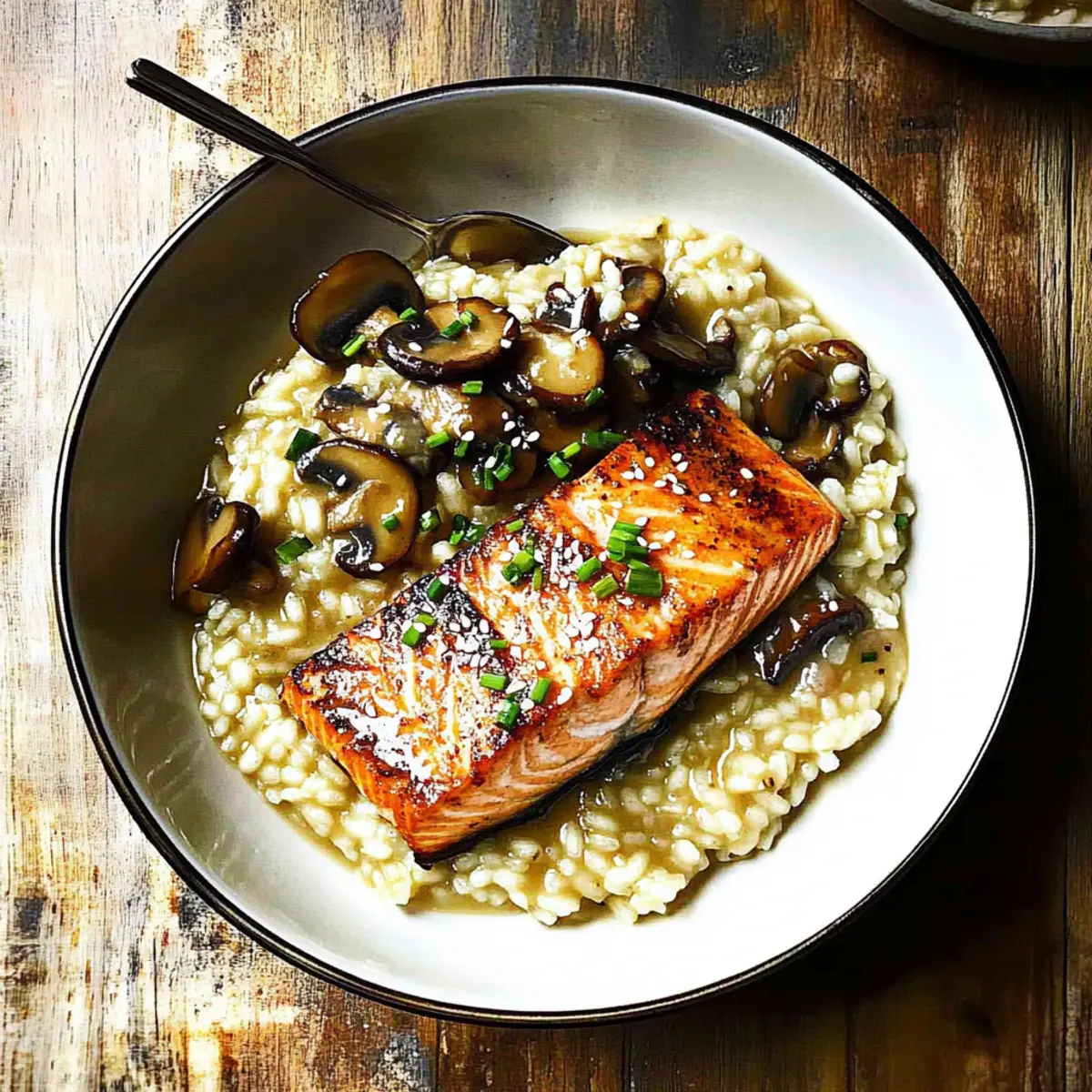
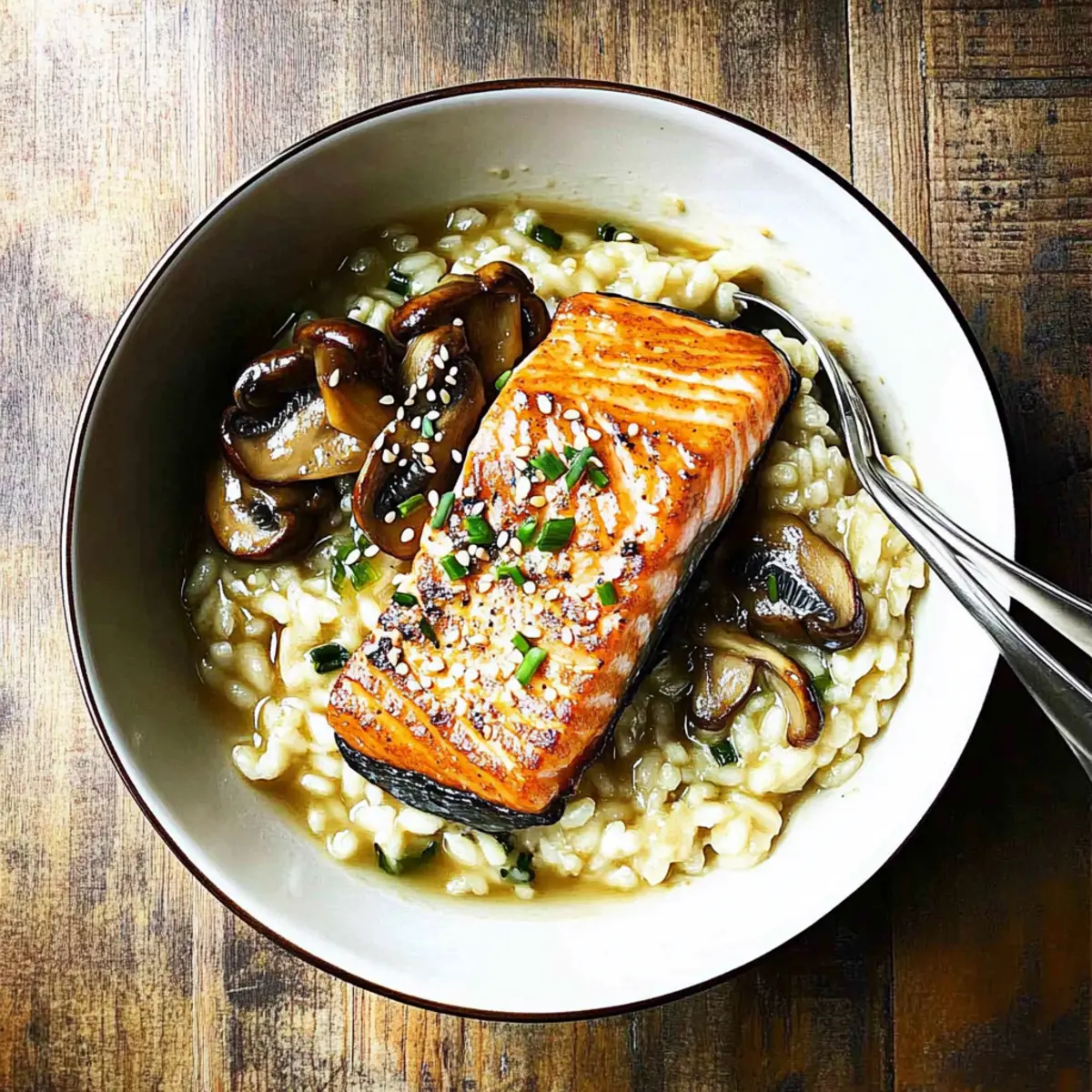
To plate your delicious Japanese Style Risotto with Seared Salmon, spoon a generous portion of risotto onto each plate and place a beautifully seared salmon fillet on top. Finish the dish with a sprinkle of black pepper, fresh chives, and sesame seeds for added flavor and presentation.
Japanese Style Risotto with Seared Salmon Variations
Feel free to explore these delightful twists that will make your risotto even more special!
-
Vegetarian: Substitute salmon with pan-fried tofu or a plant-based alternative for a hearty meal that retains its umami flavor.
-
Spicy Kick: Add a pinch of red pepper flakes or a dollop of sriracha to the risotto while cooking for a subtle heat that wakes up your taste buds.
-
Seafood Medley: Mix in shrimp or scallops instead of salmon for a flavorful seafood combo that elevates this dish to a gourmet delight.
-
Extra Veggies: Include roasted bok choy or snap peas for vibrant color and added nutritional goodness. These fresh veggies brighten up the dish and add a satisfying crunch.
-
Umami Boost: Stir in a tablespoon of miso or a splash of fish sauce for a deeper umami flavor profile that will keep you coming back for more.
-
Crispy Toppings: Top the risotto with crispy fried onions or garlic chips for an extra layer of texture and that comforting crunch you crave.
-
Herb Infusion: Experiment with fresh herbs like cilantro or basil mixed into the risotto, giving it a refreshing lift that complements the flavors beautifully.
For another delicious seafood experience, be sure to check out my Baked Boursin Salmon. It’s perfect for those cozy nights in!
What to Serve with Japanese Style Risotto with Seared Salmon
Elevate your dining experience with the perfect sides that balance the richness of this delightful risotto!
-
Light Green Salad: Fresh greens tossed with a zesty vinaigrette perfectly complement the creamy risotto and seared salmon. The crispness and tang awaken your palate.
-
Steamed Asparagus: Tender, seasonal asparagus brings a vibrant color and a slight crunch that contrasts beautifully with the risotto’s soft texture, enhancing every bite.
-
Sesame Broccoli: Sautéed broccoli drizzled with sesame oil mirrors the Asian flavors of the dish while adding a lovely pop of green and nutritional balance.
-
Miso Soup: A warm bowl of miso soup carries the umami theme through, creating a comforting fusion meal that pairs seamlessly with the risotto.
-
Pickled Vegetables: Crunchy, tangy pickles add a refreshing bite that cuts the creaminess of the risotto and enhances the overall dining experience.
-
Chilled Sake: This fragrant rice wine harmonizes beautifully with the dish, making it an excellent beverage choice that enhances the subtle flavors of the salmon.
Expert Tips for Japanese Style Risotto with Seared Salmon
-
Perfectly Sear Salmon: Ensure your skillet is hot enough before adding the salmon. This helps create a delightful crust while keeping the inside flaky.
-
Avoid Overcooking Risotto: Stir constantly and monitor your rice; it should be creamy and al dente, not mushy.
-
Use the Right Rice: Opt for sushi or Arborio rice, as these varieties release starch for the creamy texture essential in Japanese Style Risotto.
-
Taste as You Go: Adjust seasonings as you cook. Each broth varies, so taste to ensure the right balance of saltiness and umami.
-
Keep Broth Hot: Always add hot chicken broth gradually, maintaining the temperature to keep your risotto cooking evenly.
-
Miso Magic: Don’t skip the white miso paste; it infuses a depth of flavor that elevates your risotto to new heights!
How to Store and Freeze Japanese Style Risotto with Seared Salmon
Fridge: Store any leftover risotto in an airtight container for up to 2 days to maintain freshness and flavor.
Freezer: For longer storage, freeze the risotto (without the salmon) for up to 1 month. Cool completely before transferring to a freezer-safe container and using a layer of plastic wrap for extra protection.
Reheating: When ready to enjoy, thaw in the fridge overnight. Reheat gently on the stovetop over low heat, adding a splash of broth to restore creaminess.
Salmon Storage: Store any leftover seared salmon separately in the fridge for up to 2 days. To reheat, warm gently in a skillet to avoid drying it out.
Make Ahead Options
These Japanese Style Risotto with Seared Salmon are perfect for busy home cooks looking to save time without sacrificing flavor! You can prepare the risotto base (without the seafood) up to 24 hours in advance. Simply cook the risotto until creamy, and store it in an airtight container in the refrigerator. To maintain its luscious texture, reheat with a splash of chicken broth to restore creaminess. As for the salmon, you can marinate it ahead of time, allowing the flavors to meld for up to 3 days in the fridge. When you’re ready to serve, sear the salmon as directed and simply combine with your prepped risotto. This way, you can enjoy a delightful homemade meal with minimal last-minute effort!
Japanese Style Risotto with Seared Salmon Recipe FAQs
How do I select ripe ingredients for this recipe?
Absolutely! When choosing shiitake mushrooms, look for ones that are firm, with a smooth, dark brown cap and no dark spots all over. For the salmon, opt for fillets that have a vibrant pink color and are fresh to the touch; avoid any that smell overly fishy.
How should I store leftovers of the risotto?
Very good question! Store leftover risotto in an airtight container in the fridge for up to 2 days. Reheat gently on the stovetop with a splash of broth, stirring until warmed through to retain that lovely creamy texture.
Can I freeze the risotto for future meals?
Absolutely! To freeze the Japanese Style Risotto, it’s best to do this without the salmon. Let the risotto cool completely, then transfer it to a freezer-safe container. It will keep well for up to 1 month. When you’re ready to enjoy it, thaw it overnight in the fridge before reheating gently with a splash of broth.
What if my risotto turns out too thick?
Don’t worry, this happens sometimes! If your risotto is too thick after cooking, you can easily fix it. Simply add a ladle of hot broth at a time, stirring continually until the risotto reaches your desired creamy consistency. This helps to revive the texture and flavor wonderfully.
Are there any dietary considerations I should be aware of?
Indeed! If you’re catering to gluten-free diets, substitute the low sodium soy sauce with tamari. And if someone has a mushroom allergy, you can use zucchini or bell peppers instead for a different texture and flavor. Just a reminder—always check that the broth you use aligns with any dietary restrictions.
How do I know when the salmon is perfectly cooked?
Great question! To ensure your salmon is perfectly seared, cook it for about 4 minutes on each side. It should be golden brown on the outside and still slightly pink in the center for a flaky texture. Use a fork to check for doneness—if it flakes easily, it’s ready to enjoy!
Savory Japanese Style Risotto with Seared Salmon Delight
Ingredients
Equipment
Method
- Marinate the salmon by whisking together 1 tablespoon of soy sauce, ¼ cup of dry white wine, and 1 tablespoon of brown sugar in a shallow dish. Add salmon fillets, coating well, and set aside for 15 minutes.
- Prepare the vegetables by washing and tearing shiitake mushrooms into bite-sized pieces, dicing celery and onion, and mincing garlic.
- Cook the shiitake mushrooms in a skillet with 1 tablespoon of olive oil over medium-high heat, sautéing for 5-6 minutes until golden brown. Add 1 tablespoon of soy sauce, mix, and remove from heat.
- Sauté the aromatics with another tablespoon of olive oil, adding diced celery, onion, and minced garlic, cooking for 2 minutes until tender.
- Add 1 cup of rice to the skillet with the vegetables, toasting for 1 minute. Then pour in ¼ cup of dry white wine, deglazing the pan, and simmer for 2 minutes until most liquid evaporates.
- Gradually add hot chicken broth, two ladles at a time, stirring constantly for about 15 minutes until rice absorbs the broth and becomes creamy and tender.
- Finish the risotto by stirring in sautéed shiitake mushrooms and dissolving 1 tablespoon of white miso paste in 2 tablespoons of hot broth, mixing into the risotto. Simmer for an additional 5 minutes.
- Sear the salmon in a separate skillet with remaining olive oil and a knob of butter over medium-high heat for about 4 minutes on each side until cooked through.
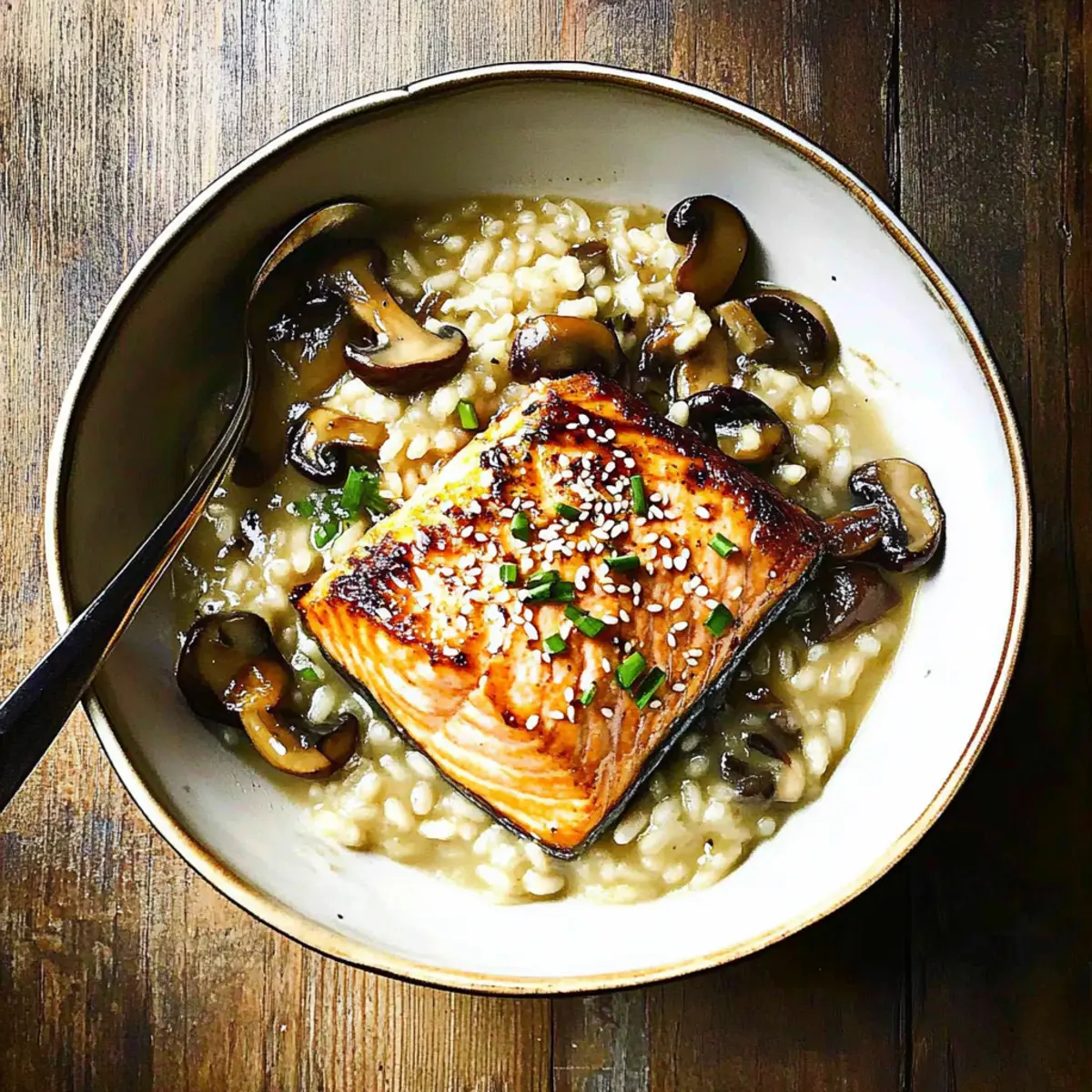
- Serve the risotto on plates topped with seared salmon, and garnish with black pepper, chives, and sesame seeds.
Leave a Reply