
As I flipped my first Korean Vegetable Pancake (Yachaejeon) on the stovetop, the kitchen filled with an irresistible aroma that whisked me straight to the bustling streets of Seoul. These delightful pancakes combine a crispy exterior with a tender, flavorful center, showcasing a vivid medley of fresh vegetables. They’re not only quick to whip up but also a fantastic way to enjoy a light, satisfying meal or snack—a true crowd-pleaser for any occasion! Plus, they can easily be made vegan and gluten-free, accommodating diverse dietary needs without sacrificing taste. Are you ready to bring the warmth of Korean cuisine into your home? Let’s dive into this delicious recipe together!
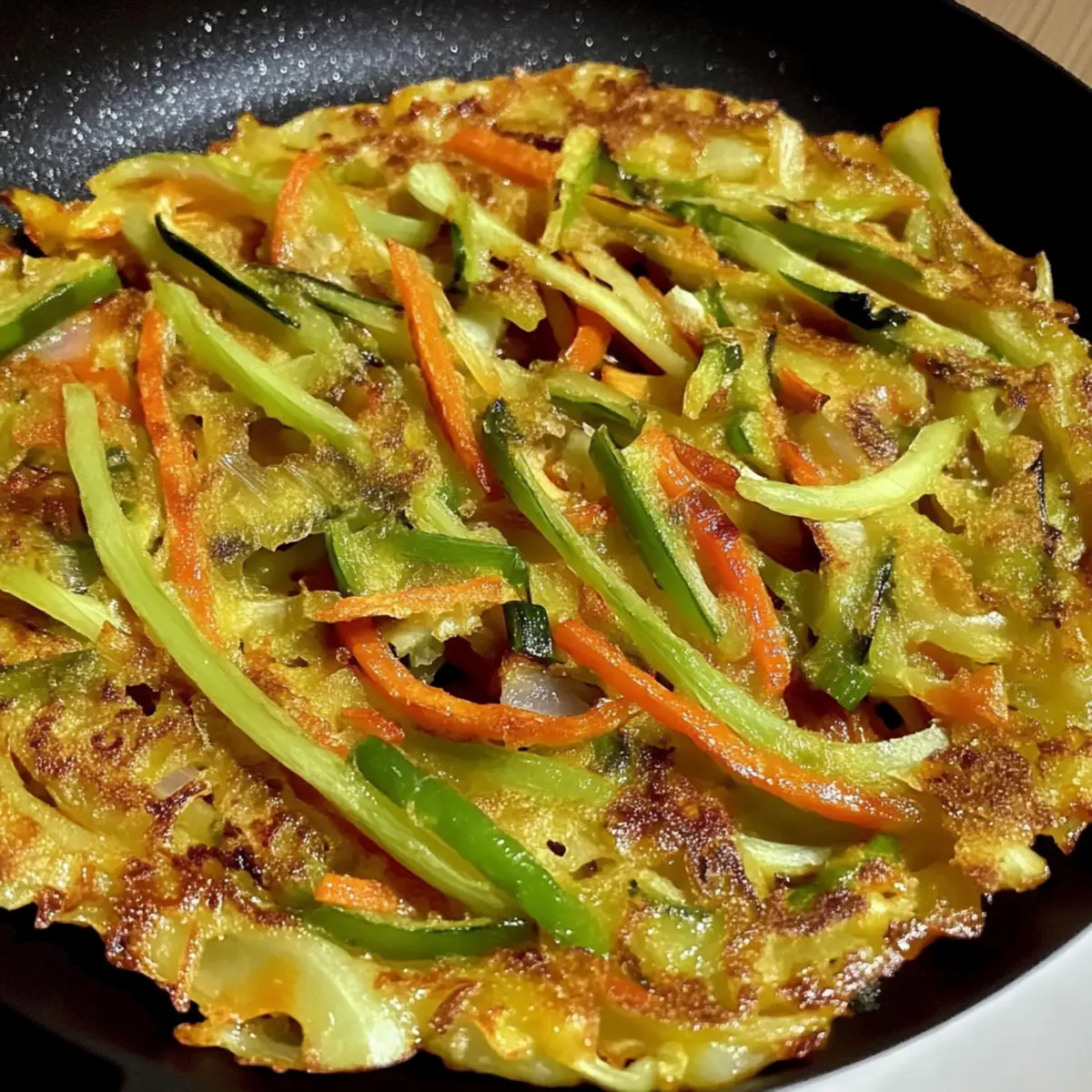
Why are Korean Vegetable Pancakes so delightful?
Crispy Perfection: The impressive crunchy texture of these pancakes leaves a lasting impression, making them addictive snacks or perfect side dishes.
Bursting with Flavor: A medley of fresh vegetables brings vibrant taste and color, elevating your dining experience.
Quick and Easy: You can whip these up in no time—ideal for busy weeknights when you crave something homemade but don’t want to spend hours in the kitchen.
Versatile Serving Options: Enjoy them as a light meal, appetizer, or finger food at gatherings, pairing beautifully with your favorite dipping sauces like Mediterranean Vegetable Pasta or Roasted Vegetable Orzo.
Diet-Friendly: Suitable for various dietary preferences, these pancakes can be easily adapted for vegan and gluten-free diets without losing flavor.
A Crowd Favorite: Their appealing presentation and delightful taste mean they are sure to impress family and friends alike!
Korean Vegetable Pancake Ingredients
For the Batter
- Flour – Provides structure; use all-purpose or gluten-free flour blend for a gluten-free option.
- Cornstarch – Contributes to a light, crispy texture.
- Water – Binds the ingredients and adjusts batter consistency.
- Turmeric – Adds a beautiful golden color and a subtle warm flavor.
- Salt – Enhances overall flavor.
- Baking Powder – Helps the pancakes rise and adds fluffiness.
For the Vegetables
- Fresh Vegetables – Green onions, red onion, carrot, red pepper, and cabbage are key for texture and flavor; substitute with any crisp seasonal vegetables like zucchini or mushrooms.
- Hot Pepper – Provides heat; optional based on spice preference.
For Frying
- Oil for Frying – Neutral oils like vegetable or canola are best, but sesame oil can boost flavor in the final stage.
For the Dipping Sauce
- Soy Sauce – Adds umami flavor; essential for the dipping experience.
- Rice Vinegar – Adds tanginess to balance the sauce.
- Toasted Sesame Seeds – Provides texture and nutty flavor.
- Chili Flakes – Adds heat; adjust to taste.
- Sesame Oil – Finishing touch for the sauce, enhancing depth of flavor.
Indulge in these delectable Korean Vegetable Pancakes that make the perfect snack or side dish, loaded with freshness and personality!
Step‑by‑Step Instructions for Korean Vegetable Pancakes
Step 1: Prepare Vegetables
Start by finely slicing the green onions, red onion, carrot, and red pepper. Next, shred the cabbage into thin strips and, if using, finely chop the hot pepper for added heat. Arrange all the prepared vegetables on a cutting board, making sure they are neatly chopped to allow for easy mixing later with the batter.
Step 2: Make Batter
In a large mixing bowl, combine 1 cup of all-purpose or gluten-free flour, 1 tablespoon of cornstarch, 1 teaspoon of turmeric, and 1 teaspoon of salt. Gradually whisk in about 1 cup of water until you reach a smooth and slightly thick consistency. You want the batter to be pourable but not too runny, as it will coat the vegetables well when we mix everything together.
Step 3: Mix Vegetables
Add the prepared vegetables into the batter, ensuring they are well-coated. Stir gently but thoroughly to combine, allowing the colorful medley of vegetables to showcase in the mixture. The batter should cling to the veggies, creating a delicious blend that forms the heart of your Korean Vegetable Pancakes.
Step 4: Prepare Dipping Sauce
While the batter is resting, mix together the dipping sauce. In a small bowl, combine 3 tablespoons of soy sauce, 1 tablespoon of rice vinegar, a sprinkle of toasted sesame seeds, and a pinch of chili flakes. Drizzle in 1 teaspoon of sesame oil for a rich finish. Taste and adjust seasoning, setting it aside to let the flavors meld together.
Step 5: Heat Pan
Place a large non-stick skillet over medium heat and allow it to warm for about 2 minutes. Once hot, add enough oil to generously coat the bottom of the pan, swirling it around. A shimmering surface will indicate that the oil is ready for cooking the Korean Vegetable Pancakes, ensuring they achieve that perfect crispy texture.
Step 6: Cook Pancakes
Using a ladle, spoon the batter mixture into the skillet, spreading it into a thin layer about ¼ inch thick. Cook for about 3–4 minutes or until the edges start to brown and the bottom turns golden. Carefully flip the pancake and cook for an additional 2–3 minutes, watching for a beautiful crispy finish on both sides.
Step 7: Repeat
Continue cooking additional pancakes, adding more oil as necessary to the pan between batches. Maintain the medium heat to achieve even cooking. Repeat the process with the remaining batter, ensuring each pancake is crispy yet tender on the inside. Keep cooked pancakes warm in a low oven while finishing the rest.
Step 8: Serve
Once all pancakes are cooked, plate them warm and serve immediately with the prepared dipping sauce. The aromatic smell and vibrant colors will delight your family and friends, making these Korean Vegetable Pancakes a perfect light meal or appetizer that everyone will love!
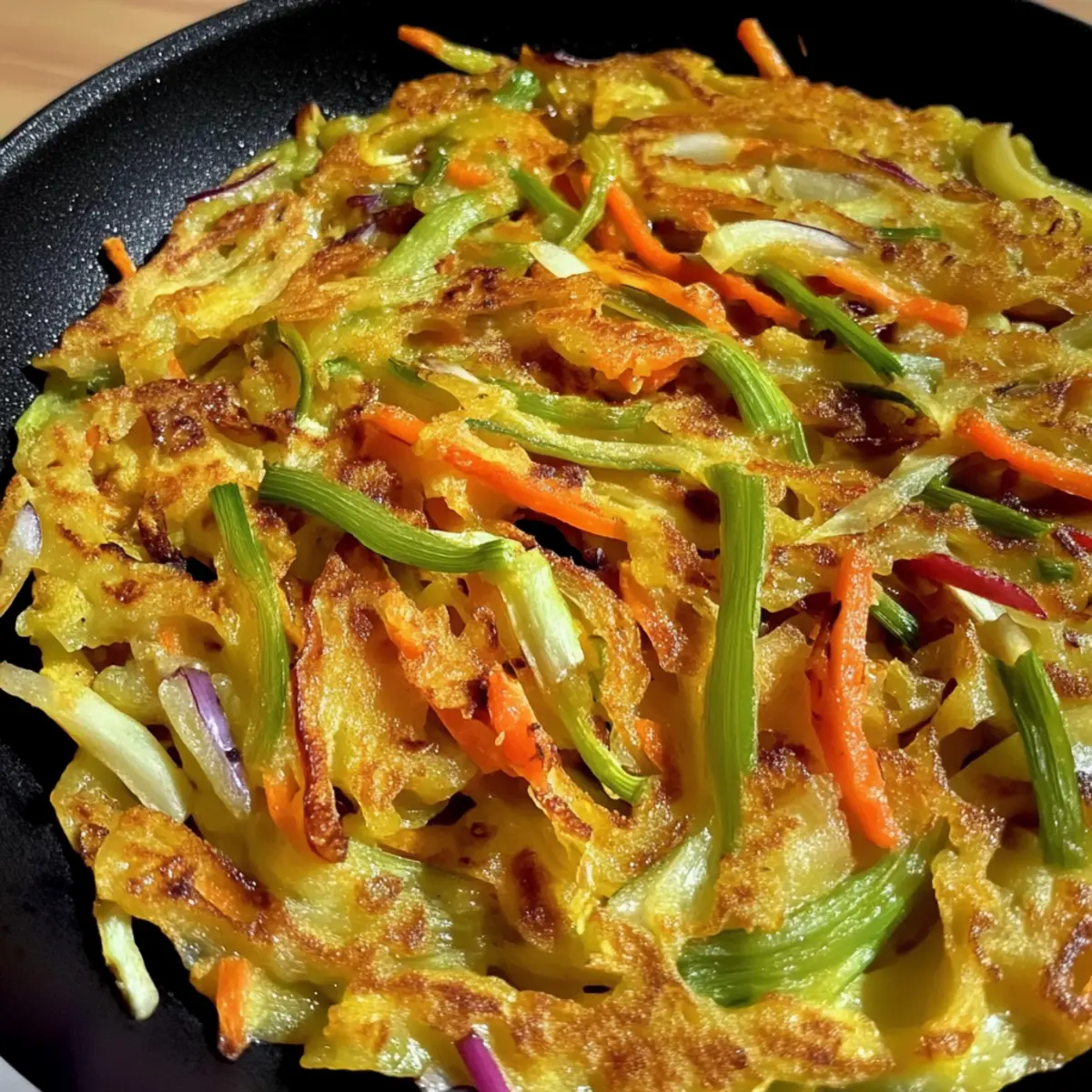
What to Serve with Crispy Korean Vegetable Pancakes?
As you savor the delightful crunch of these pancakes, let’s explore some delicious companions that will round out your meal perfectly.
- Steamed Jasmine Rice: A fragrant and fluffy base that soaks up the delicious flavors, making every bite a harmonious experience.
- Korean BBQ Beef: Juicy, marinated beef grilled to perfection complements the lightness of the pancakes, creating a delightful contrast of flavors and textures.
- Spicy Kimchi: The tangy and spicy kick serves as a vibrant counterpoint, enhancing the overall taste of your meal while adding probiotics for gut health.
- Cucumber Salad: Crisp and refreshing, a sesame-dressed cucumber salad provides a cool balance against the warm pancakes, offering a delightful crunch.
- Miso Soup: A warm, comforting soup filled with umami adds a soothing touch that envelops your palate in warmth, ideal for a cozy evening.
- Sesame Noodles: These flavorful, chilled noodles with a hint of sesame oil create a rich, nutty complement that blends well with the pancakes’ ingredients.
- Sweet Chili Sauce: For those who enjoy a bit of sweetness, this tangy and slightly spicy dipping sauce pairs beautifully and adds a burst of flavor with every bite.
- Green Tea: A soothing cup of green tea complements the meal with its earthy tones, helping to cleanse the palate between bites.
- Fresh Fruit Salad: A light and fruity dessert, featuring seasonal fruits, adds a refreshing touch to finish your meal on a sweet note.
- Korean Rice Cake (Tteok): Offering a chewy texture and slight sweetness, these rice cakes provide a fun and traditional ending to your culinary journey.
Korean Vegetable Pancakes Variations
Feel free to explore these delightful twists to make the recipe your own and surprise your taste buds!
-
Mushroom Medley:
Add finely chopped mushrooms for an earthy depth. Their meaty texture complements the crispiness beautifully. -
Zesty Zucchini:
Substitute zucchini for cabbage for added moisture and a hint of summer freshness. This summer squash elevates the flavor profile wonderfully. -
Kimchi Kick:
Mix in some chopped kimchi for a spicy, tangy kick. It adds a depth of flavor that turns your pancakes into a lively dish bursting with personality. -
Gluten-Free:
Simply swap all-purpose flour for a gluten-free flour blend and incorporate extra cornstarch. Your pancakes will still be crispy and delicious! -
Sweet Potato Bliss:
Incorporate grated sweet potato for a touch of sweetness that nicely balances out the savory flavors—an exciting twist for sweet potato lovers! -
Heat Level:
Adjust the spiciness by using different types of hot peppers, such as jalapeños or serranos, for varying levels of heat. -
Alternative Sauces:
For dipping, try a sweet chili sauce or a creamy sriracha sauce instead of traditional soy sauce. These options bring a new layer of flavor to your pancakes. -
Herb Infusion:
Add finely chopped herbs like cilantro or chives to the batter for an aromatic boost. The fresh taste perfectly complements the earthy goodness of the vegetables.
These variations make it easy to customize your Korean Vegetable Pancakes, ensuring every bite is full of flavor and true to your preferences. For more exciting vegetable-filled dishes, try my Mediterranean Vegetable Pasta or the Roasted Vegetable Orzo—both are fantastic additions to your recipe collection!
Make Ahead Options
These Korean Vegetable Pancakes (Yachaejeon) are fantastic for meal prep, saving you time on busy weeknights! You can chop and prepare the vegetables up to 24 hours in advance, storing them in an airtight container in the refrigerator to maintain their freshness. Additionally, you can mix the batter (flour, cornstarch, turmeric, salt, and water) and refrigerate it for up to 3 days. Just give it a little whisk before cooking to ensure even consistency. When you’re ready to serve, simply cook the pancakes in a hot skillet until golden and crispy, and you’ll have delightful, homemade Korean Vegetable Pancakes ready with minimal effort!
How to Store and Freeze Korean Vegetable Pancakes
Fridge: Store cooled pancakes in an airtight container for up to 2 days. Reheat in a skillet to regain that delightful crispiness.
Freezer: Freeze cooked pancakes layered between parchment paper for up to 1 month. Reheat in the oven or skillet at medium heat until warmed through and crispy.
Reheating: Always aim to reheat pancakes on the stove for the best texture. A quick spray of oil can rejuvenate their crispiness!
Expert Tips for Korean Vegetable Pancakes
- Spread Thinly: A thin layer of batter ensures maximum crispiness. If you pile it on, you’ll end up with soggy pancakes!
- Cook in Batches: To achieve that perfect golden crunch, cook one or two pancakes at a time in a well-heated pan. Overcrowding leads to steaming instead of frying.
- Choose Fresh Veggies: Using fresh, crunchy vegetables not only enhances flavor but also adds delightful texture to your Korean Vegetable Pancakes.
- Adjust for Gluten-Free: For a gluten-free option, use a gluten-free flour blend and adjust the cornstarch accordingly for the right consistency.
- Serve Quickly: Enjoy the pancakes right after cooking. They lose their crispness if left to sit too long, so serve immediately for the best experience!
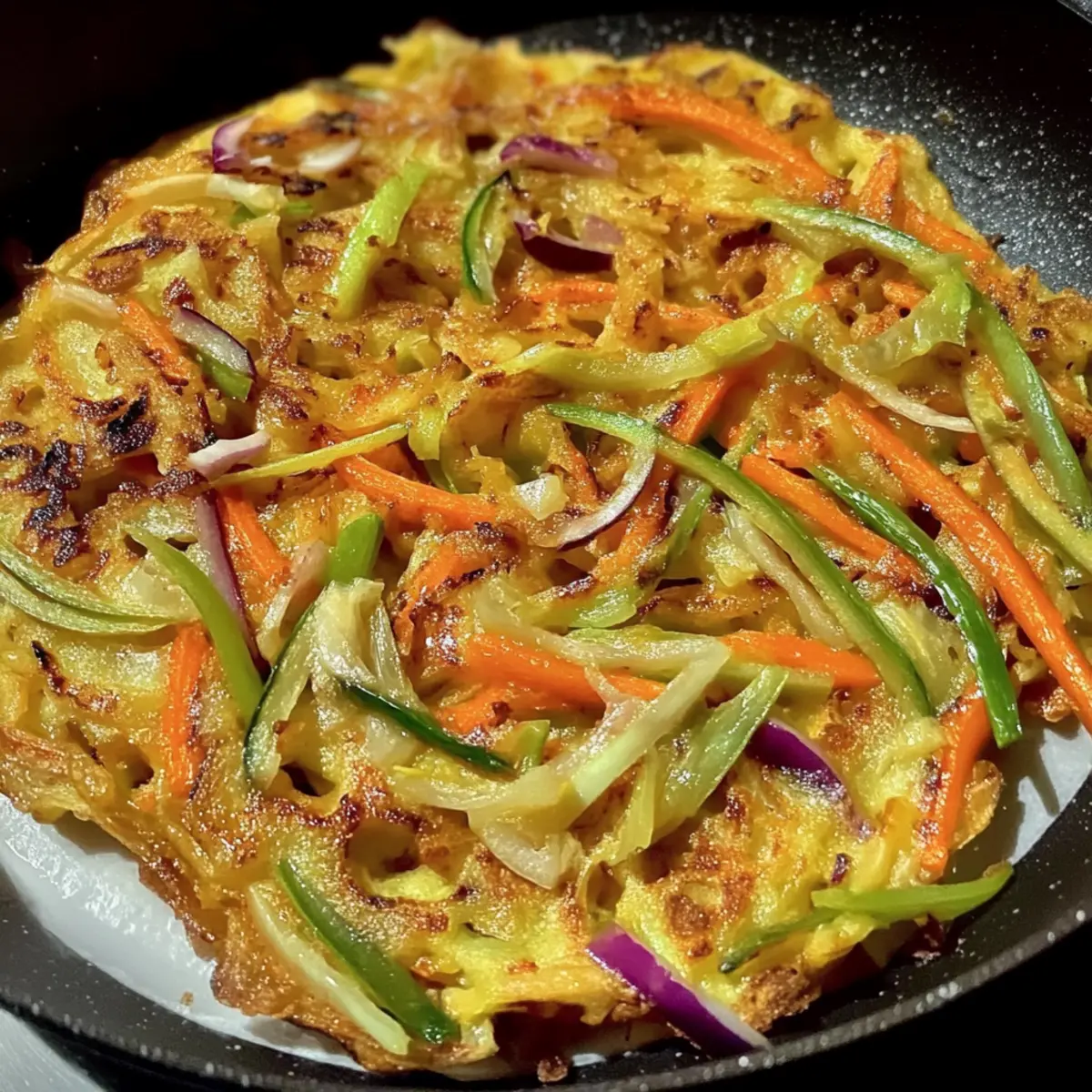
Korean Vegetable Pancakes Recipe FAQs
How do I select the best vegetables for my Korean Vegetable Pancakes?
Absolutely! For the best flavor and texture, choose vibrant, fresh vegetables. Look for firm carrots, crisp red peppers, and tender green onions. Avoid any that have dark spots or look wilted, as they won’t bring the crunch you want!
How should I store leftover Korean Vegetable Pancakes?
Great question! To keep your pancakes fresh, store cooled leftovers in an airtight container in the refrigerator for up to 2 days. When you’re ready to enjoy them, reheat in a skillet over medium heat for 3-5 minutes, adding a little oil to regain that crispy texture.
Can I freeze Korean Vegetable Pancakes?
Absolutely! You can freeze your cooked pancakes laid flat between layers of parchment paper in an airtight container for up to 1 month. To reheat, place them in a preheated oven at 375°F (190°C) for about 10-15 minutes or in a skillet, ensuring they’re warmed through and regain their delightful crispiness!
What if my pancake batter is too thick?
No worries! If your batter feels too thick, simply add a tablespoon or two of water until it reaches a pourable consistency. You want it to coat the vegetables lightly but not drown them, allowing for that perfect crispy finish when cooked.
Are these pancakes safe for my gluten-intolerant guests?
Yes! You can easily make these Korean Vegetable Pancakes gluten-free by substituting all-purpose flour with a gluten-free flour blend. Ensure that you adjust the cornstarch and mix everything thoroughly to maintain the right texture. Your guests will be delighted to enjoy these delicious snacks!
Can pets eat Korean Vegetable Pancakes?
It’s best to keep these pancakes away from pets, especially since they contain ingredients like hot peppers and salt, which can upset their tummies. Stick to pet-safe treats for our furry friends while you enjoy these tasty morsels!
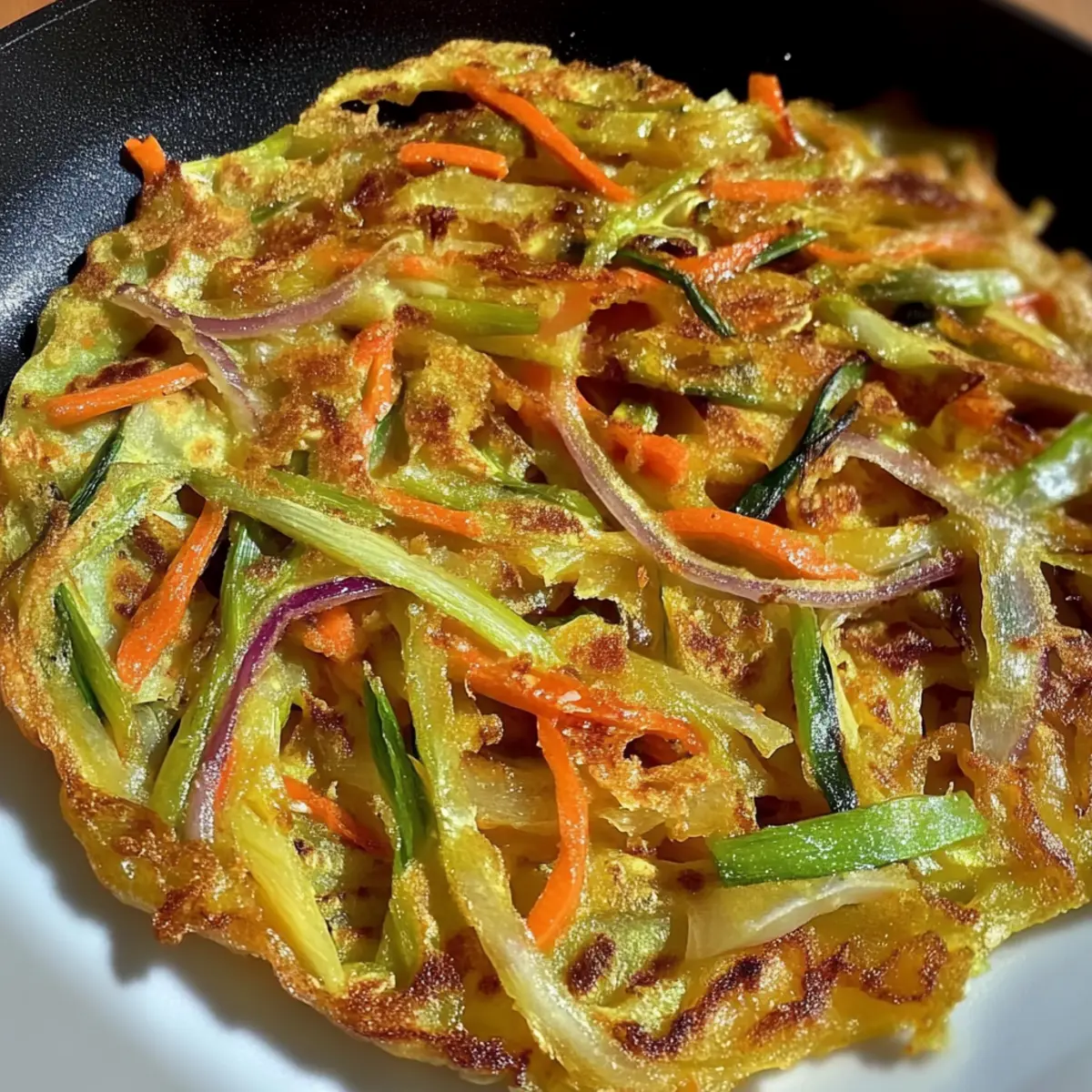
Crispy Korean Vegetable Pancakes for a Flavorful Snack
Ingredients
Equipment
Method
- Prepare Vegetables: Finely slice the green onions, red onion, carrot, and red pepper. Shred the cabbage into thin strips and chop the hot pepper if using.
- Make Batter: In a mixing bowl, combine flour, cornstarch, turmeric, and salt. Gradually whisk in water until smooth and slightly thick.
- Mix Vegetables: Add the prepared vegetables into the batter, stirring gently to combine.
- Prepare Dipping Sauce: Combine soy sauce, rice vinegar, sesame seeds, chili flakes, and sesame oil in a small bowl, adjusting the seasoning to taste.
- Heat Pan: Preheat a non-stick skillet over medium heat and coat with oil.
- Cook Pancakes: Spoon the batter mixture into the skillet, cooking until golden brown on both sides.
- Repeat: Continue cooking additional pancakes, adding oil as needed, and keeping cooked pancakes warm.
- Serve: Plate the warm pancakes and serve immediately with the dipping sauce.
Leave a Reply