
As I savored the last bite of my favorite Thai street dessert, a wave of nostalgia washed over me—the warm, sticky sweetness of mango sticky rice mingling with the creamy richness of coconut milk. It isn’t just a dessert; it’s a cherished experience that transports me straight to bustling markets, filled with vibrant colors and tantalizing aromas. In this delightful recipe for Ube Thai Mango Sticky Rice, I’m excited to share a fusion that elevates this classic treat to new heights, featuring the unique flavor and brilliant color of ube. Not only is it a show-stopper for any gathering, but it’s also graciously gluten-free and vegan, making it a versatile option for various dietary needs. Whether you’re looking for a fun twist on a comforting favorite or a crowd-pleaser that everyone can enjoy, I guarantee this dessert will have you dreaming of exotic flavors. Ready to bring a little Thai flair into your kitchen? Let’s get started!
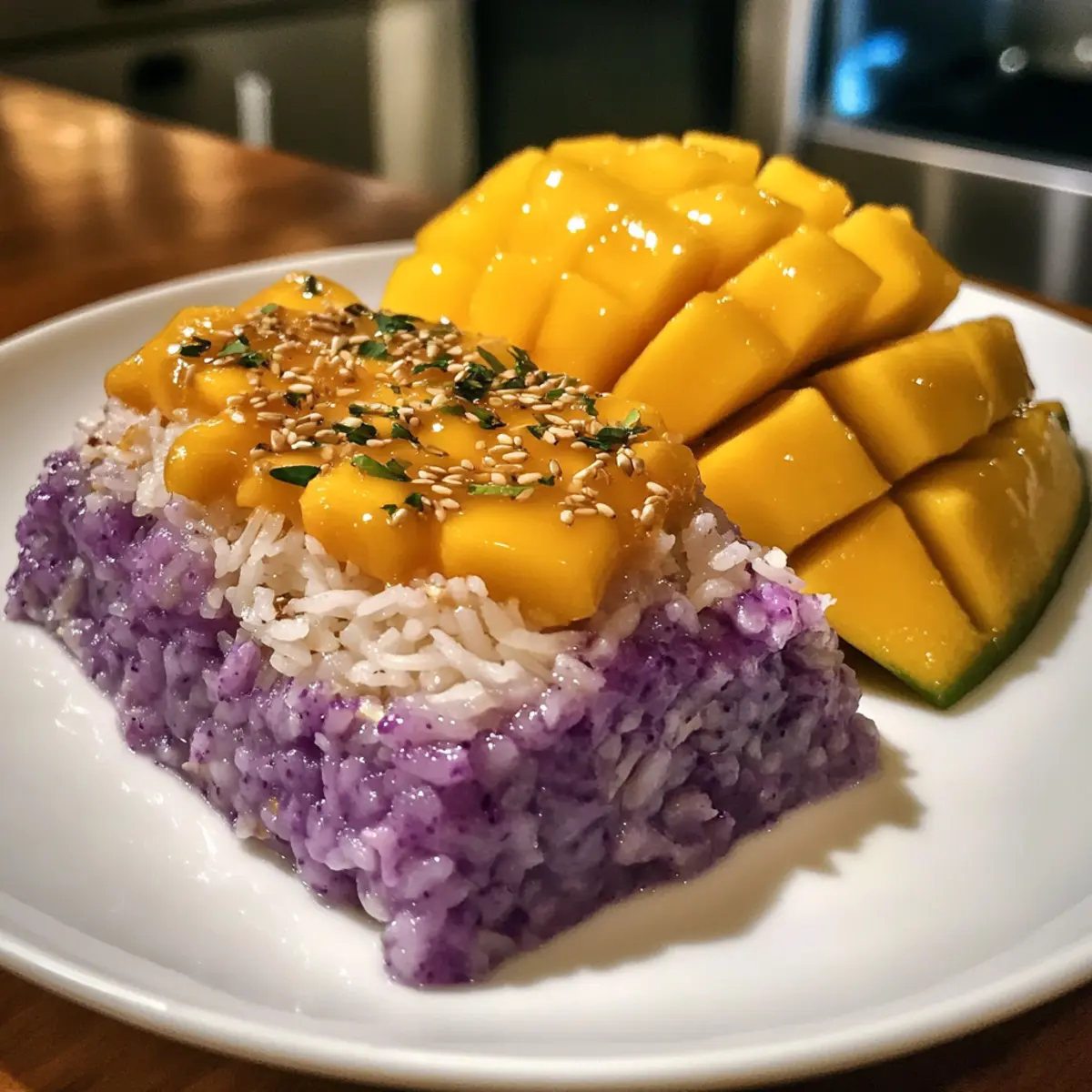
Why Is Mango Sticky Rice So Beloved?
Irresistible Flavors: The sweet and creamy combination of ripe mango and coconut milk creates a taste explosion that’s hard to resist!
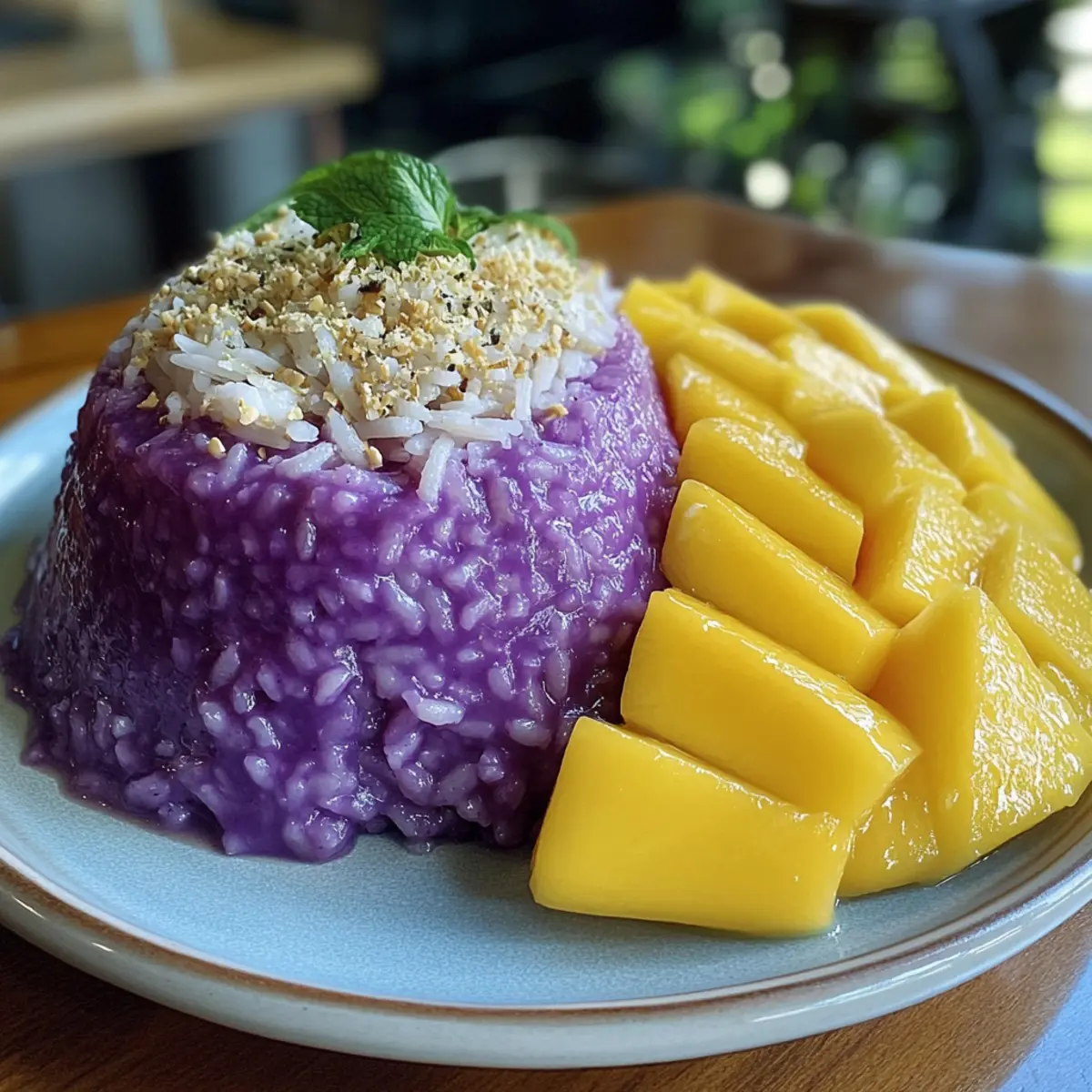
Fusion Twist: Transform a classic dessert with the optional addition of ube, giving a vibrant color and a unique flavor profile that will leave everyone craving more.
Easy Preparation: This recipe simplifies traditional methods, making it accessible even for beginner cooks. Just soak, steam, and enjoy!
Crowd-Pleaser: Perfect for parties or casual family dinners, this dessert is bound to delight friends and family alike—much like our delicious Cheesy Chicken Rice or a flavorful Teriyaki Chicken Rice Bowl.
Gluten-Free Goodness: Naturally gluten-free and vegan, this dessert caters to various dietary preferences without compromising on taste.
Dive into this tasty adventure and make lasting memories with every delicious spoonful!
Mango Sticky Rice Ingredients
• Create the perfect sweet treat with these must-have ingredients!
For the Sticky Rice
- Glutinous Rice – This is the foundation of your dish, providing that beloved chewy texture.
- Water – Necessary for soaking and steaming the rice to achieve a tender consistency.
For the Coconut Mixture
- Coconut Milk – Full-fat coconut milk is best for a rich and creamy flavor.
- Granulated Sugar – This adds the sweetness; feel free to adjust it based on your preference.
- Sea Salt – A tiny pinch enhances the overall flavors, balancing the sweetness perfectly.
- Cornstarch – Helps to thicken your coconut sauce, creating that irresistible creamy consistency.
Optional Flavor Boosts
- Ube Halaya or Ube Spread – An optional addition for a gorgeous purple hue and a delightful flavor twist. Substitute with ube extract if fresh ube is unavailable.
- Ripe Mangoes – Choose sweet and fragrant mangoes to complement the richness of the sticky rice.
This Mango Sticky Rice recipe is a celebration of flavors, textures, and colors sure to impress at any gathering!
Step‑by‑Step Instructions for Ube Thai Mango Sticky Rice
Step 1: Soak the Rice
Begin by thoroughly rinsing 1 cup of glutinous rice under cold water until the water runs clear, ensuring no excess starch remains. Transfer the washed rice to a bowl, cover it with water, and let it soak for at least 8 hours or overnight. This crucial step prepares the rice for that beloved chewy texture in your Mango Sticky Rice.
Step 2: Steam the Rice
After soaking, drain the rice and place it in a bamboo steamer lined with parchment paper to prevent sticking. Bring a pot of water to a gentle boil, then set the steamer on top, covering it with a lid. Steam the rice for 20-25 minutes, checking occasionally; it should turn translucent and feel tender, ready to absorb the delicious coconut mixture.
Step 3: Prepare the Coconut Mixture
While the rice is steaming, pour 1 cup of full-fat coconut milk into a saucepan over medium heat. Stir in ½ cup of granulated sugar and a pinch of sea salt, allowing the mixture to simmer gently until the sugar dissolves. If using ube, mix in your desired amount at this stage, letting its vibrant hue and flavor infuse the Coconut Mixture.
Step 4: Combine Rice and Coconut
Once the rice is steamed, transfer it into the saucepan with the warm coconut mixture. Stir gently to thouroughly combine, ensuring every grain of rice is coated in that luscious coconut goodness. Allow this blend to simmer on low heat for about 10 minutes, stirring occasionally until the rice has absorbed most of the Coconut Mixture.
Step 5: Make the Coconut Sauce
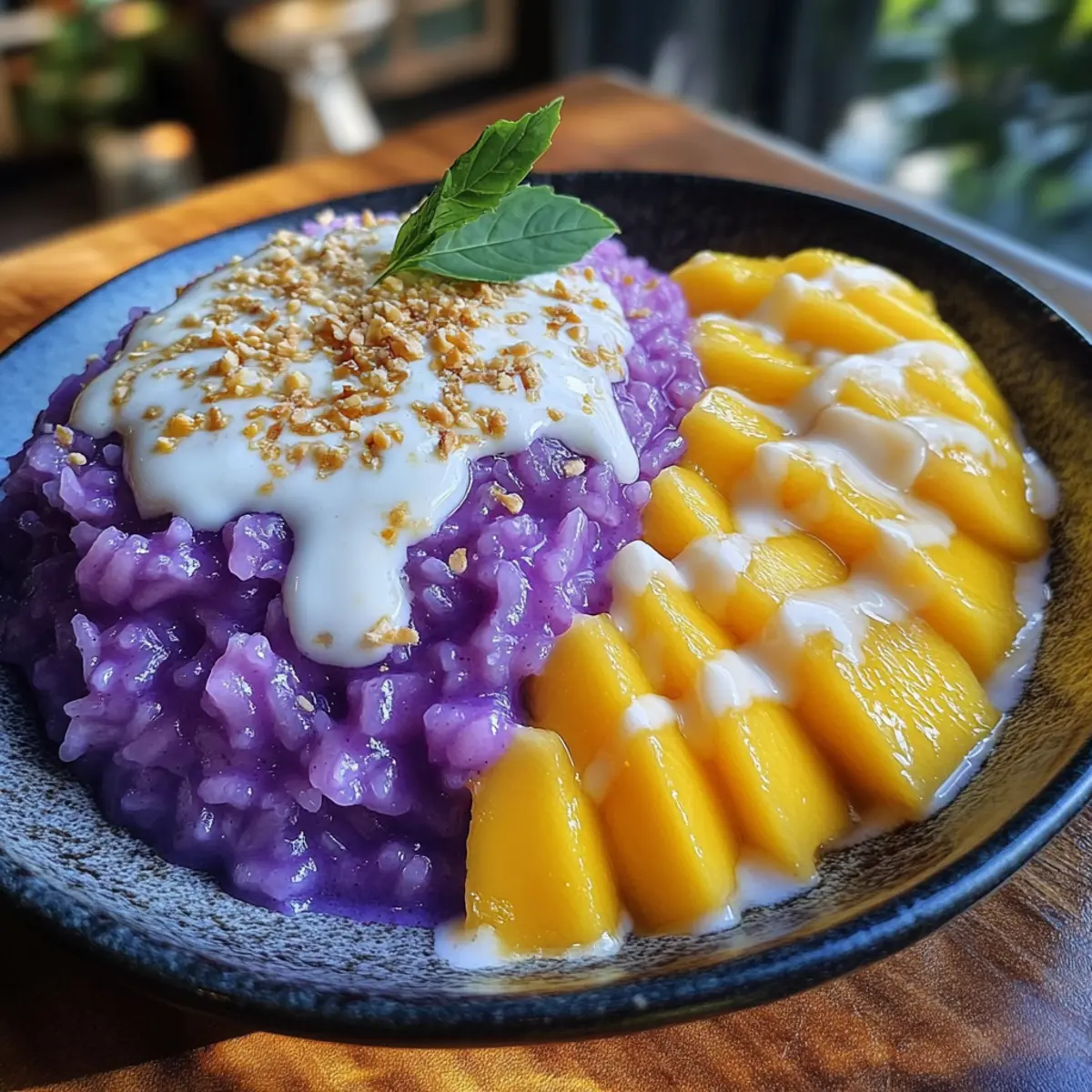
In a separate small saucepan, heat an additional ½ cup of coconut milk with 2 tablespoons of sugar over medium heat. Once it begins to boil, dissolve 1 tablespoon of cornstarch in a few tablespoons of water to create a slurry, then whisk this into the bubbling coconut sauce. Stir continuously for about 2-3 minutes until it thickens; this will be your delightful topping.
Step 6: Assemble the Dish
To serve your Ube Thai Mango Sticky Rice, start by peeling and neatly slicing 2 ripe mangoes. On each plate, add a generous portion of the sticky rice, shaping it into a mound. Artfully arrange the mango slices beside the rice, then drizzle the rich coconut sauce on top. For a lovely finishing touch, consider garnishing with toasted sesame seeds for added texture.
How to Store and Freeze Mango Sticky Rice
-
Room Temperature: It’s best to enjoy Mango Sticky Rice fresh, but if you must leave it out, do so for no more than 2 hours to ensure food safety.
-
Fridge: Store any leftovers in an airtight container for up to 2 days. Reheat gently in the microwave with a splash of water to restore moisture and maintain its delicious texture.
-
Freezer: For longer storage, freeze the sticky rice in an airtight container for up to 1 month. Thaw in the refrigerator overnight before reheating.
-
Reheating: When ready to enjoy frozen Mango Sticky Rice, reheat it in the microwave, adding a little water to prevent drying out.
Make Ahead Options
For busy home cooks, preparing Ube Thai Mango Sticky Rice in advance can be a real time-saver! You can soak the glutinous rice up to 24 hours ahead, which helps achieve that perfect chewy texture. Additionally, the coconut mixture can be combined and refrigerated for up to 3 days; just be sure to reheat gently to maintain its creamy quality. When you’re ready to serve, simply steam the rice (which takes about 20-25 minutes) and warm the coconut sauce, if needed. Adding freshly sliced mango just before serving ensures the fruit remains vibrant and juicy, making this dessert just as exquisite as if made fresh that day!
What to Serve with Ube Thai Mango Sticky Rice
Indulging in this delightful dessert opens the door to many tantalizing pairings that will enhance your dining experience.
-
Creamy Coconut Soup: A warm bowl of coconut soup offers a savory contrast that perfectly balances the sweetness of the mango sticky rice.
-
Fresh Spring Rolls: These light and refreshing rolls filled with crisp vegetables and herbs complement the rich coconut flavors, creating a delightful textural contrast.
-
Matcha Green Tea: The earthiness of matcha provides a unique counterpoint to the sweetness of the dessert, making it a calming beverage choice.
-
Mango Sorbet: For a vibrant and fruity twist, a scoop of mango sorbet enhances the mango flavor while providing a refreshing coolness.
-
Pineapple Fried Rice: This fragrant dish adds a savory touch to your meal, with spices that sing harmoniously alongside the sweet and tropical notes of the dessert.
-
Toasted Coconut Flakes: Sprinkle these on top for an extra crunch; the nutty flavor of toasted coconut beautifully complements the creaminess of the mango sticky rice.
-
Thai Iced Tea: This sweet, spiced beverage pairs excellently with the dish, enhancing the sweet experience and reminiscing Thai street food culture.
-
Sesame Cookies: These crisp cookies provide a delightful crunch that contrasts with the softness of the sticky rice, creating a memorable end to the meal.
-
Chilled Lychee: The light and subtly sweet flavor of lychee makes for an exotic fruit pairing, refreshing the palate after the rich dessert.
Mango Sticky Rice Variations & Substitutions
Feel free to explore exciting variations that take your Mango Sticky Rice to the next level!
-
Matcha Magic: Substitute ube with matcha powder for a delightful green tea twist that adds depth and color to your dessert. The combination of flavors creates a refreshing and invigorating experience.
-
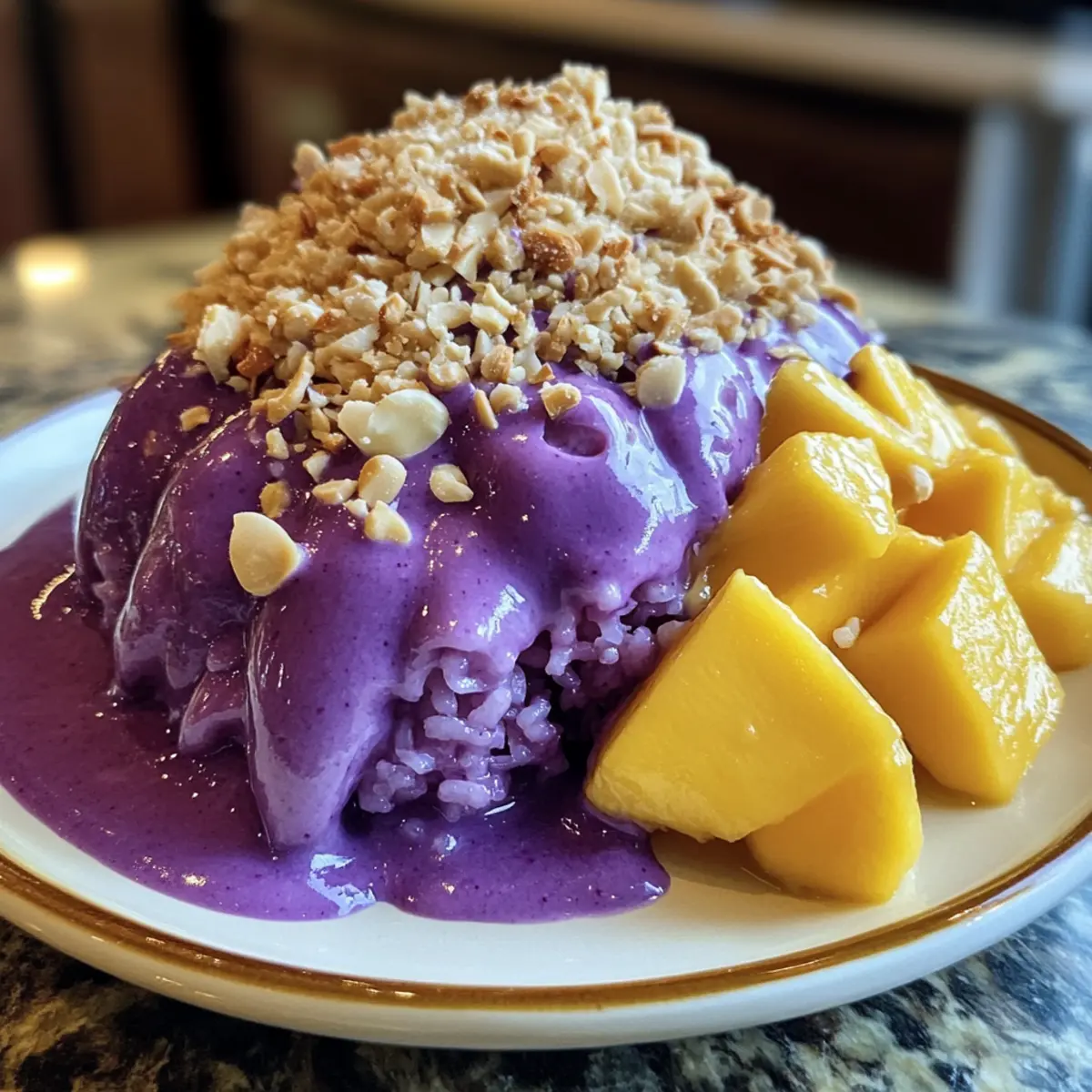
Nutty Delight: Add crushed peanuts or toasted coconut on top for a crunchy finish that complements the creamy texture and delicate sweetness perfectly. This contrasting crunch will bring joy with each bite!
-
Brown Sugar Bliss: Replace granulated sugar with brown sugar for a deeper, richer flavor profile. It introduces a warm molasses hint that beautifully balances the creamy coconut and ripe mango.
-
Fruit Fusion: Consider incorporating other tropical fruits like pineapple or banana to enhance the fruity depth. These additions lend a fresh twist, offering bursts of flavor that evoke a sun-kissed island vibe.
-
Pandan Infusion: Add a few drops of pandan extract to your coconut sauce for a fragrant twist that elevates the traditional taste. This subtle change takes your dessert from delightful to extraordinary.
-
Chili Kick: For a spicy contrast, sprinkle a hint of chili flakes on top before serving. The heat pairs surprisingly well with the sweetness, creating a mouthwatering sensation that’s sure to surprise your guests!
-
Coconut Cream Layer: For an extra creamy experience, layer a dollop of coconut cream on top of the rice before drizzling the coconut sauce. This additional creaminess elevates the richness to pure bliss!
Explore these delightful variations as you indulge in this Mango Sticky Rice recipe, and consider whipping up a delicious Sticky Garlic Chicken or paired with a flavor-packed Beef Pepper Rice Bowl for a well-rounded meal. Enjoy the journey of flavors!
Expert Tips for Mango Sticky Rice
-
Wash Thoroughly: Ensure that your glutinous rice is completely rinsed until the water runs clear; this prevents a gummy texture in your Mango Sticky Rice.
-
Perfect Soaking Time: Soaking for 8-24 hours is crucial for achieving the ideal chewy consistency, enhancing flavor absorption.
-
Steam Smartly: Steaming rather than boiling the rice keeps it tender without the risk of excess water dilution—always check for translucency!
-
Coconut Sauce Consistency: For your coconut sauce, whisk the cornstarch slurry well before adding it to avoid lumps and ensure a smooth drizzle.
-
Adjust Ube Flavor: If you’re using ube, start with a small amount; its flavor can be strong. You can always add more to taste!
-
Reheating Leftovers: Store any leftovers in an airtight container; reheat with a splash of water in the microwave to restore moisture and texture.
Mango Sticky Rice Recipe FAQs
What type of rice should I use for Mango Sticky Rice?
Absolutely! For the best results, use glutinous rice (often labeled as “sticky rice”) as it provides the chewy texture that is quintessential for this dessert. Make sure to rinse the rice thoroughly until the water runs clear to avoid a gummy outcome.
How do I store leftovers of Mango Sticky Rice?
Leftover Mango Sticky Rice can be placed in an airtight container and stored in the refrigerator for up to 2 days. When ready to enjoy, simply reheat it in the microwave with a splash of water to restore its moisture and soft texture.
Can I freeze Mango Sticky Rice?
Yes! You can freeze Mango Sticky Rice for up to 1 month. To do so, place it in an airtight container, making sure it’s well-sealed to prevent freezer burn. When you’re ready to eat it, thaw it in the refrigerator overnight and reheat gently. Add a small amount of water during reheating to ensure it doesn’t dry out.
What should I do if my rice turns out too gummy or mushy?
Very! If your Mango Sticky Rice is too gummy, it might be due to excess starch from not rinsing the rice enough before soaking. To fix it, you can sprinkle a little cornstarch and gently toss to absorb extra moisture after it’s cooked. If it’s mushy, try reducing the cooking time next time to achieve that perfect chewy texture.
Is Mango Sticky Rice suitable for vegans and those with gluten sensitivities?
Absolutely! This Mango Sticky Rice recipe is inherently vegan and gluten-free, making it a wonderful option for those with dietary restrictions. Just ensure all your ingredients, particularly the sugar and any additional toppings, are certified vegan and gluten-free for peace of mind.
What kind of mangoes are best for this dish?
I often recommend using ripe, sweet mango varieties such as Ataulfo (Honey) or Haden, as they offer the perfect balance of sweetness and juiciness. Look for mangoes that yield slightly to gentle pressure when ripe and have a vibrant color.
Mango Sticky Rice Bliss: Sweet, Creamy, and Irresistible!
Ingredients
Equipment
Method
- Soak the rice: Rinse the glutinous rice until the water runs clear, then soak in a bowl of water for at least 8 hours or overnight.
- Steam the rice: Drain and place in a bamboo steamer lined with parchment paper. Steam for 20-25 minutes until tender.
- Prepare the coconut mixture: In a saucepan, heat the coconut milk, sugar, and sea salt until the sugar dissolves. Add ube if using.
- Combine rice and coconut: Add the steamed rice to the coconut mixture, stir gently, and simmer on low for about 10 minutes.
- Make the coconut sauce: Heat additional coconut milk with sugar, create a cornstarch slurry, and add it to the boiling coconut mixture until thickened.
- Assemble the dish: Slice ripe mangoes, serve sticky rice, and drizzle with coconut sauce. Garnish with sesame seeds if desired.
Leave a Reply