
As I stood over the simmering pot, the air around me filled with the rich aroma of umami, I realized that this was no ordinary cooking session. This was the magic of creating Authentic Homemade Ramen Broth, a dish that brings together the comforting essence of Japanese cuisine. While many shy away from making broth from scratch, the rewards are truly unmatched. With just a bit of patience, you can achieve a complex, restaurant-quality flavor that transforms any ramen bowl into a culinary masterpiece. This broth not only serves as a delightful foundation, but it’s also freezer-friendly, making it perfect for meal prepping. Ready to elevate your ramen experience? Let’s dive in and explore this flavorful journey together!
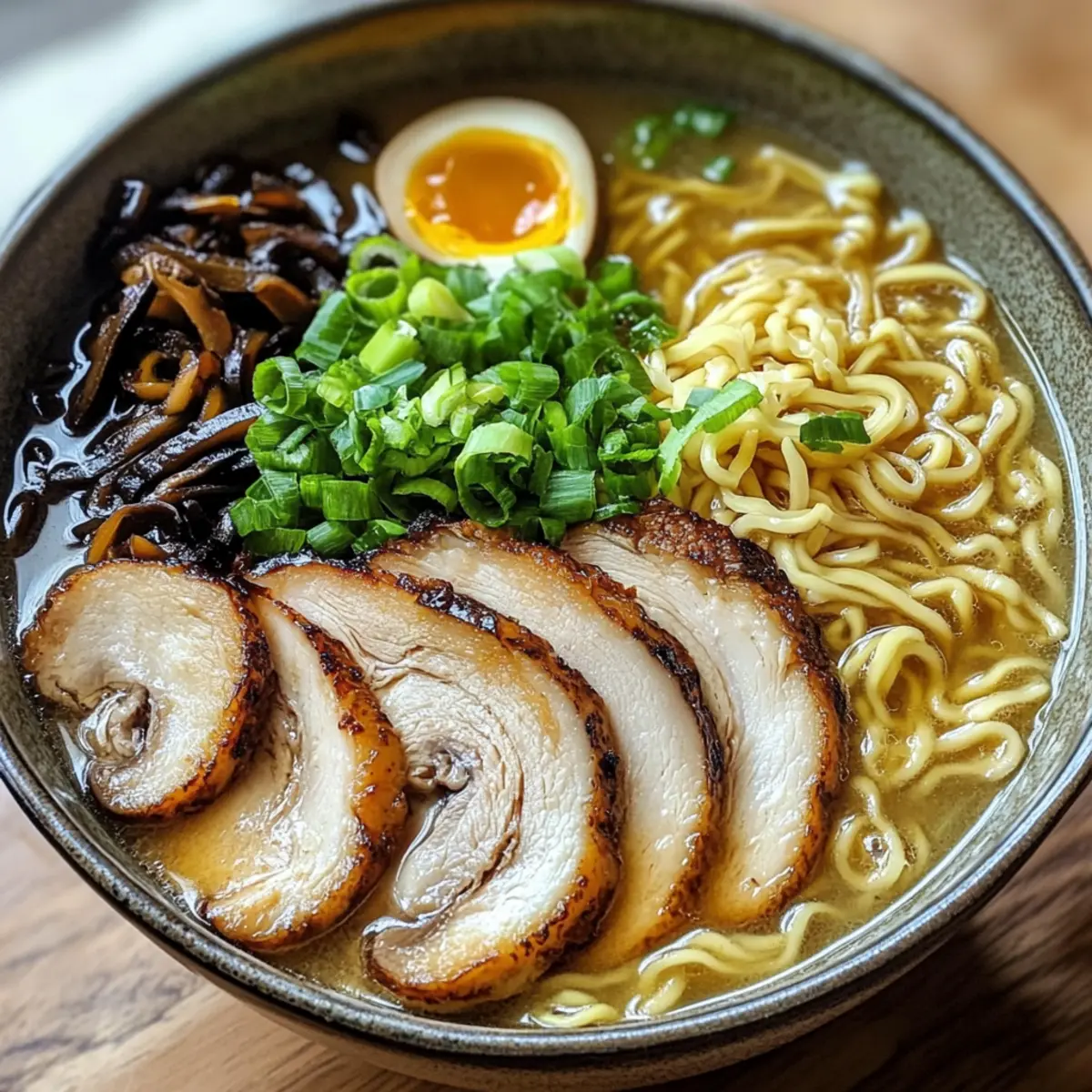
Why is Homemade Ramen Broth Special?
Depth of flavor: Each sip of this broth offers a rich, complex umami taste that takes your ramen to new heights.
Versatile tare options: Customize your ramen experience with shio, shoyu, or miso tare, each adding its own unique character.
Batch-friendly: Make a huge pot and freeze portions for quick weeknight meals — perfect for busy schedules!
Nutrient-rich goodness: Loaded with protein and low in carbs, this broth fits well into various dietary lifestyles, making it suitable for family or guests.
Culinary adventure: Creating your own ramen broth invites creativity in the kitchen, allowing you to experiment with unique flavors and ingredients.
Ramen Broth Ingredients
• Get ready to unleash umami!
For the Broth
- Kelp – Adds umami depth and flavor; substitute with wakame or omit if unavailable.
- Bonito Flakes – Contributes a smoky, fish flavor; use more dashi if needed as a substitute.
- Dried Shiitake Mushrooms – Enhances earthiness and umami; fresh shiitake can work, but dried offers stronger flavor.
- Chicken Carcasses – Main source of broth flavor; substitute with about 15 chicken wings if carcasses aren’t available.
- Chicken Wings – Adds sweetness and richness; feel free to use more carcasses.
- Onion – Provides natural sweetness; substitute with shallots for a mild twist.
- Garlic – Bursts with aromatic flavor; no direct substitute but can be omitted for low FODMAP diets.
- Ginger – Delivers warmth and spice; use galangal for a similar zing.
- Sake – Adds depth and complexity; dry sherry or white wine work in a pinch.
- Scallions – Enhance freshness in the broth; green onions are a great alternative.
- Mirin – Infuses sweetness and depth; mix 1 tbsp sake with 1 tsp sugar as a substitute.
- Salt – Essential for perfect seasoning.
For the Tares
- Shio Tare – Enhances broth flavor complexity, pivotal for a well-rounded ramen experience.
- Shoyu Tare & Miso Tare Ingredients – Add distinctive flavors; adjust based on your personal taste preferences.
With these Ramen Broth ingredients, you’re one step closer to a delightful bowl of homemade goodness!
Step‑by‑Step Instructions for Authentic Homemade Ramen Broth
Step 1: Prepare Overnight Dashi
Begin your ramen broth journey by creating a fragrant dashi. In a jar, combine kelp, bonito flakes, and dried shiitake mushrooms with water, ensuring they are fully submerged. Cover and let the mixture soak overnight in the refrigerator. This step enhances the umami flavor, creating a robust foundation for your broth that will develop beautifully as it simmers.
Step 2: Prepare Chicken Broth
The next day, it’s time to prepare your chicken base. Rinse your chicken carcasses and wings under cold water to clean them thoroughly. Place them in a large pot, covering them with fresh water, and bring to a gentle boil. After about 5 minutes, remove the chicken and discard the poaching water to eliminate any impurities that could cloud your broth.
Step 3: Simmer Broth
Return the cleaned chicken to the pot along with 4 quarts of fresh water, onion, garlic, ginger, scallions, and sake. Bring the mixture to a boil over medium-high heat, then reduce the heat to low, letting it simmer gently for 3 hours. Make sure to skim off any scum that rises to the surface to ensure a clear and pristine ramen broth.
Step 4: Add Dashi
Once your broth has simmered for three hours, introduce the overnight dashi stock along with the soaked kelp, bonito flakes, and shiitake mushrooms. Stir gently and let the broth simmer for another 2 hours on low heat. The combination of these ingredients will deepen the flavors, resulting in a rich, umami-packed broth that truly elevates your homemade ramen experience.
Step 5: Strain Broth
After a total of five hours of simmering, it’s time to strain your flavorsome broth. Carefully pour the mixture through a fine-mesh sieve lined with a paper towel to catch any remaining solids. This process ensures a smooth, clear broth free of impurities. Let the strained broth cool slightly before proceeding to your tare preparations.
Step 6: Prepare Tares
While your broth cools, prepare the tare to enhance its flavor complexity. Mix your chosen tare: shio, shoyu, or miso, using the prescribed ingredients. Each tare brings a distinct flavor profile that can transform your ramen broth. Make sure to adjust the ratios according to your personal taste preferences, as this will create a customized flavor for your ramen bowls.
Step 7: Assemble Ramen Bowls
Now, it’s time to bring your delicious ramen to life! In a bowl, stir together 2 tablespoons of your selected tare with 2 cups of the freshly strained broth. Mix well to integrate the flavors fully. Serve hot with your favorite toppings, such as fresh ramen noodles, green onions, and perhaps a soft-boiled egg, creating a delightful homemade ramen experience that is sure to impress.
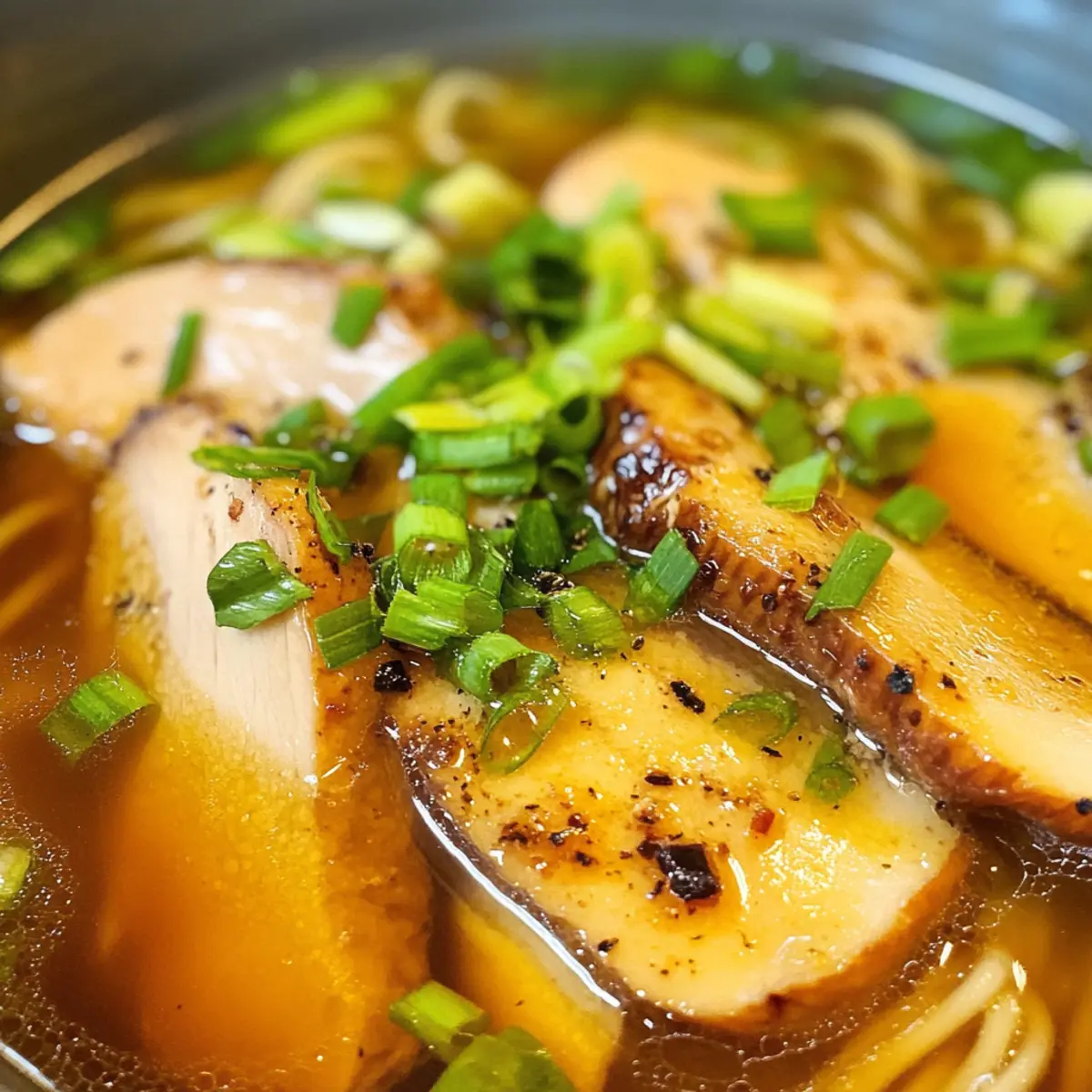
Ramen Broth Variations & Substitutions
Feel free to put your own spin on this traditional broth recipe to make it uniquely yours!
- Dairy-Free: Omit any ingredients with dairy and enjoy a deliciously rich experience that remains true to its roots.
- Vegan Option: Replace chicken with additional shiitake mushrooms and vegetable stock for a plant-based alternative that’s equally hearty.
- Umami Boost: Add dried scallops or shiitake powder to enhance the broth’s depth — a little goes a long way!
- Spice It Up: Toss in a few slices of fresh chili or a dash of chili oil for a heat kick that will warm your soul.
- Herb Infusion: Adding fresh herbs like cilantro or basil towards the end can infuse a vibrant, aromatic twist into your broth.
- Smoky Flavor: Want to amp up the smokiness? Try using smoked sea salt instead of regular salt for a new flavor dimension.
- Experiment with Tare: Combine different tare flavors like mixing shoyu and miso for a unique ramen experience. Each combination tells a different story!
- No Kelp? No Problem: If you’re out of kelp, using a dash of soy sauce or dashi powder can deliver that umami goodness.
These variations not only offer delightful options for your taste buds but also invite creativity in your kitchen! Dive into the world of flavors and let inspiration guide your culinary journey. Don’t forget to explore how these variations fit with your meal prep needs; for tips on making your ramen day easier, check out Storage Tips for Ramen Broth for insights on freezing and reheating!
What to Serve with Homemade Ramen Broth
A steaming bowl of homemade ramen broth invites an array of delightful accompaniments that can enhance your cozy meal experience.
- Fresh Ramen Noodles: Perfectly cooked ramen noodles create a satisfying base, soaking in the rich umami of the broth.
- Chashu Pork: Tender, slow-braised pork belly adds a mouthwatering, savory depth that complements the broth beautifully.
- Soft-Boiled Eggs: A creamy, runny yolk adds luxury and richness, elevating each bite with its velvety texture.
- Bok Choy: This vibrant green leafy vegetable brings a crispy freshness, balancing the rich flavors in your ramen bowl.
- Nori Sheets: Seaweed sheets add a subtle umami touch and a delightful crunch, making every slurp feel like a treat.
- Pickled Ginger: Offering a tangy contrast, pickled ginger cleanses the palate and adds a refreshing zing to each comforting spoonful.
- Scallions: Chopped scallions introduce a burst of color and fresh flavor, brightening the overall dish.
- Spicy Togarashi: A sprinkle of this Japanese spice blend brings a warm, spicy kick that can elevate your ramen to new heights.
- Miso Tare Sauce: Drizzling additional tare over your finished bowl enhances flavor complexity and customization for a unique experience.
- Japanese Beer: Pairing with a light, crisp beer provides a refreshing contrast to the deep flavors of the ramen broth.
Make Ahead Options
These Authentic Homemade Ramen Broth options are perfect for meal prep enthusiasts and busy weeknights! You can prepare the overnight dashi by combining kelp, bonito flakes, dried shiitake mushrooms, and water up to 24 hours in advance, storing it in the refrigerator for maximum flavor. The chicken can also be cleaned and poached ahead of time, keeping it refrigerated for up to 3 days. When ready to finish, simply follow the simmering and straining steps to transform your prepared components into a rich, umami-filled broth, ensuring it remains just as delicious. With these make-ahead tips, you’ll create a comforting ramen base that fits beautifully into your busy schedule.
Storage Tips for Ramen Broth
-
Fridge: Store your homemade ramen broth in an airtight container in the refrigerator for up to 2 days to keep it fresh and flavorful.
-
Freezer: For longer storage, freeze portions of the broth in ziplock bags or freezer-safe containers for up to 1 month. This makes meal prep easy!
-
Reheating: Thaw frozen ramen broth in the refrigerator overnight, or reheat directly from the freezer on the stove over low heat, stirring occasionally until hot.
-
Batch-Friendly: Making a larger batch allows for convenient storage and quick meal solutions—perfect for busy weeknights while enjoying all the umami goodness of your ramen broth.
Expert Tips for Ramen Broth
-
Perfect Simmer Temperature: Maintain a low simmer rather than a rolling boil to achieve a clear and flavorful ramen broth. This prevents cloudiness and enhances the overall taste.
-
Dashi Preparation: Ensure the kelp and bonito flakes are properly soaked overnight to extract maximum umami flavor. Rushing this step can lead to a lackluster broth.
-
Ingredient Quality: Use high-quality ingredients, especially the chicken and seasonal vegetables, to make a truly authentic ramen broth. The flavors are more vibrant with top-notch produce.
-
Flavor Balancing: Taste the broth during the simmering process and adjust the tare levels gradually. Since flavors intensify over time, slight adjustments can elevate your ramen experience.
-
Freezing for Convenience: Consider making a large batch and freezing portions for quick meals. Labeling the bags will help you keep track of your delicious homemade ramen broth!
-
Experiment Creatively: Don’t be afraid to play with different tare flavors! Combining shio, shoyu, or miso tare can offer unique and delightful variations for your ramen bowls.
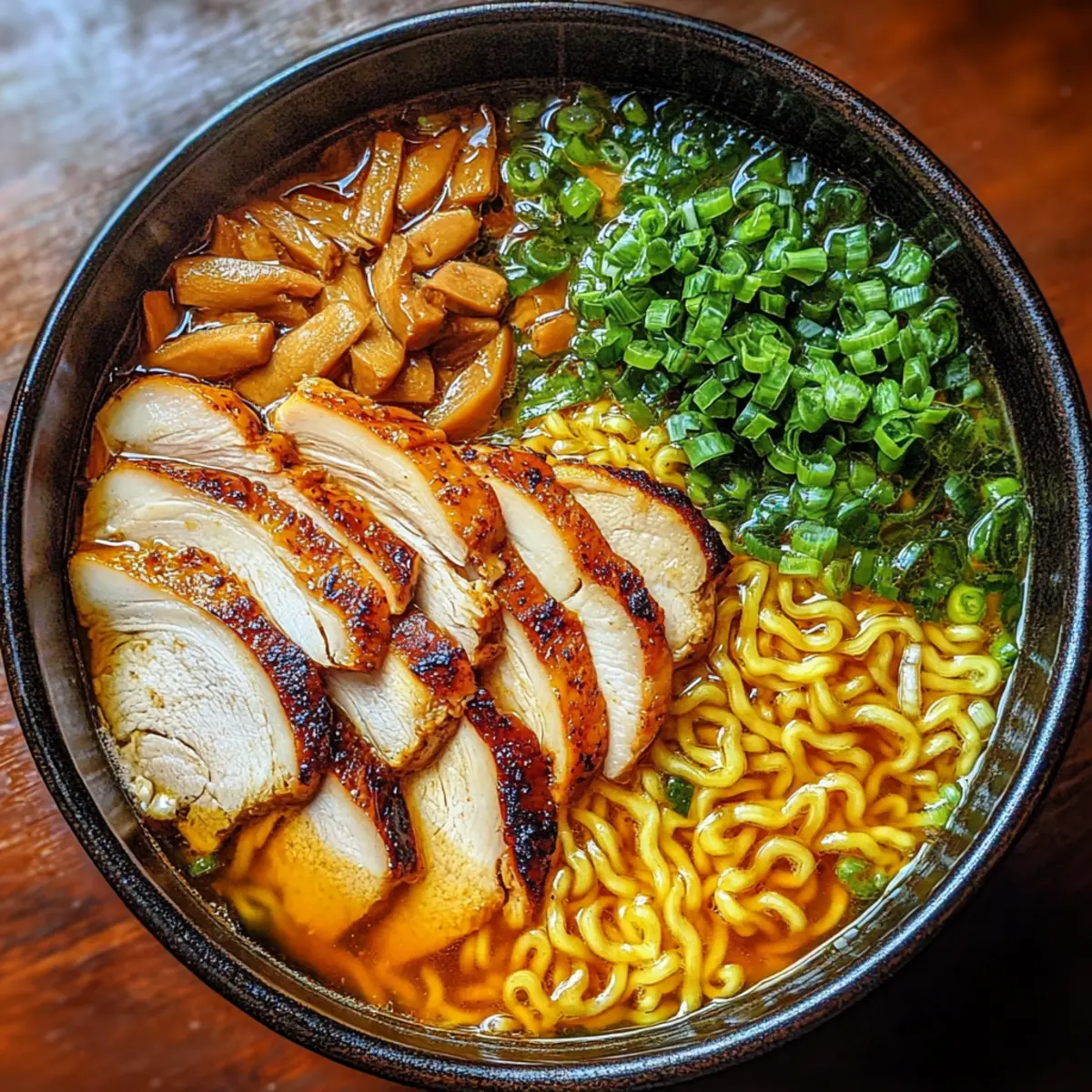
Homemade Ramen Broth Recipe FAQs
How do I choose the best kelp for my ramen broth?
Absolutely! Look for dried kombu kelp that has a deep green color without any dark spots or signs of deterioration. The best kelp will have a slightly glossy surface. If you can’t find kombu, wakame can serve as a decent substitute, although it may not provide the same depth of flavor.
What are the best storage methods for leftover ramen broth?
Very good question! Store your homemade ramen broth in an airtight container in the refrigerator for up to 2 days for the best freshness. If you’re not planning to use it within that timeframe, I recommend freezing it in ziplock bags or freezer-safe containers for up to 1 month. Be sure to label the bags with the date to track how long it’s been stored.
Can I freeze my homemade ramen broth?
Absolutely! Freezing is a fantastic way to preserve your delicious ramen broth. Here’s how you can do it:
- Allow the broth to cool at room temperature.
- Pour it into ziplock bags, leaving some space for expansion, and lay them flat in the freezer to save space.
- Once frozen, you can stack the bags. They will keep well for up to 1 month. When you’re ready to use it, simply thaw overnight in the fridge or reheat directly from frozen in a pot over low heat.
What common issues might I encounter when making ramen broth?
If your broth turns out too cloudy, it might be due to boiling too vigorously during the simmering process. Maintain a gentle simmer to allow flavors to meld without agitation. If you find the flavor too weak, consider adding more tare or salt gradually while tasting. Lastly, if your broth lacks the expected umami depth, ensure you used high-quality ingredients and allowed the dashi to soak adequately overnight.
Can I make this recipe allergy-friendly?
Absolutely! If you or a loved one has allergies, you can easily adjust this recipe. For gluten sensitivities, substitute regular soy sauce with tamari or a gluten-free shoyu. If you’re avoiding seafood, omit bonito flakes and add more mushrooms or a splash of extra soy sauce to enhance flavor. Always feel free to experiment with substitutions based on your dietary needs!
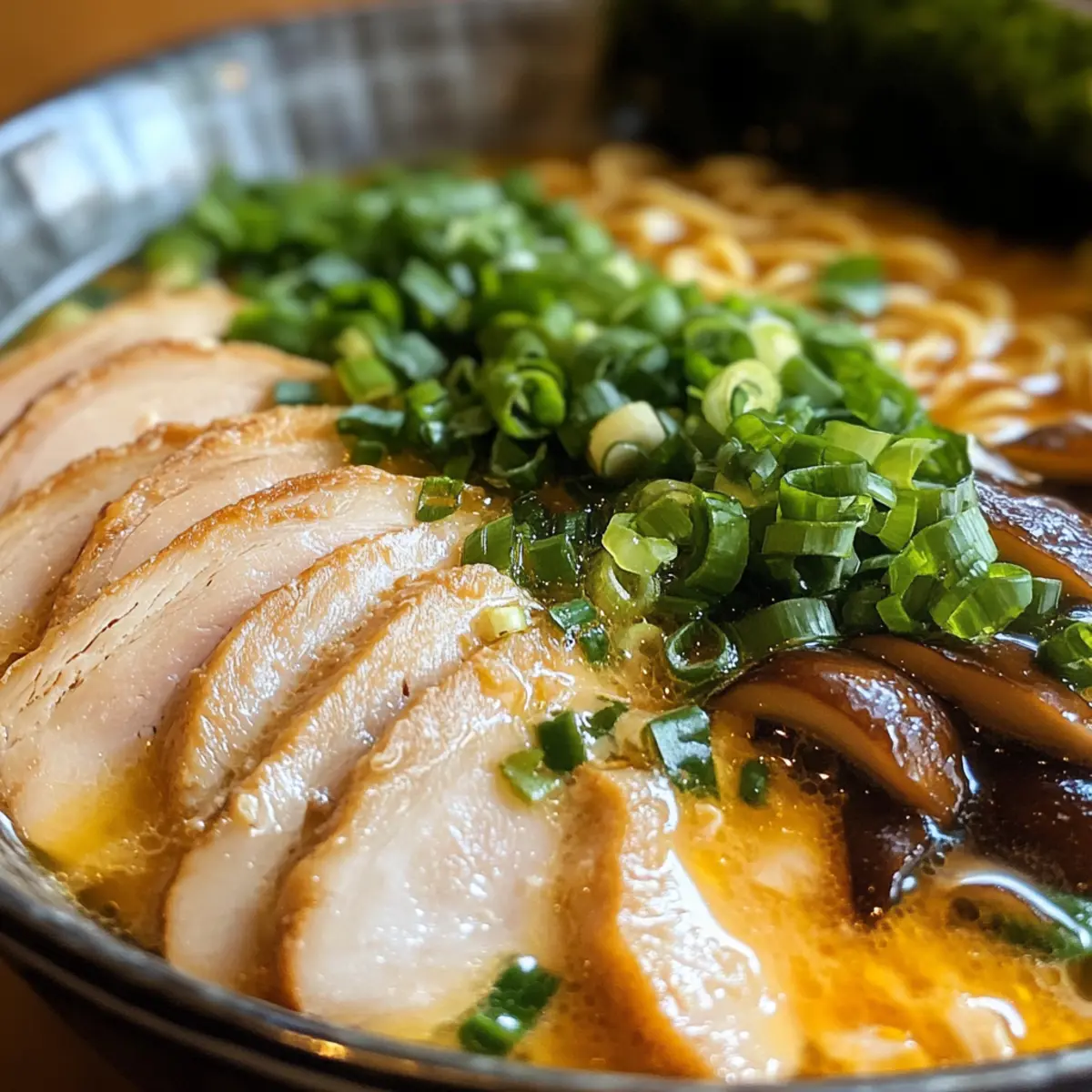
Homemade Ramen Broth: Rich Umami in Every Slurp
Ingredients
Equipment
Method
- Prepare Overnight Dashi: Combine kelp, bonito flakes, and dried shiitake mushrooms with water in a jar. Cover and soak overnight in the refrigerator.
- Prepare Chicken Broth: Rinse chicken carcasses and wings. Place in a large pot, cover with water, and gently boil for about 5 minutes. Discard poaching water.
- Simmer Broth: Return chicken to pot with 4 quarts of fresh water, onion, garlic, ginger, scallions, and sake. Boil, then reduce heat and simmer for 3 hours.
- Add Dashi: After 3 hours, introduce the overnight dashi along with kelp, bonito flakes, and shiitake mushrooms. Simmer for another 2 hours.
- Strain Broth: Pour mixture through a fine-mesh sieve lined with paper towel. Let cool slightly.
- Prepare Tares: Mix your chosen tare: shio, shoyu, or miso, according to preferences.
- Assemble Ramen Bowls: In a bowl, stir together 2 tablespoons of tare with 2 cups of strained broth. Serve hot with toppings.
Leave a Reply