
The aroma of sizzling garlic mingling with a hint of sweetness and heat instantly transports me to the bustling streets of Seoul. That’s the magic behind these Spicy Gochujang Eggs, a delightful Korean side dish that is both quick to whip up and loaded with flavor. In just 20 minutes, you can create a high-protein indulgence that caters to your cravings, whether you prefer your eggs jammy, runny, or hard-boiled. What’s even better? This recipe is incredibly versatile, allowing you to customize the spice level to suit your taste, making it a true crowd-pleaser. Ready to transform your routine and elevate your mealtime? Let’s dive into this comforting dish that’s bound to make your taste buds dance!
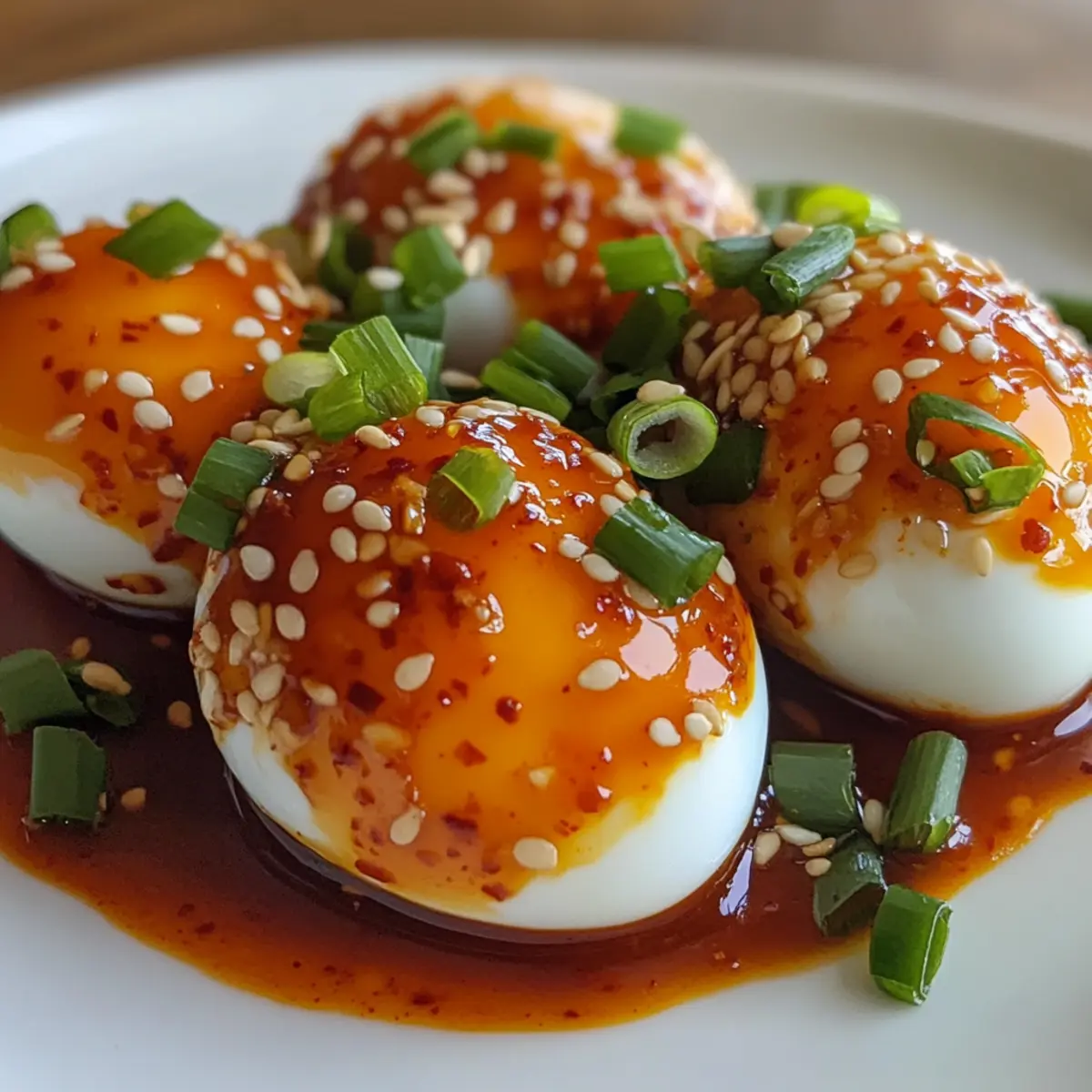
Why Are Spicy Gochujang Eggs Irresistible?
Umami Explosion: The robust flavor of gochujang, paired with the creamy eggs, creates a satisfying taste sensation.
Quick and Easy: Ready in just 20 minutes, this recipe is perfect for busy weeknights or a last-minute side.
Customizable Heat: Adjust the spice level by varying the amount of gochujang, making it suitable for all palates.
Protein-Packed: With each serving loaded with protein, these eggs are a nutritious addition to any meal, just like a delicious Cucumber Salad Deliciously.
Versatile Serving Options: Pair with rice, veggies, or even on toast for a delightful breakfast twist, just like the unique flavors found in Shredded Thai Salad.
Crowd-Pleaser: Whether it’s a family dinner or a gathering with friends, these Spicy Gochujang Eggs will impress everyone at the table!
Spicy Gochujang Eggs Ingredients
For the Eggs
• Large Eggs – The star of the dish, cook them to jammy, runny, or hard-boiled based on your preference!
For the Sauce
• Gochujang – Infuses the dish with spicy umami flavor; can substitute with other chili pastes but expect a different taste.
• Soy Sauce – Adds essential saltiness; opt for gluten-free soy sauce to keep the dish suitable for gluten-free diets.
• Sugar – Balances the heat of the gochujang; use brown sugar for a richer sweetness.
• Rice Vinegar – Brightens the sauce with acidity; apple cider vinegar can be a perfect alternative.
• Chicken Stock (or water) – Forms the base for the sauce; vegetable stock works great in vegetarian versions.
• Neutral Oil – Used for sautéing the garlic; sesame oil can add a delightful nutty note instead.
• Garlic – Freshly minced to enhance the dish’s aroma; it’s key for maximum flavor.
For the Garnish
• Scallion – Adds a fresh crunch and color; substitute with chives or omit if you’re in a pinch.
• Toasted Sesame Seeds – Optional, but they bring a lovely crunch and nutty flavor to the finished dish.
With these Spicy Gochujang Eggs ingredients, you’re just a few steps away from a mouthwatering dish that perfectly blends flavor and simplicity!
Step‑by‑Step Instructions for Spicy Gochujang Eggs
Step 1: Boil Eggs
Fill a medium-sized pot with water and bring it to a rolling boil over high heat. Carefully lower in the large eggs using a slotted spoon, cover the pot, and let them boil for exactly 7 minutes for jammy yolks. Once done, promptly transfer the eggs to an ice bath to stop the cooking process, allowing them to cool for about 5 minutes for easier peeling.
Step 2: Prepare Sauce
In a mixing bowl, combine 2 tablespoons of gochujang, 1 tablespoon of soy sauce, 1 teaspoon of sugar, 1 tablespoon of rice vinegar, and ½ cup of chicken stock. Whisk the ingredients together until smooth and well-blended, creating a deliciously spicy sauce that will coat your Spicy Gochujang Eggs beautifully.
Step 3: Cook Sauce
Heat 2 tablespoons of neutral oil in a skillet over medium heat. Once the oil is shimmering, add 2 minced garlic cloves and sauté for about 15 seconds until fragrant and golden. Carefully pour in your prepared sauce mixture and let it simmer for 2-3 minutes, stirring occasionally, until it thickens slightly and the flavors meld together.
Step 4: Cook Eggs in Sauce
Peel the cooled eggs and gently add them to the skillet with the simmering sauce. Allow the eggs to cook in the sauce for about 3 minutes, turning them occasionally, so they are fully coated and heated through. The sauce will cling beautifully to the eggs, enhancing their flavor and creating a mouthwatering dish.
Step 5: Serve
Once the eggs are perfectly infused with the gochujang sauce, remove them from the heat. Transfer the Spicy Gochujang Eggs onto a serving plate, spooning any remaining sauce over them. Garnish with thinly sliced scallions and a sprinkle of toasted sesame seeds for added crunch and flavor, and serve them warm over a bed of rice for a delightful meal!
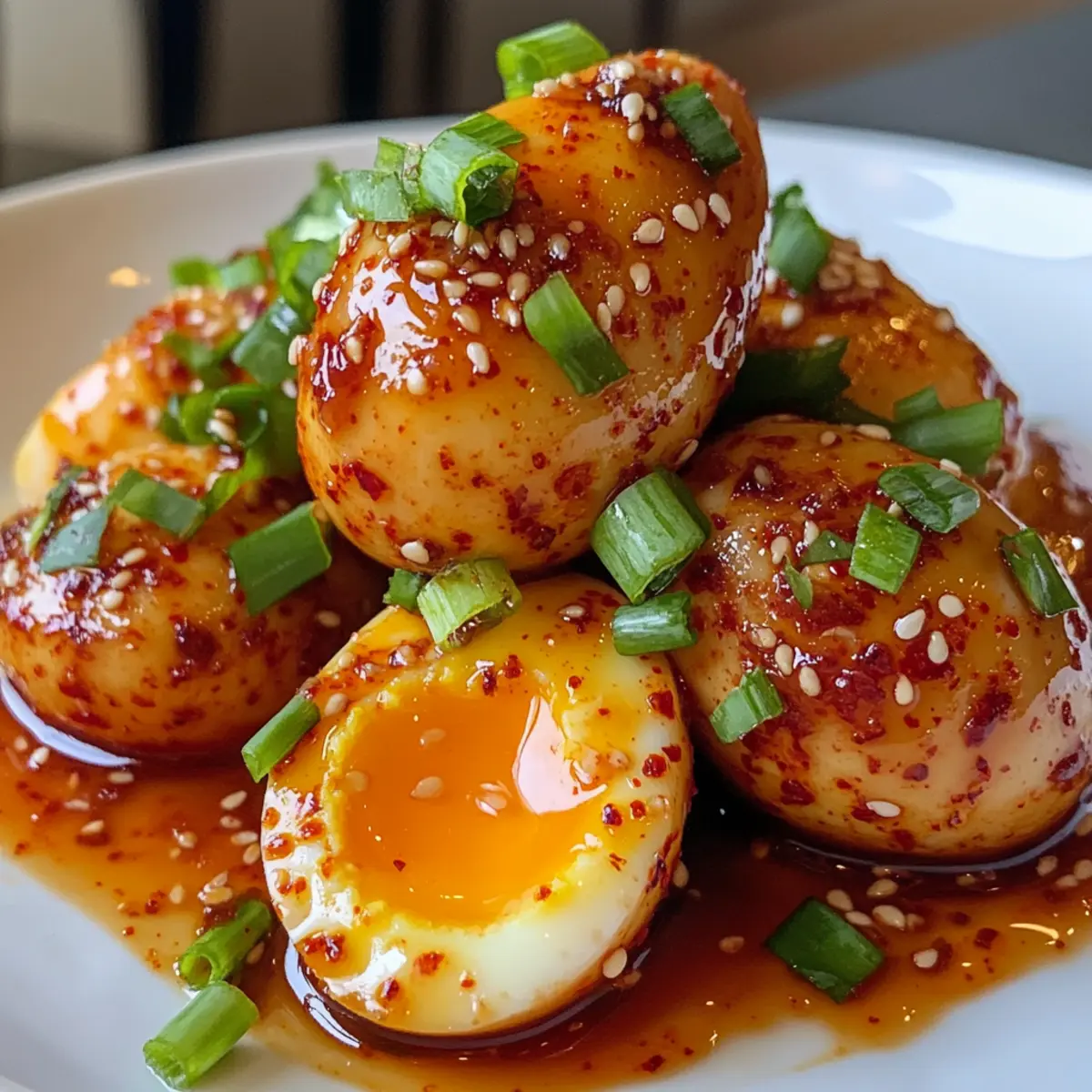
Variations & Substitutions for Spicy Gochujang Eggs
Feel free to get creative with these flavorful twists on Spicy Gochujang Eggs, making them truly your own!
-
Protein Swap: Replace the eggs with firm tofu for a fantastic vegetarian take. Simply slice and sauté until golden for a delightful texture.
-
Spice Boost: Add a touch of extra heat by incorporating chopped fresh chili or a drizzle of chili oil. The layers of spice will thrill your taste buds!
-
Gluten-Free Option: Use gluten-free soy sauce instead of regular soy sauce for a gluten-free version that still delivers that savory depth.
-
Veggie Infusion: Toss in fresh veggies like bell peppers or leafy spinach when simmering the sauce. They’ll absorb the flavors while adding nutrition and color.
-
Richness Upgrade: Beat in a tablespoon of miso paste with the sauce to enhance the umami flavor. It adds a wonderfully creamy texture and deeper taste.
-
Sour Note: For a tangy twist, substitute rice vinegar with lemon juice. This brightens the dish and complements the spice beautifully.
-
Savory Addition: Stir in cooked mushrooms or caramelized onions to the sauce for a heartier, more complex flavor that makes it feel like a meal.
-
Bowl Variation: Serve your Spicy Gochujang Eggs over a bed of quinoa or farro instead of rice for an added nutty flavor and chewy texture. This will elevate the dish from simple to extraordinary!
By experimenting with these variations, your version of Spicy Gochujang Eggs will always be exciting! And if you’re in the mood for more delightful salads, don’t forget to check out Mango Cucumber Salad and Cucumber Salad Crab for refreshing sides!
Expert Tips for Spicy Gochujang Eggs
Boiling Perfection: Ensure eggs are fully submerged in boiling water for even cooking. This prevents any undercooked or overcooked spots in your eggs.
Timing Matters: Adjust boiling times to fit your preferred egg doneness—6 minutes for runny, 7 minutes for jammy, and up to 9 minutes for hard-boiled.
Ice Bath Essential: Don’t skip the ice bath after boiling; it allows for easy peeling and stops the cooking process, giving you the perfect texture.
Substitutions Smartly: If you can’t find gochujang, experiment with other chili pastes, but keep in mind that flavors and heat levels will differ.
Simmer Sauce Carefully: Allow the sauce to simmer for a few minutes to marry the flavors before adding the eggs; this enhances the umami taste.
Final Touch: Don’t forget the garnish—scallions and sesame seeds elevate the look and texture of your Spicy Gochujang Eggs, making them even more inviting.
What to Serve with Spicy Gochujang Eggs
Pairing your Spicy Gochujang Eggs with the right accompaniments will elevate your meal and satisfy a variety of cravings.
-
Steamed Rice: The perfect canvas to soak up the spicy gochujang sauce, providing a subtle sweetness that balances the heat.
-
Roasted Vegetables: Caramelized veggies add a delightful crunch and freshness, complementing the richness of the eggs. Think of vibrant bell peppers and sweet zucchini.
-
Korean Kimchi: A traditional side that brings tanginess and probiotic goodness, adding complexity and a spicy kick that harmonizes beautifully with the dish.
-
Cucumber Salad: Cool, crisp cucumbers tossed in vinegar and sesame oil provide a refreshing contrast to the savory eggs, cutting through the richness.
-
Sesame Noodles: A bowl of sesame oil-dressed noodles offers nutty undertones that amplify the umami flavor profile, tying the meal together seamlessly.
-
Spicy Tofu Soup: A warm bowl of this hearty soup enhances the meal with vibrant flavors, just like the traditional comfort seen in Korean cuisine.
-
Cold Beer or Soju: An ice-cold beverage enhances your dining experience, complementing the spiciness with a refreshing finish that keeps you reaching for more.
Make Ahead Options
These Spicy Gochujang Eggs are perfect for meal prep enthusiasts! You can boil and peel the eggs up to 24 hours in advance, ensuring you have a delicious base ready to go. Simply store the cooled eggs in an airtight container in the refrigerator to maintain their freshness. The gochujang sauce can also be prepared up to 3 days ahead; just keep it well-covered in the fridge. When you’re ready to enjoy, all you need to do is heat the sauce in a skillet, add the eggs, and let them simmer for about 3 minutes for that comforting, umami flavor. This way, you’ll have a delightful dish on the table with minimal effort, making busy weeknights a breeze!
How to Store and Freeze Spicy Gochujang Eggs
Fridge: Store leftover Spicy Gochujang Eggs in an airtight container for up to 5 days. Be sure to separate them from the sauce to preserve texture.
Freezer: If you wish to freeze them, consider freezing the cooked eggs alone, wrapped tightly in plastic wrap and stored in a freezer bag for up to 3 months.
Reheating: To reheat, thaw the eggs overnight in the fridge and warm them gently in a skillet with a splash of water, or microwave them on low until heated through.
Serving Freshness: Always add fresh sauce just before serving to revive its flavor, especially after storing. This enhances the overall taste of your dish!
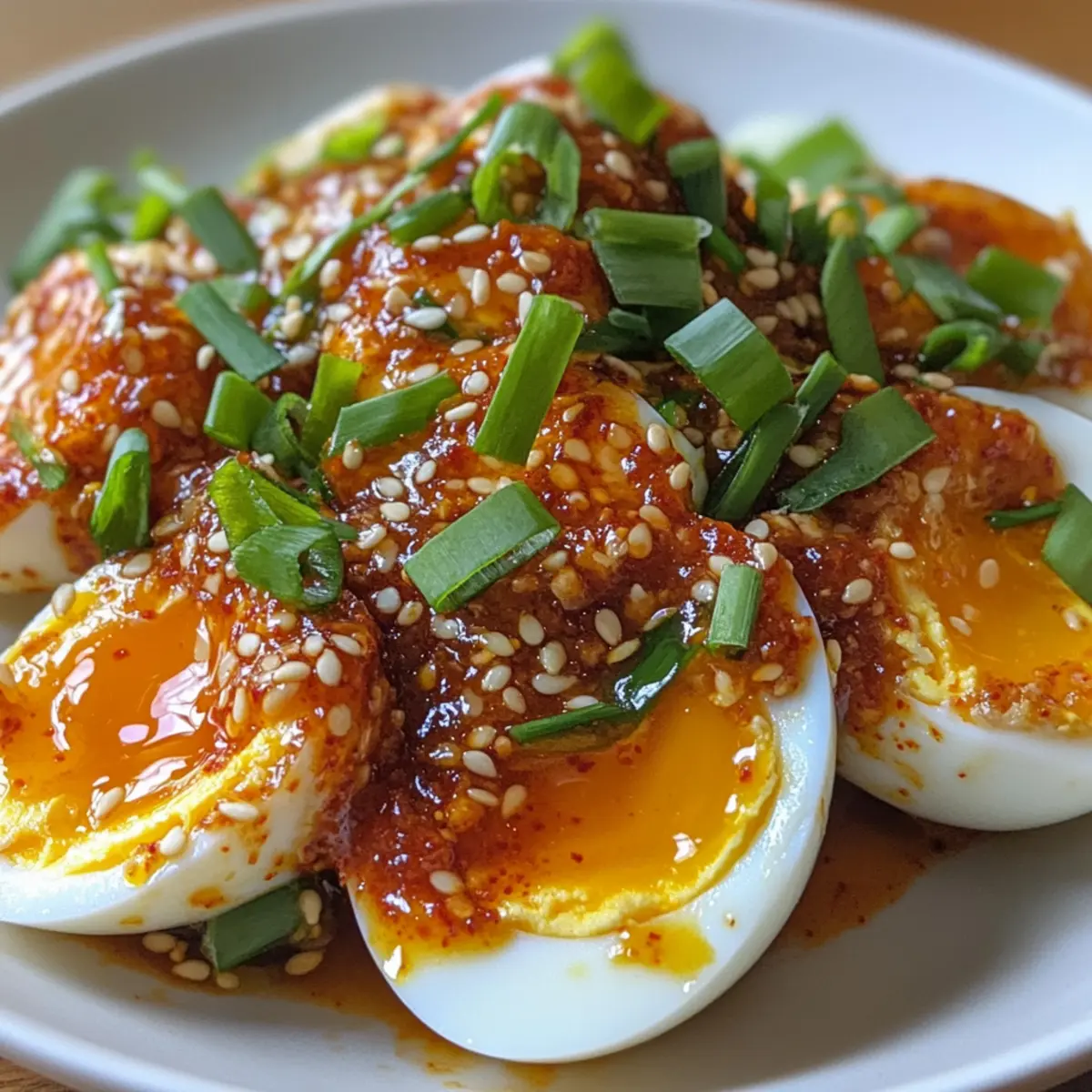
Spicy Gochujang Eggs Recipe FAQs
How do I choose the best eggs for this recipe?
Absolutely! When selecting large eggs, look for ones that are clean, with no cracks or dark spots all over the shell, as these indicate freshness. Fresh eggs will yield the best texture for cooking. I often recommend choosing organic eggs for a richer flavor, but any good quality egg will work perfectly.
What is the best way to store leftover Spicy Gochujang Eggs?
Store any leftovers in an airtight container in the refrigerator for up to 5 days. It’s best to keep the eggs separate from the sauce to prevent them from absorbing too much moisture, which can affect their texture. You can reheat them gently on the stove or in the microwave before serving.
Can I freeze Spicy Gochujang Eggs?
Yes, you can! To freeze, carefully wrap the cooked eggs in plastic wrap and place them in a freezer-safe bag. They can be frozen for up to 3 months. When you’re ready to eat, thaw them in the fridge overnight, then reheat gently either in a skillet with a splash of water or in the microwave until warmed through.
What should I do if my eggs are overcooked?
If you find your eggs are overcooked and the yolks are too hard, don’t worry! You can still enjoy them by slicing them into salads or using them in a sandwich, combined with flavorful ingredients like mayo or spicy mustard. Also, make sure to adjust the boiling time for your next batch—experiment with 6 minutes for runny yolks, and 7 to 9 minutes for jammy to hard-boiled.
Are there any dietary considerations I should keep in mind?
Very! If you or someone you’re serving has gluten sensitivities, be sure to use gluten-free soy sauce to keep this dish suitable for gluten-free diets. Additionally, the Spicy Gochujang Eggs are high in protein, making them a nutritious option for those looking to boost their protein intake. If you’re serving this to children or anyone sensitive to spice, consider reducing the gochujang for a milder taste.
Can I use a different ingredient instead of gochujang?
Definitely! If gochujang isn’t available, you can substitute it with other chili pastes like sambal oelek or sriracha, but do remember this will alter the flavor profile. Also, adjust the quantity according to your spice tolerance—start with a smaller amount and increase it as necessary to find the perfect balance of flavor and heat.
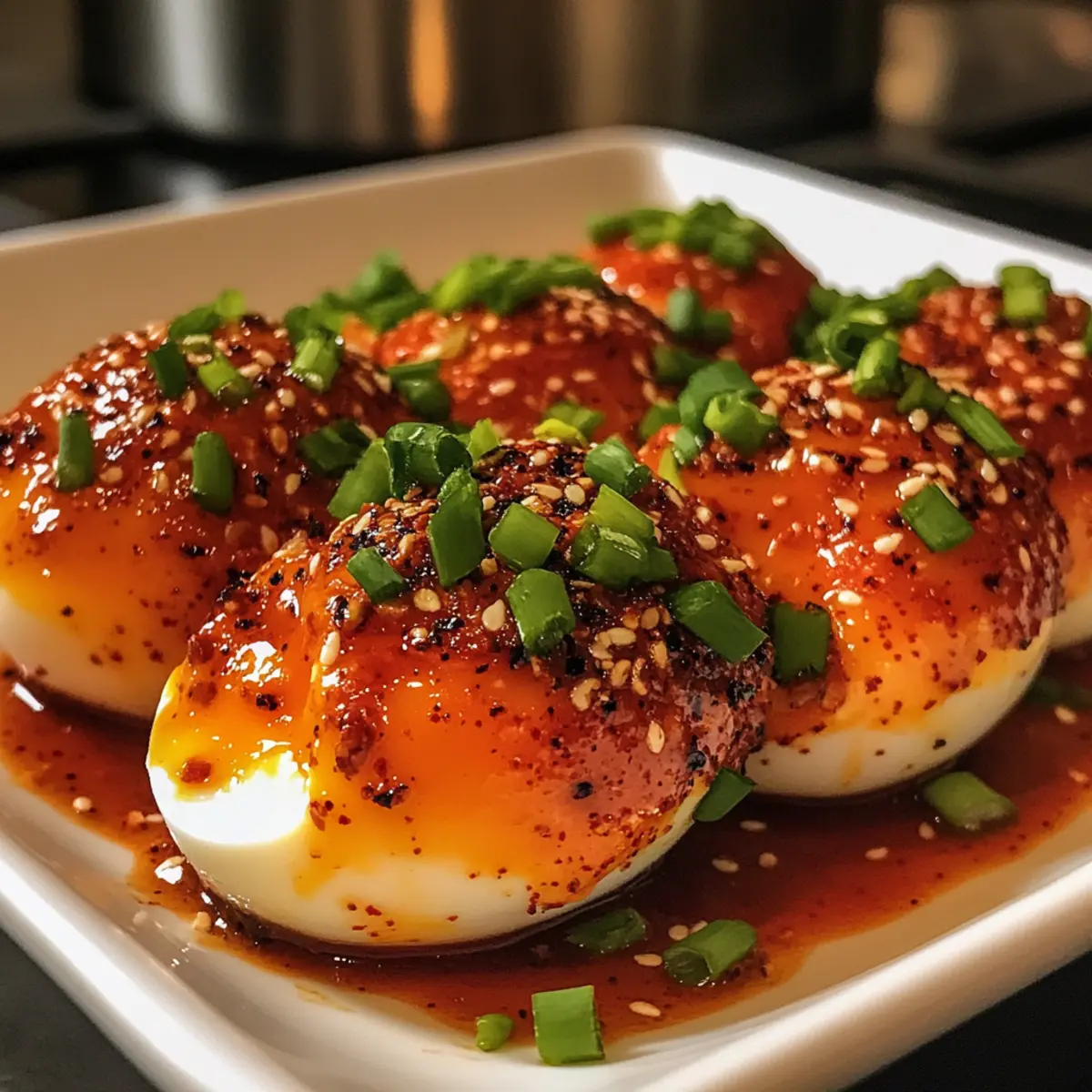
Crispy Egg Salad: A Crunchy Take on Classic Comfort Food
Ingredients
Equipment
Method
- Fill a medium-sized pot with water and bring it to a rolling boil. Carefully lower in the large eggs, cover the pot, and let them boil for exactly 7 minutes. Transfer to an ice bath for 5 minutes to cool.
- In a mixing bowl, combine gochujang, soy sauce, sugar, rice vinegar, and chicken stock. Whisk together until smooth to create the sauce.
- Heat oil in a skillet over medium heat. Add minced garlic and sauté for about 15 seconds. Pour in the sauce mixture and simmer for 2-3 minutes until thickened.
- Peel the cooled eggs and add them to the skillet with the sauce. Cook for about 3 minutes, turning to coat the eggs thoroughly.
- Remove the eggs from heat, transfer to a serving plate, garnish with scallions and sesame seeds, and serve over rice.
Leave a Reply