
As I stirred the simmering pot, the air filled with a captivating aroma that whisked me away to the bustling streets of Seoul. Tteokbokki is a beloved Korean dish that encapsulates the lively essence of street food, and I can’t wait to share this authentic spicy Tteokbokki recipe with you. In just 35 minutes, you can create a comforting bowl of chewy rice cakes bathed in fiery gochujang sauce, perfect for a quick dinner or a cozy night in. Not only is this dish incredibly flavorful, but it also has a wonderful versatility—easily customizable to make it gluten-free or vegetarian! Are you ready to embark on a delicious culinary adventure that will bring the taste of Korea right to your kitchen?
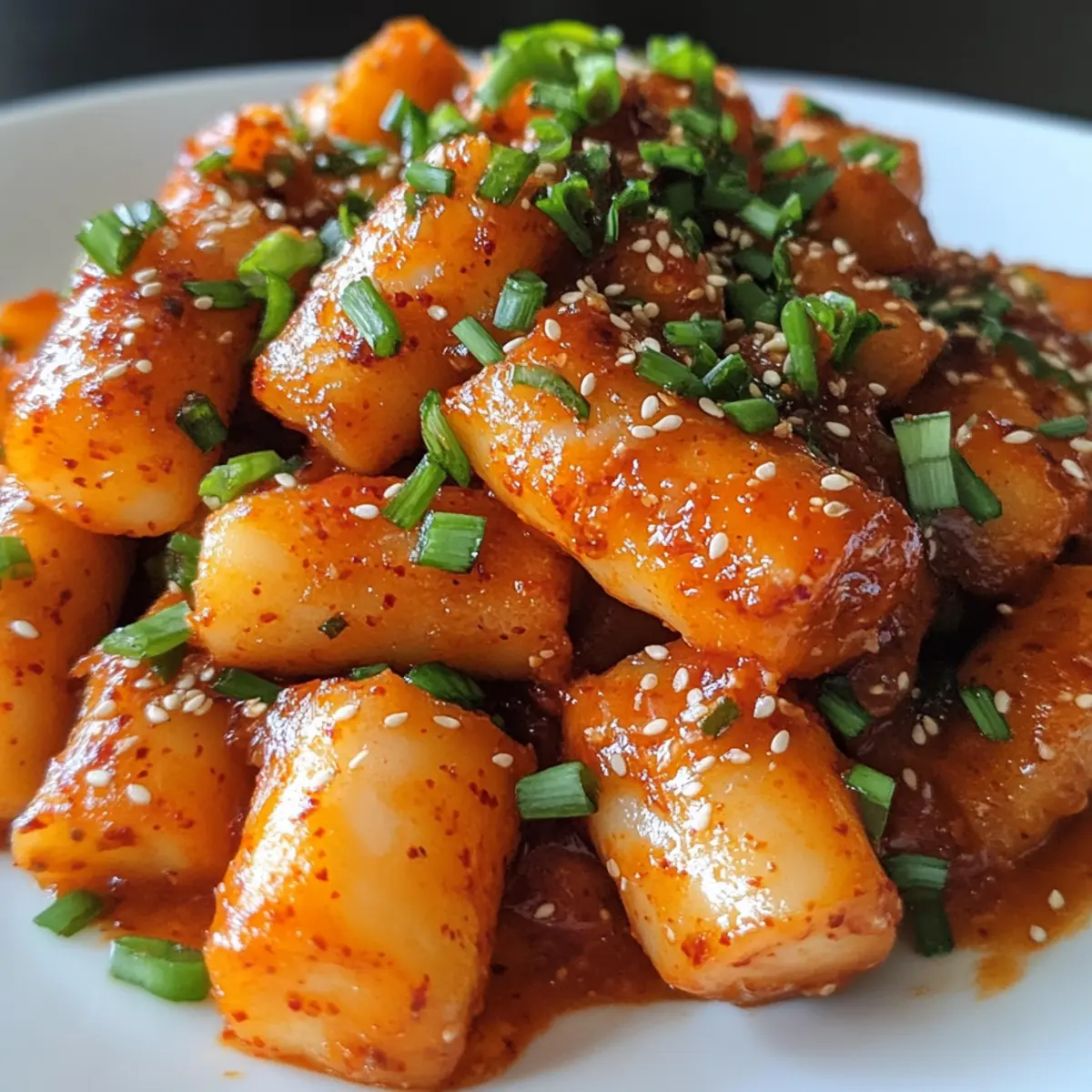
Why is Tteokbokki so irresistible?
Bold flavors: Each bite bursts with a delightful mix of spicy gochujang and slightly sweet notes, creating a mouthwatering experience.
Quick and easy: In just 35 minutes, you can whip up this comforting dish, perfect for busy weeknights or a last-minute gathering.
Customizable options: Easily adapt this recipe to suit your dietary needs—make it gluten-free or add more veggies for extra nutrition!
Crowd-pleaser: Great for sharing, this dish is sure to impress friends and family alike, bringing a taste of Korea straight to your table.
Satisfying texture: Enjoy the chewy rice cakes paired with tender fish cakes or tofu, all enveloped in a luscious, thick sauce.
With its vibrant flavors and quick preparation, Tteokbokki is a must-try that will have you coming back for more!
Tteokbokki Ingredients
• Get ready to dive into this delicious dish!
For the Broth
- Anchovy stock or water – A flavorful base that builds depth; anchovy stock is recommended for a richer taste.
- Dried kelp – Infuses umami into the broth; discard it after boiling for maximum flavor.
- Gochujang (Korean red chili paste) – The essential ingredient that provides the signature spiciness and sweetness of Tteokbokki.
- Gochugaru (Korean chili pepper flakes) – Adds an extra kick and vibrant color to the dish.
- Soy sauce – Balances sweetness; use gluten-free soy or tamari for a gluten-free option.
- Sugar – Enhances the overall sweetness, bringing harmony to spicy flavors.
For the Main Ingredients
- Tteokbokki (Korean rice cakes) – Provides the chewy texture that’s so beloved in this dish; avoid dried varieties for best results.
- Korean fish cakes – Adds a savory protein element; substitute with tofu skin for a delightful vegetarian alternative.
For Finishing Touches
- Toasted sesame oil – Contributes richness and a nutty aroma that elevates the dish.
- Scallions – Fresh garnishes that introduce a pop of color and flavor.
- Sesame seeds – Use for a crunchy texture and a beautiful presentation on your Tteokbokki.
Now gather these ingredients, and let’s get cooking!
Step‑by‑Step Instructions for Tteokbokki
Step 1: Make the Broth
In a medium-sized pot, combine 4 cups of anchovy stock or water with a piece of dried kelp. Bring the mixture to a boil over medium-high heat. Once boiling, reduce the heat to low, remove the kelp, and let the broth simmer for about 10 minutes, allowing all the rich flavors to develop.
Step 2: Season the Broth
Add 3 tablespoons of gochujang, 1 tablespoon of gochugaru, 2 tablespoons of soy sauce, and 1 tablespoon of sugar to the simmering broth. Stir well to dissolve the gochujang and sugar completely. Increase the heat back to medium-high and bring the broth to a gentle boil, letting the vibrant flavors meld together for about 2 minutes.
Step 3: Cook the Rice Cakes
Introduce 1 pound of tteokbokki (Korean rice cakes) into the pot, stirring to ensure they are submerged in the flavorful broth. Allow the rice cakes to simmer for 8-10 minutes, stirring occasionally until they soften and become chewy. You’ll know they’re ready when they start to look plump and the sauce thickens slightly.
Step 4: Add the Fish Cakes
After the rice cakes have cooked, add in 1 cup of sliced Korean fish cakes. Stir the mixture gently, allowing the fish cakes to warm through. Cook for an additional 4 minutes, stirring frequently, until the fish cakes are heated and melded with the sauce, creating a delightful texture throughout the dish.
Step 5: Serve
Once everything is cooked to perfection, remove the pot from heat and stir in 1 tablespoon of toasted sesame oil. Transfer the hot Tteokbokki to a serving bowl, and sprinkle with chopped scallions and sesame seeds for garnish, adding a beautiful finish. Serve immediately for an authentic and delicious experience!
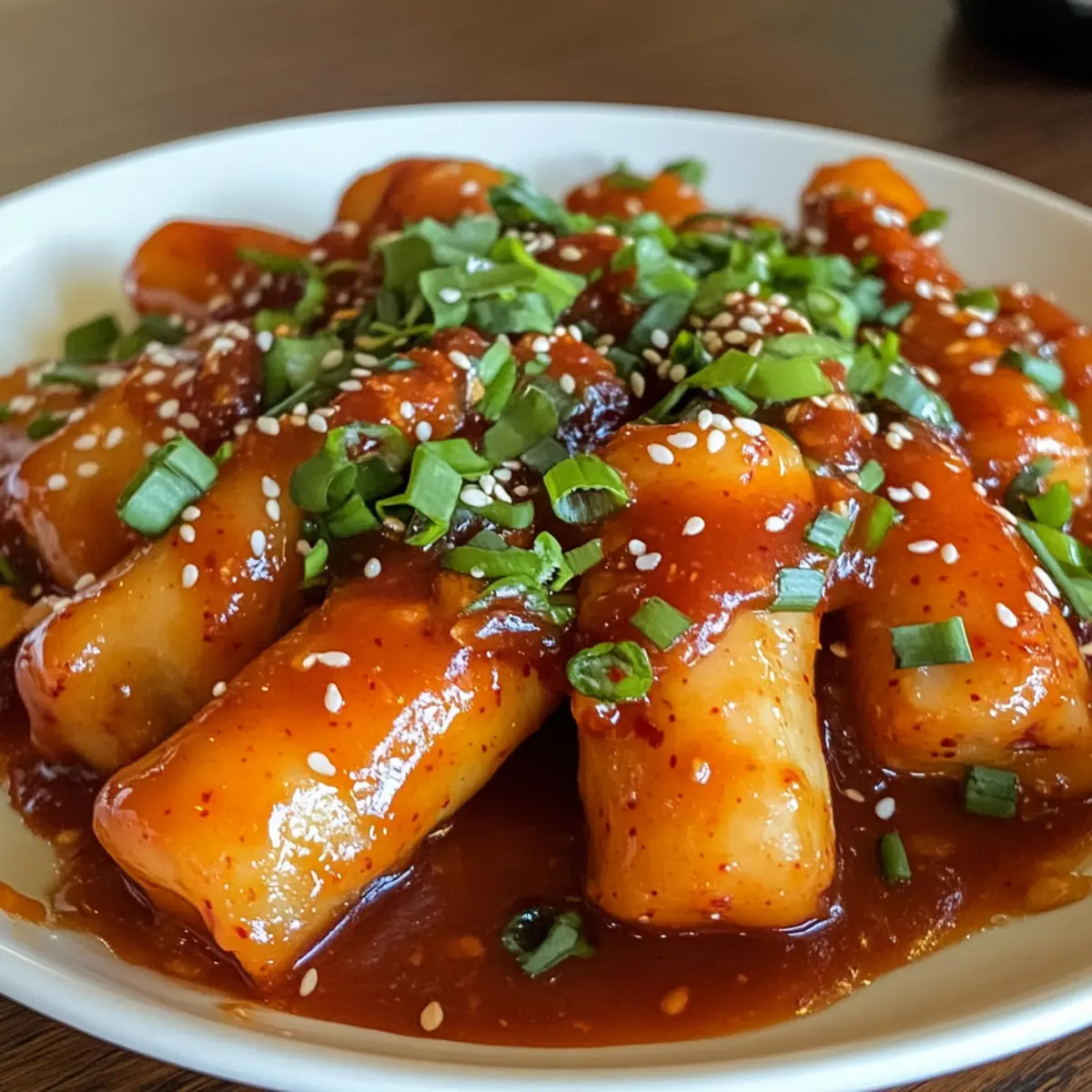
Storage Tips for Tteokbokki
- Fridge: Store leftover Tteokbokki in an airtight container for up to 3 days to keep its flavors intact.
- Freezer: If you want to freeze it, place Tteokbokki in a freezer-safe container for up to 1 month. Thaw in the fridge overnight before reheating.
- Reheating: To restore its chewy texture, reheat on the stovetop with a splash of water until heated through, stirring gently to avoid clumping.
- Texture Awareness: Keep in mind that freezing can change the texture slightly. It’s best enjoyed fresh for the ultimate taste experience!
Tteokbokki Variations & Substitutions
Get ready to play with flavors and textures while making this delightful dish your own!
-
Vegetarian Tteokbokki: Substitute fish cakes with sliced fried tofu pockets for a hearty vegetarian option. The tofu absorbs the sauce beautifully!
-
Gluten-Free Delight: Swap regular soy sauce with tamari to make this dish gluten-free. You’ll still enjoy all the rich flavors without compromise.
-
Extra Veggies: Add sliced cabbage or julienned carrots while simmering the rice cakes for a nutritious boost. It’s a tasty way to sneak more vegetables into your meal!
-
Heat Level: If you prefer a milder version, reduce the amount of gochugaru or gochujang. Start small and adjust to your taste for a perfect balance.
-
Incorporate Seafood: For a seafood twist, add shrimp or squid to the pot when cooking the fish cakes. They’ll add a lovely depth of flavor.
-
Savory Umami: Enhance the broth with a splash of oyster sauce or fish sauce for an umami kick. It’s an easy way to elevate the dish!
-
Creamy Tteokbokki: Stir in a splash of coconut milk for a creamier texture, blending the flavors while making it more decadent.
-
Savory Broth Base: Replace anchovy stock with vegetable broth for a satisfying vegetarian base while still maintaining the soup’s richness.
Feel free to explore these suggestions and find your favorite twist! And if you’re curious about other delicious adventures, don’t miss out on trying out some flavorful Korean banchan sides!
Expert Tips for Tteokbokki
-
Fresh is Best: Tteokbokki is best served immediately to maintain its chewy texture. Storing leftovers can lead to hard rice cakes.
-
Adjust Spice Levels: Don’t hesitate to customize the heat! Modify how much gochujang and gochugaru you use to suit your taste preferences.
-
Gluten-Free Options: Switch out regular soy sauce for gluten-free soy or tamari, allowing those with dietary restrictions to enjoy this authentic Tteokbokki.
-
Enhance Umami: For a deeper flavor, add a splash of fish sauce or a few slices of mushrooms during the broth preparation for extra savory goodness.
-
Add Veggies: Incorporate more nutrition by tossing in veggies like cabbage or carrots while cooking the rice cakes. These add flavor, texture, and color!
Make Ahead Options
These Tteokbokki are perfect for meal prep, saving you time on busy weeknights! You can prepare the flavorful broth (without the rice cakes and fish cakes) and store it in the refrigerator for up to 3 days. Simply simmer the anchovy stock, dried kelp, gochujang, gochugaru, soy sauce, and sugar, then let it cool before refrigerating. When you’re ready to serve, heat the broth and add the rice cakes and fish cakes; they’ll cook to perfection in just 12-15 minutes. For optimal texture, ensure that the rice cakes are well-coated in the sauce just before serving, maintaining their delightful chewiness and flavor. Enjoy restaurant-quality Tteokbokki with minimal effort!
What to Serve with Authentic Spicy Tteokbokki
Tteokbokki pairs beautifully with a variety of dishes, creating a perfect balance of flavors and textures for your meal.
- Korean Fried Chicken: Crispy and spicy, each bite of chicken complements the chewy rice cakes, making for a delightful combination that’s always a hit.
- Kimchi: A staple in Korean cuisine, the tangy, fermented flavors of kimchi contrast nicely with the sweetness of tteokbokki for a well-rounded experience.
- Veggie Pancakes: These savory pancakes add a crunchy texture, and their mild flavor pairs wonderfully with the spicy sauce of your tteokbokki.
For a truly convivial spread, consider serving a platter of fresh vegetable banchan as well. You can include pickled cucumbers and seasoned bean sprouts to cleanse the palate and bring a refreshing crunch to the table.
- Steamed Dumplings: Their soft, warm texture complements the chewy tteokbokki, and dipping them into soy sauce adds another layer of flavor.
- Rice: A bowl of plain or seasoned rice can help absorb the rich sauce, balancing out the heat with simplicity and comfort.
Finally, consider a sweet treat like Mochi Ice Cream for dessert. The cool, chewy ice cream contrasts perfectly with the hot, spicy tteokbokki, providing a sweet conclusion to your delicious meal!
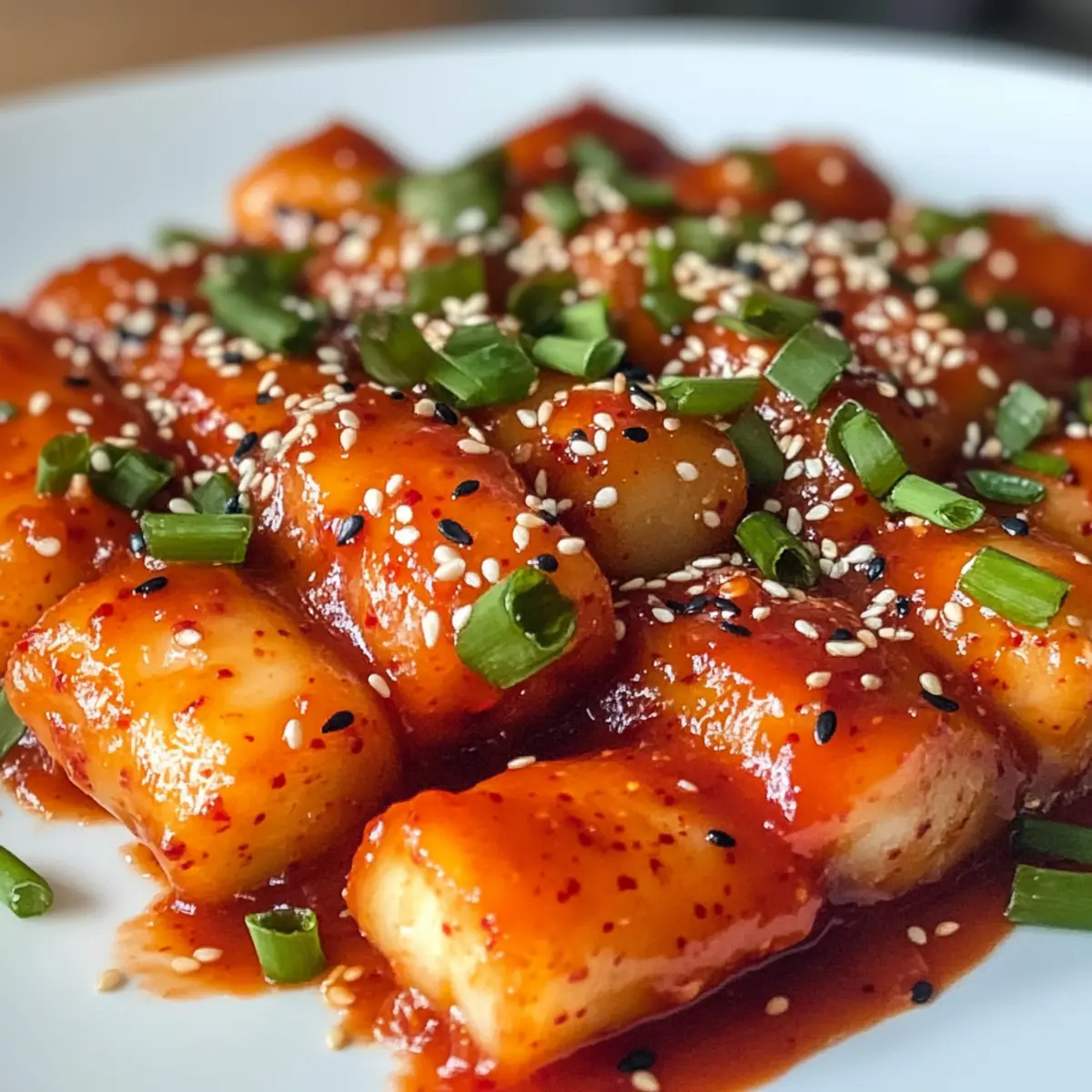
Tteokbokki Recipe FAQs
How do I choose the right rice cakes for Tteokbokki?
Absolutely! For the best results, use fresh or frozen Tteokbokki (Korean rice cakes) and avoid dried varieties, as they won’t provide the desired chewy texture. Look for rice cakes that are slightly plump and uniformly white. If using frozen, let them thaw slightly before cooking to ensure even heating.
How should I store leftover Tteokbokki?
Very! Store any leftovers in an airtight container in the refrigerator for up to 2 to 3 days. To maintain its flavors, reheat on the stovetop with a splash of water. This helps restore moisture, ensuring that the rice cakes don’t harden.
Can I freeze Tteokbokki?
Absolutely! To freeze, place the cooled Tteokbokki in a freezer-safe container or bag for up to 1 month. When you’re ready to enjoy it again, thaw it overnight in the fridge and reheat on the stove, adding a bit of water as needed for moisture.
What should I do if my Tteokbokki sauce is too thick?
Don’t worry! If you find that your sauce has thickened too much, simply add a little water (one tablespoon at a time) while stirring it on low heat until you reach the desired consistency. Adjusting the heat helps everyone meld back together beautifully!
Can I make Tteokbokki vegan or gluten-free?
Absolutely! To make a vegan version, substitute Korean fish cakes with sliced fried tofu pockets and use vegetable stock instead of anchovy stock. For gluten-free, switch soy sauce for a gluten-free variety like tamari. This way, everyone can enjoy this delightful dish!
Is Tteokbokki safe for pets?
It’s a good idea to keep Tteokbokki away from pets, as the gochujang can be too spicy for them and may cause digestive upset. Always check ingredients for potential allergens, like soy sauce, if you’re considering sharing any with your furry friends.
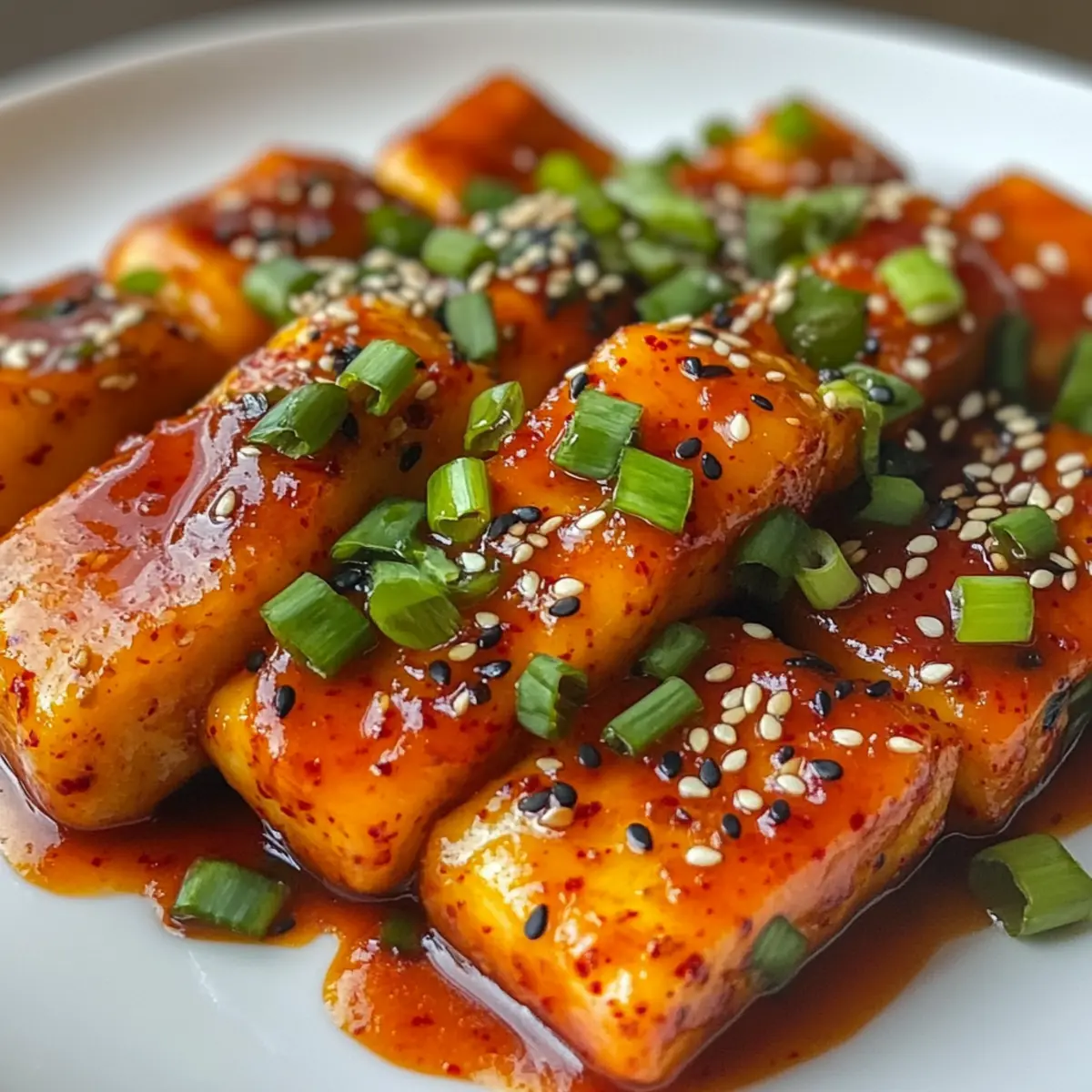
Spicy Tteokbokki: Chewy Comfort Food in 35 Minutes
Ingredients
Equipment
Method
- In a medium-sized pot, combine 4 cups of anchovy stock or water with a piece of dried kelp. Bring to a boil over medium-high heat. Reduce heat, remove kelp, and let simmer for 10 minutes.
- Add 3 tablespoons of gochujang, 1 tablespoon of gochugaru, 2 tablespoons of soy sauce, and 1 tablespoon of sugar to the broth. Stir well and bring to a gentle boil for 2 minutes.
- Introduce 1 pound of tteokbokki to the pot, stirring to submerge in the broth. Simmer for 8-10 minutes until soft and chewy.
- Add 1 cup of sliced Korean fish cakes and cook for an additional 4 minutes, stirring frequently.
- Remove from heat, stir in 1 tablespoon of toasted sesame oil, and serve garnished with scallions and sesame seeds.
Leave a Reply