
The vibrant colors and captivating aroma wafting from a sizzling pan can transport you halfway around the globe. This is exactly what happens when you dive into a bowl of Vegetarian Bibimbap, a beloved Korean rice dish that seamlessly marries a variety of textures and fresh flavors. With a delightful combination of perfectly sautéed vegetables, a warm, runny egg or crispy baked tofu, and a wonderfully spicy gochujang sauce, this dish checks all the boxes as a nutritious, easy weeknight dinner. Not only is it incredibly fast to prepare, but it also offers the flexibility to customize with whatever seasonal produce you have on hand. If you’re tired of the same old routines and eager to explore new culinary horizons, you’re going to love assembling this vibrant, wholesome meal. What veggies will you add to your bibimbap masterpiece?
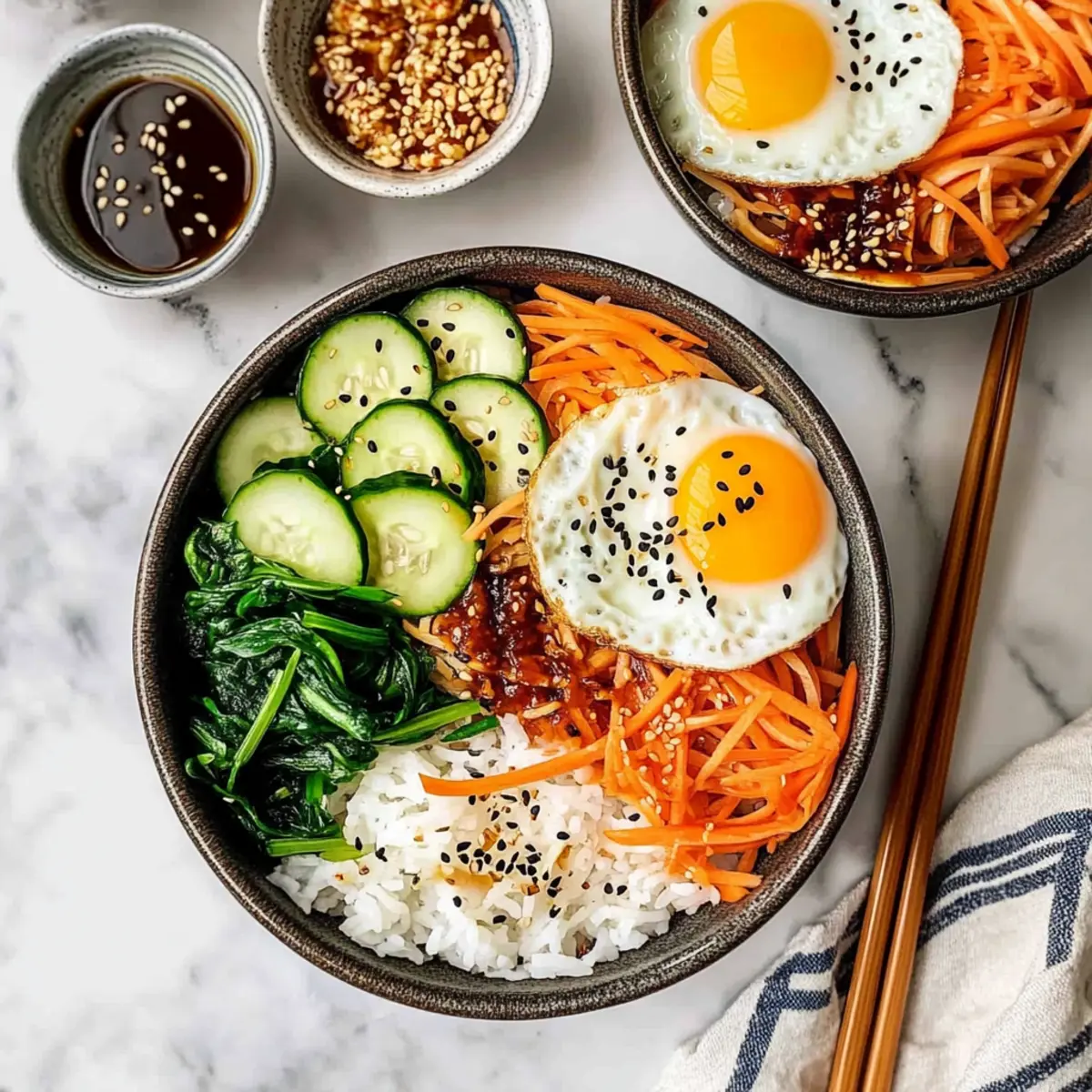
Why is Bibimbap So Irresistible?
Colorful Creations: Each bowl of bibimbap is a feast for the eyes, featuring a rainbow of fresh vegetables that can be tailored to your taste.
Flavor Fusion: With the spicy-sweet gochujang sauce, every bite delivers a delightful punch, combining saltiness and umami in the most satisfying way.
Quick & Easy: Perfect for busy weeknights, this dish comes together in no time—just 30 minutes! Plus, prep your veggies and sauce ahead of time for an even faster meal.
Nutrient-Packed: This vegetarian version is loaded with vitamins, ensuring a nourishing option that doesn’t sacrifice taste.
Versatile Delight: Feel free to mix and match vegetables based on what’s in season or what you have on hand, making it the perfect adaptable dish for everyone! Check out more make-ahead tips.
Bibimbap Ingredients
For the Rice Base
• Short-grain white rice – This is the foundation of your bibimbap; use brown rice for added nutrients.
For the Vegetables
• English cucumber – It adds a delightful crunch; radishes can be used as a substitute if needed.
• Rice vinegar – This balances flavors with a hint of acidity; feel free to swap with apple cider vinegar.
• Mung bean sprouts – Their refreshing crunch is key; alfalfa sprouts can work as a substitute.
• Shredded carrots – They bring sweetness and a pop of color; zucchini can be used for a change.
• Baby spinach – Packed with nutrients; other greens like kale or Swiss chard can also work.
• Sautéed shiitake mushrooms (optional) – They enhance umami flavor; feel free to use any mushrooms you prefer.
• Tamari or soy sauce – Provides essential umami; opt for gluten-free soy sauce for a gluten-free bibimbap version.
For the Protein
• Eggs (or baked tofu) – This adds a protein boost; skip the eggs for a vegan option or substitute with marinated tempeh.
For the Sauce
• Gochujang sauce – This is crucial for that spicy kick; use homemade or store-bought depending on your preference.
For Garnishing
• Sesame seeds – They add a pleasing crunch and nutty flavor; don’t skip this step!
• Chopped scallions (optional) – They bring added freshness and a mild onion note; look out for these on top!
• Kimchi (optional, for serving) – Traditionally served with bibimbap, it’s great for enhancing flavors.
With this bibimbap, you’ll experience a delightful medley of ingredients, textures, and flavors that will ignite your taste buds and keep you coming back for seconds!
Step‑by‑Step Instructions for Vegetarian Bibimbap with Spicy Gochujang Sauce
Step 1: Cook the Rice
Begin by rinsing 1 cup of short-grain white rice under cold water until the water runs clear. Cook the rice according to your preferred method—stove or Instant Pot—as this forms the base of your bibimbap. Once cooked, let it steam for an additional 10 minutes, covered, to achieve that perfect sticky texture.
Step 2: Prepare the Cucumber
While the rice is cooking, slice an English cucumber into thin rounds and toss them with 2 tablespoons of rice vinegar, 1 tablespoon of toasted sesame oil, and a pinch of salt in a mixing bowl. Allow the cucumber to marinate for about 10 minutes, which will add a delicious tang and enhance its refreshing crunch.
Step 3: Blanch the Mung Bean Sprouts
In a small pot, bring water to a boil over medium heat. Add 1 cup of mung bean sprouts and blanch them for exactly 1 minute, then drain them immediately to stop the cooking process. This quick blanching will keep them crisp and vibrant in your vegetarian bibimbap.
Step 4: Sauté the Carrots
Heat a skillet over medium heat and add 1 tablespoon of toasted sesame oil. Sauté 1 cup of shredded carrots for about 2 minutes, just until softened. It’s important to keep them slightly crunchy for texture contrast in your bibimbap, then remove from the skillet and set aside.
Step 5: Wilt the Spinach
In the same skillet, add a handful of baby spinach along with 1 tablespoon of tamari or soy sauce. Sauté for about 1-2 minutes, or until just wilted and vibrant. Once cooked, squeeze out any excess moisture to keep your bibimbap from becoming soggy.
Step 6: Assemble the Bowls
To assemble your vegetarian bibimbap, spoon a generous portion of the sticky rice into each bowl as the base. Neatly arrange the marinated cucumber, blanched mung bean sprouts, sautéed carrots, and wilted spinach around the rice, creating a colorful presentation.
Step 7: Add the Protein
Top your assembled bowls with either a fried egg (for a non-vegan option) or crispy baked tofu for a delicious protein boost. If you’re using an egg, fry it sunny-side up until the whites are set but the yolk remains runny, about 3-4 minutes.
Step 8: Finish and Serve
Finally, generously sprinkle sesame seeds over the top of each bowl and drizzle each serving with spicy gochujang sauce to elevate the flavors of your bibimbap. Serve with optional kimchi and chopped scallions on the side for an authentic touch!
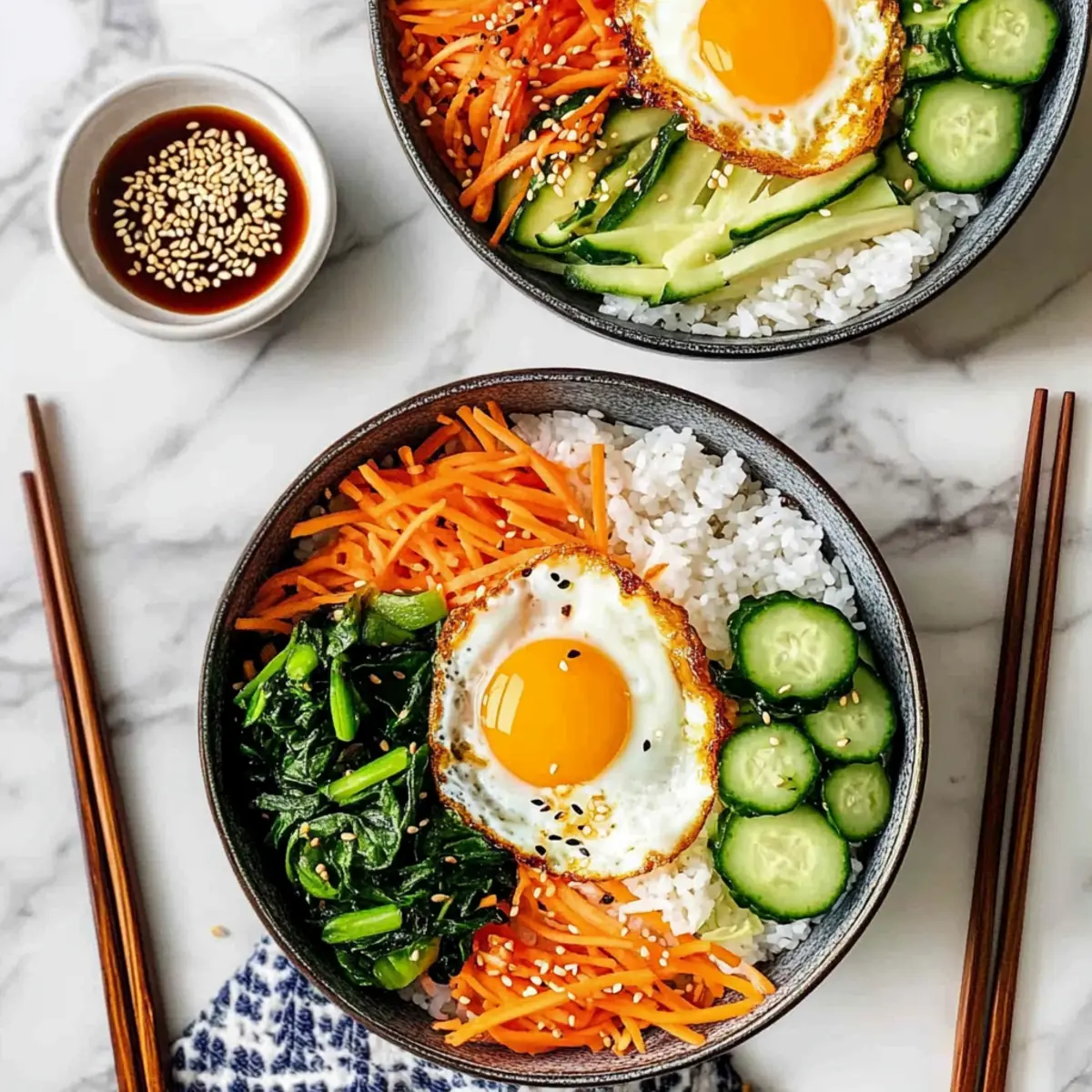
Bibimbap Variations & Substitutions
Feel free to explore the wonderful world of bibimbap by customizing it to suit your taste buds and dietary needs!
-
Dairy-Free: Use plant-based toppings like avocado or cashew cream instead of traditional ingredients that might contain dairy.
-
Gluten-Free: Opt for gluten-free soy sauce or tamari to ensure a gluten-free version. This swap maintains that essential umami flavor without compromising on taste.
-
Protein Boost: Replace the egg with grilled chicken or marinated tempeh for a protein-packed alternative that still satisfies.
Give a try to marinated tempeh for a sublime savory twist. It adds a hearty texture and a delightful burst of flavor, perfect for a filling meal!
-
Veggie Variety: Go seasonal with your veggies—try adding asparagus in spring or roasted sweet potatoes in winter to keep your bibimbap fresh.
-
Flavor Punch: Toss in a sprinkle of furikake or gochugaru for extra flavor and a hint of spice.
-
Rice Alternatives: Swap the short-grain rice for quinoa or cauliflower rice for a healthier twist that still holds up beautifully in your bowl.
-
Spice Levels: Adjust the heat by using mild gochujang or adding fresh chilies according to your spice preference.
Ready to dive deeper into the world of bibimbap? Check out my guide on expert tips to make it even more delightful!
Make Ahead Options
Busy home cooks will love how easy it is to prep this Vegetarian Bibimbap ahead of time! You can make the gochujang sauce and all the vegetables up to 3 days in advance. To do this, simply prepare the cucumber, mung bean sprouts, sautéed carrots, and wilted spinach according to the recipe, allowing them to cool completely before storing in airtight containers in the refrigerator. Keep the rice cooked and stored separately for best texture; it can also be prepped up to 3 days ahead. When you’re ready to serve, reheat the rice, assemble the bowls, and top them with a fresh egg or baked tofu. This way, you’ll enjoy a delicious and nutritious meal with minimal effort!
Expert Tips for Making Bibimbap
Perfect Rice Texture: Use short-grain rice for that signature sticky texture, making sure to rinse it well before cooking to remove excess starch.
Prep Ahead: Save time on busy nights by preparing gochujang sauce and vegetables up to 3 days in advance for a quicker bibimbap assembly.
Vibrant Vegetables: Avoid overcooking your veggies; they should remain colorful and slightly crisp to provide a pleasing contrast in texture and maintain their nutrients.
Egg Tips: If using a fried egg, aim for a runny yolk to enhance the richness of the dish; cook it sunny-side up for the perfect result.
Sauce Dynamo: Customize the level of spice in your gochujang sauce by adjusting the amount; start with less and add to taste for a personalized kick that complements your bibimbap.
What to Serve with Vegetarian Bibimbap with Spicy Gochujang Sauce
Elevate your homemade bibimbap experience with delightful sides and accompaniments that balance its vibrant flavors and textures.
-
Kimchi: This traditional fermented side adds a tangy crunch that perfectly complements the rich flavors of bibimbap.
-
Miso Soup: A warm bowl of miso soup serves as a soothing starter, enhancing the meal with an umami flavor that pairs beautifully with the dish.
-
Pickled Vegetables: Bright, tangy pickled vegetables can bring an added contrast of acidity and freshness, enhancing each bite.
-
Crispy Tempura: Light and crispy tempura vegetables provide a delightful crunch, adding another layer of texture to your meal.
-
Sesame Spinach Salad: A simple salad of sautéed spinach seasoned with sesame oil and garlic complements the dish while keeping the meal light and refreshing.
-
Sweet Potato Fries: The sweetness of baked sweet potato fries contrasts nicely with the savory elements of bibimbap, making each bite a treat.
-
Light Asian Slaw: A crunchy slaw with a sesame dressing adds freshness and acts as a great palate cleanser between bites.
-
Green Tea: A cup of warm green tea brings a calming finish, with its subtle earthiness perfectly offsetting the spiciness of the gochujang.
-
Mochi Ice Cream: For a sweet finish, a mochi ice cream offers a chewy, delightful end to the meal, contrasting its warm and spicy introduction.
-
Chilled Soba Noodles: Light and refreshing, these noodles can be drizzled with soy sauce for an easy side that complements the main dish’s rich flavors.
How to Store and Freeze Bibimbap
Fridge: Store any leftovers in an airtight container in the refrigerator for up to 3 days. Reheat gently in the microwave or on the stove, adding a little water to prevent drying.
Freezer: If you want to freeze your bibimbap components, the rice and sautéed vegetables can be frozen separately for up to 2 months. Defrost overnight in the fridge before reheating.
Gochujang Sauce: This sauce can be made ahead and stored in the fridge for up to 1 week or frozen in small portions for up to 3 months, making it easy to add to future meals.
Reheating: When reheating, keep the rice and veggies covered to retain moisture, and heat until warm throughout, ensuring a delicious bibimbap experience every time.
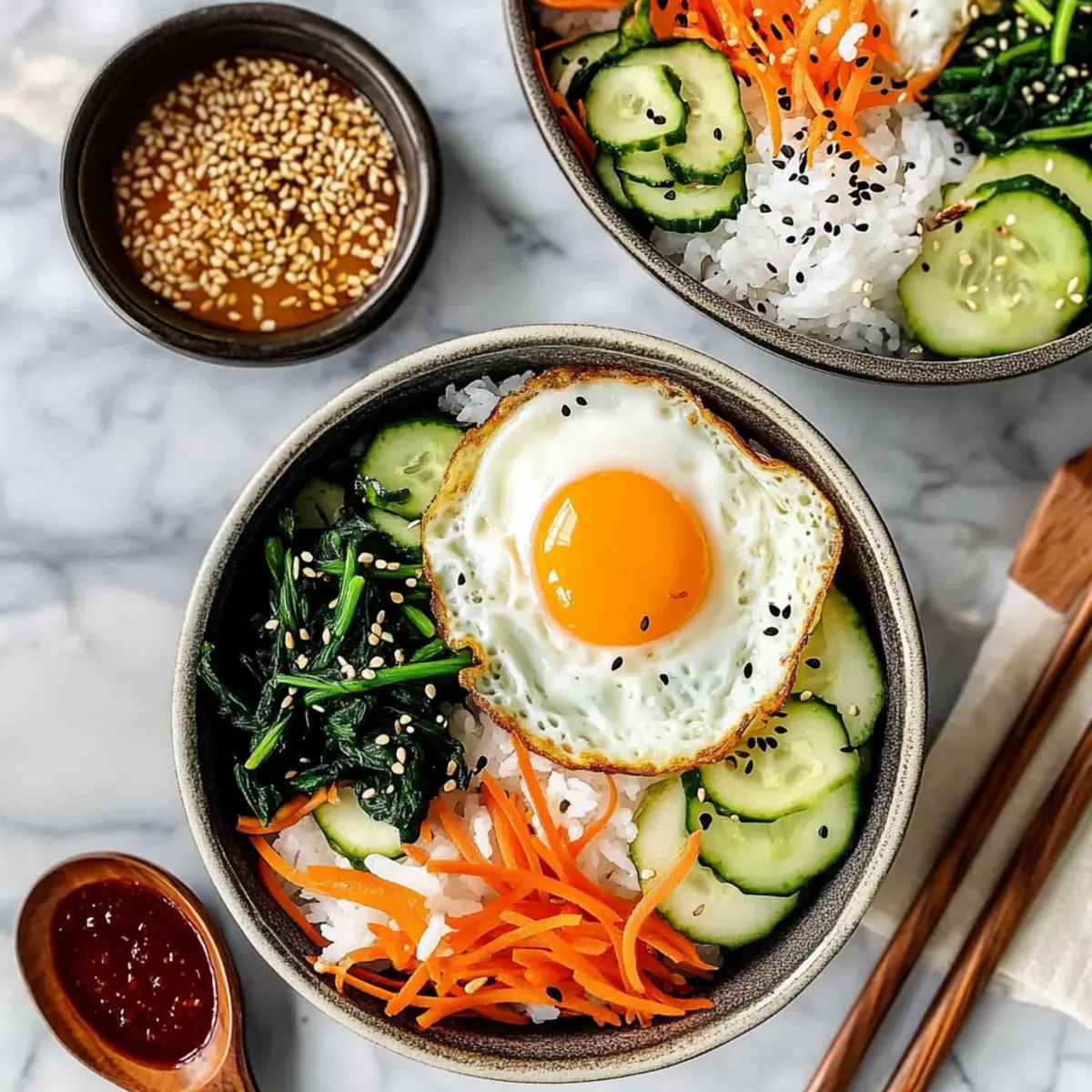
Vegetarian Bibimbap Recipe FAQs
What type of rice is best for bibimbap?
Short-grain white rice is ideal for bibimbap due to its sticky texture, which helps hold the dish together. If you’re looking for a healthier option, brown rice can be used, but take note that the cooking times may vary; aim for about 45 minutes for brown rice as opposed to 20 minutes for white rice.
How can I store leftover bibimbap?
Store any leftover bibimbap in an airtight container in the refrigerator for up to 3 days. When you’re ready to enjoy it again, reheat gently in the microwave or on the stove, adding a splash of water to help retain moisture and avoid drying out the ingredients.
Can I freeze components of bibimbap?
Absolutely! You can freeze the rice and sautéed vegetables separately for up to 2 months. To recover their delightful texture, defrost them overnight in the refrigerator before reheating. Keep in mind that gochujang sauce can also be frozen in small portions for up to 3 months for easy meal prep.
What if my vegetables turn mushy while cooking?
To prevent overcooking your vegetables, sauté them just until they’re vibrant and slightly tender—usually around 1 to 3 minutes per batch depending on the vegetable. If you find that they have become mushy, next time, reduce cooking times and keep an eye on them for that perfect crunchy finish.
What dietary considerations should I be aware of?
If you’re preparing bibimbap for someone with allergies, consider substitutes for key ingredients. For instance, use gluten-free tamari in place of regular soy sauce to cater to gluten sensitivities. If making it vegan, simply swap eggs for baked tofu or marinated tempeh, ensuring everyone can enjoy this delicious dish!
How do I make the gochujang sauce ahead of time?
Making gochujang sauce ahead of time is a breeze! Whisk together the gochujang paste with desired sweeteners, vinegar, and any additional spices or ingredients. Store the sauce in an airtight container in the refrigerator for up to 1 week. For longer preservation, freeze in smaller portions for up to 3 months; this will keep your bibimbap experience flavorful and convenient!
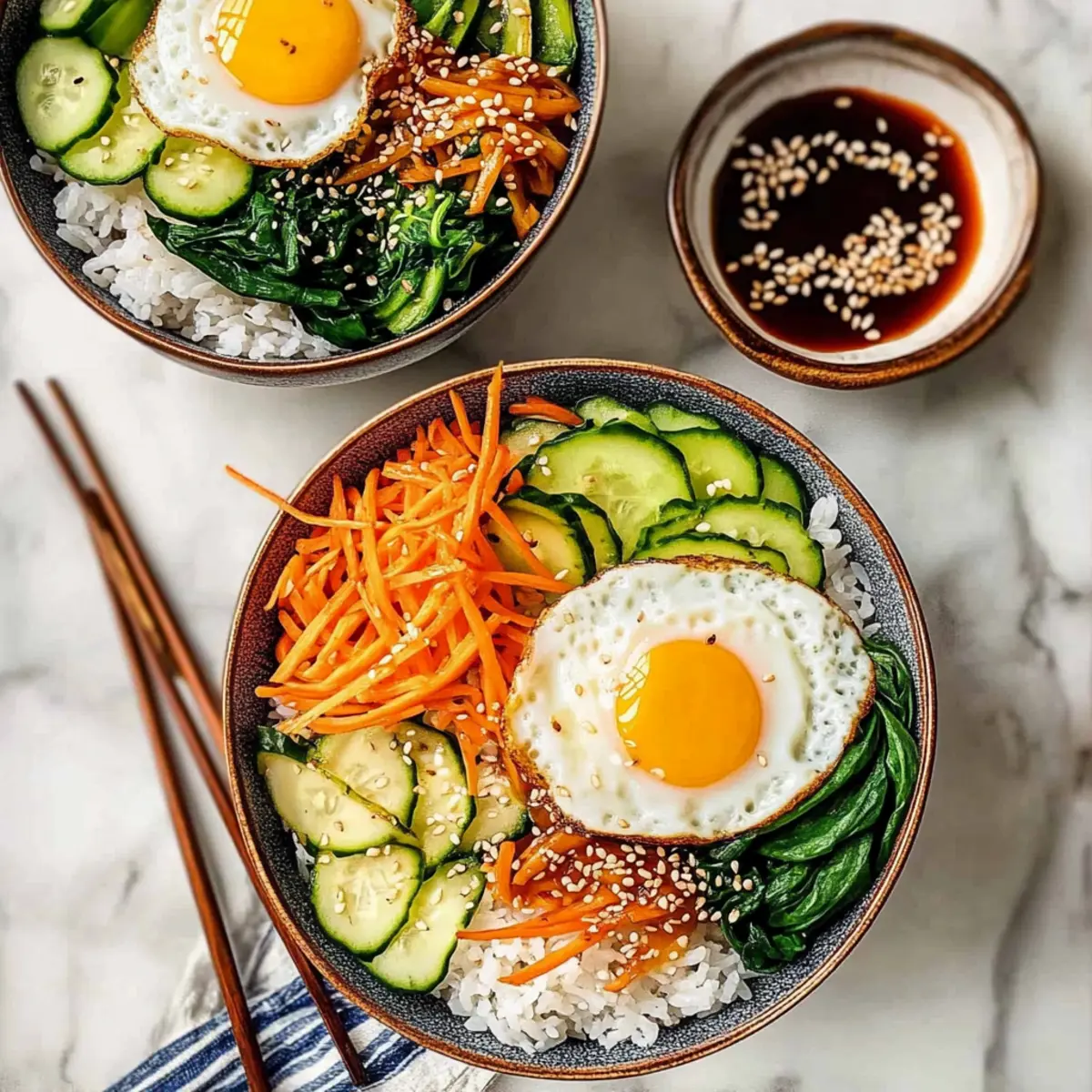
Vibrant Bibimbap: A Flavorful Vegetarian Delight
Ingredients
Equipment
Method
- Rinse 1 cup of short-grain white rice under cold water until clear, then cook according to method. Let it steam for 10 minutes covered.
- Slice an English cucumber and toss with 2 tablespoons of rice vinegar, 1 tablespoon of sesame oil, and salt. Marinate for 10 minutes.
- Bring water to boil and blanch 1 cup of mung bean sprouts for 1 minute, then drain.
- Sauté 1 cup of shredded carrots in 1 tablespoon sesame oil for 2 minutes until slightly crunchy, then set aside.
- Sauté a handful of baby spinach in 1 tablespoon of tamari/soy sauce for 1-2 minutes until wilted, then squeeze out moisture.
- Assemble by spooning sticky rice into bowls, arranging marinated cucumber, blanched sprouts, sautéed carrots, and spinach around the rice.
- Top with a fried egg or crispy baked tofu.
- Sprinkle sesame seeds and drizzle with gochujang sauce. Serve with kimchi and chopped scallions.
Leave a Reply