
As I stirred the bubbling pot on my stovetop, the fragrant aroma of garlic, kimchi, and spices filled my kitchen, instantly transporting me to the vibrant streets of Seoul. My heart raced with excitement for this one-pot delight: Budae Jjigae, or Korean Army Stew. This dish beautifully merges savory Korean flavors with comforting American staples like Spam and ramen noodles, making it a fantastic comfort food choice that warms both the body and soul. Not only is it a feast for the senses, but the recipe is incredibly straightforward, ensuring that even on the busiest weeknights, a hearty meal is just 30 minutes away. With its rich flavors and spice levels that you can tailor to your taste, it’s sure to be a crowd-pleaser for family and friends. Are you ready to dive into a bowl of comfort?

Why is Budae Jjigae a Must-Try?
Comforting, Savory Delight: This one-pot stew combines rich Korean flavors with familiar ingredients, offering an unforgettable dining experience.
Quick and Easy: With just 30 minutes of prep and cooking, you’ll have a hearty meal ready in no time—perfect for busy weeknights!
Customizable Spiciness: Adjust the heat to your liking by tweaking the gochujang and gochugaru amounts, ensuring everyone at the table is satisfied.
Hearty and Filling: Packed with protein from Spam and sausages, plus the fiber of kimchi and veggies, this dish is both satisfying and nutritious.
Perfect for Sharing: Gather friends and family around this bubbling stew, and enjoy the communal spirit of this beloved Korean dish. For more quick weeknight wonders, check out our easy one-pot meals to keep dinnertime stress-free!
Budae Jjigae Ingredients
• Dive into this comforting stew with these essential ingredients!
For the Base
• Garlic – Adds aroma and flavor; fresh garlic is preferred but can be substituted with garlic powder.
• Onion – Contributes sweetness; shallots can also be used as a substitute.
• Spam – Provides richness and protein; can be replaced with tofu for a vegetarian option.
• Sausage – Adds a savory element; any cooked sausage variety works great here.
• Kimchi – Brings tanginess and depth; ensure it is well-fermented for best flavor.
For the Flavor
• Gochugaru (Korean red pepper flakes) – Delivers heat and color; adjust for your desired spice level.
• Gochujang (Korean chili paste) – Enhances umami and adds depth; substitute with sriracha for milder taste.
• Soy Sauce – Provides saltiness and umami; opt for low-sodium soy sauce for a healthier choice.
• Mirin – Adds a touch of sweetness; sake or a bit of sugar can substitute if necessary.
• Sugar – Balances flavors; can be reduced or omitted to taste.
• Black Pepper – Works for seasoning; freshly cracked pepper enhances overall flavor.
For the Stew
• Tofu – Adds creaminess and extra protein; firm tofu works best but can be skipped if desired.
• Enoki Mushrooms – Offers a delicate texture; any preferred mushroom variety can easily be swapped.
• Rice Cakes – Provides a chewy texture; these are optional and can be replaced with extra noodles.
• Ramen Noodles – Serves as a filling component; substitute with any instant noodles or omit for a lower-carb option.
• Cheese – Adds a decadent creaminess; mozzarella or cheddar works great for melting.
For Garnish
• Green Onions – Brightens the dish with freshness; chives can be used as a substitute.
Indulge in this delightful Budae Jjigae (One-Pot Korean Army Stew) and enjoy the explosion of flavors as you cook!
Step‑by‑Step Instructions for Budae Jjigae (One-Pot Korean Army Stew)
Step 1: Prepare the Sauce
In a mixing bowl, combine minced garlic, gochugaru, gochujang, soy sauce, mirin, sugar, and freshly cracked black pepper. Stir until you have a smooth, well-blended sauce, and set it aside. This sauce will infuse the Budae Jjigae with a rich and savory depth, so take a moment to ensure all ingredients are fully mixed.
Step 2: Layer the Ingredients
In a shallow, large pot or Dutch oven, layer the prepared spam, sliced sausage, diced tofu, rice cakes, chopped onion, enoki mushrooms, and kimchi evenly across the bottom. Aim for a colorful arrangement, as this will create visual appeal. This layering technique allows the flavors to meld beautifully throughout the cooking process.
Step 3: Add the Sauce and Broth
Carefully pour the prepared sauce over the layered ingredients, ensuring everything is coated evenly. Next, add the chicken broth until the ingredients are just submerged. The liquid will help the Budae Jjigae simmer and develop its unique flavors, so pour generously while avoiding any splashes.
Step 4: Bring to a Boil
Cover the pot and place it on the stovetop over medium-high heat. Allow the mixture to come to a vigorous boil, approximately 5–7 minutes. Keep an eye on it to prevent overflow, as the bubbling stew fills your kitchen with mouthwatering aromas that signal the exciting flavor journey ahead.
Step 5: Add Noodles and Cheese
Once boiling, remove the lid and add your ramen noodles on top, followed by a sprinkle of cheese. The cheese will melt deliciously into the stew, enhancing its creaminess. Cover the pot again and let it cook for an additional 4–5 minutes, until the noodles are tender but still have a slight chew.
Step 6: Final Garnish and Serve
After the noodles have cooked, remove the pot from heat. Garnish the Budae Jjigae with freshly chopped green onions for a burst of freshness and color. Serve hot, ideally over a bed of steamed rice, to soak up all the flavorful broth and enjoy this comforting One-Pot Korean Army Stew with friends and family.
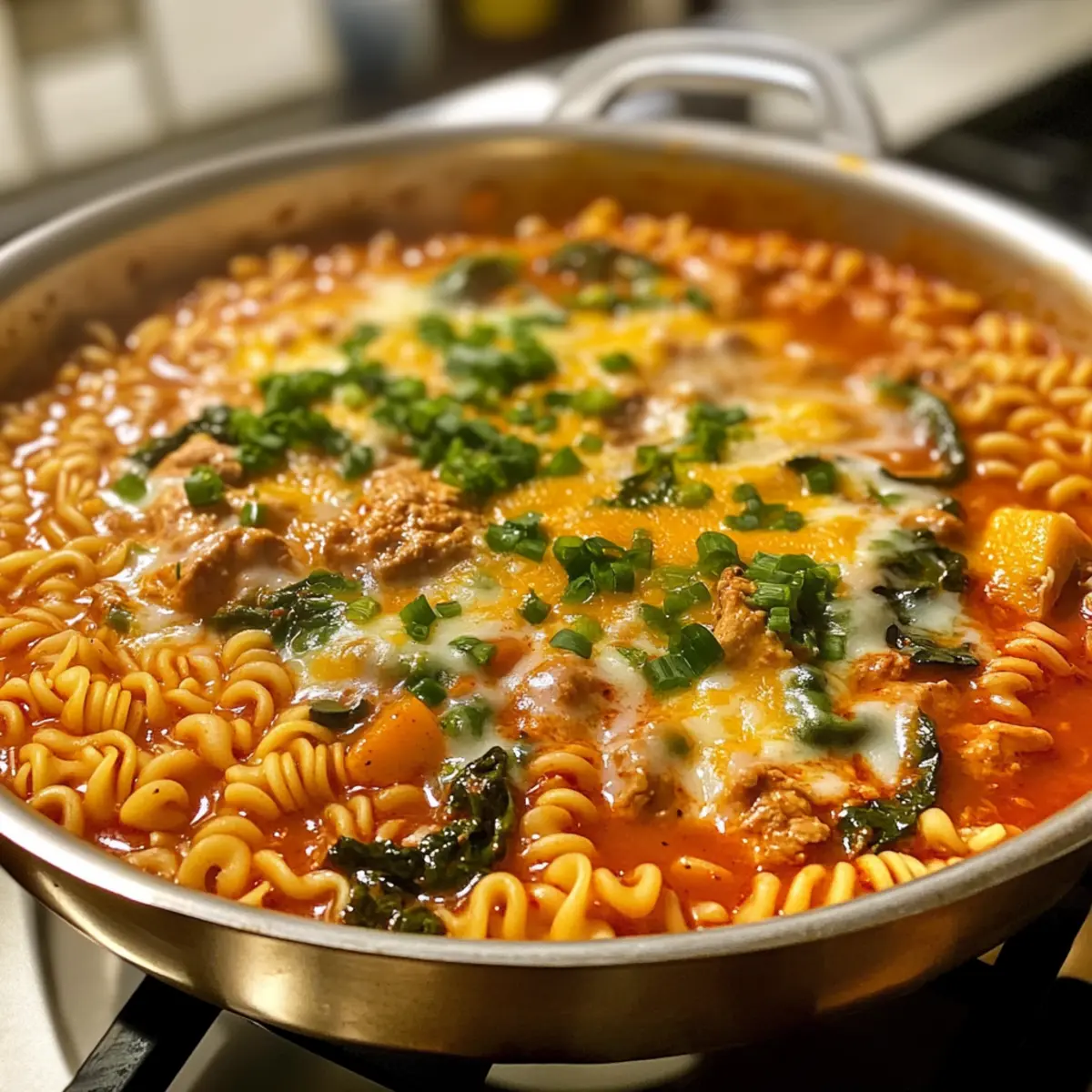
How to Store and Freeze Budae Jjigae
Fridge: Store leftover Budae Jjigae in an airtight container for up to 3 days. Ensure it cools completely before sealing to maintain freshness.
Freezer: Budae Jjigae can be frozen for up to 2 months. Use a freezer-safe container or heavy-duty freezer bag, leaving some space for expansion.
Reheating: To reheat, thaw overnight in the fridge. Warm gently on the stovetop, adding a splash of broth to restore its delicious flavor and prevent sticking.
Check for Quality: Always check for any off smells or changes in texture when reheating, ensuring your meal retains its comforting essence.
Make Ahead Options
These Budae Jjigae (One-Pot Korean Army Stew) are perfect for busy weeknights, allowing you to enjoy a hearty meal with minimal effort! You can prepare the sauce (step 1) and layer the ingredients (step 2) up to 24 hours in advance; simply refrigerate the prepped pot tightly covered. This helps the flavors meld beautifully while ensuring freshness. When you’re ready to cook, add the sauce and broth as instructed (step 3), bring it to a boil (step 4), and then finish by adding the noodles and cheese (steps 5 and 6). With these make-ahead options, you’ll have restaurant-quality results that are just as delicious and cozy when you’re ready to serve!
Expert Tips for Budae Jjigae
• Simmer for Flavor: Letting the Budae Jjigae simmer longer deepens the flavors, creating a more robust and delicious stew.
• Protein Options: Feel free to substitute Spam with other proteins like chicken, beef, or tofu to suit your dietary preferences while still enjoying this comforting dish.
• Noodle Care: Watch your ramen noodles closely; they should be slightly chewy and not overcooked. Adding them too early can lead to a mushy texture.
• Liquid Levels: Make sure to have enough broth to prevent sticking. If the stew looks dry during cooking, add more broth to keep it perfect.
• Spice It Up: Adjust the gochujang and gochugaru quantities to customize the heat level, ensuring everyone at the table enjoys the Budae Jjigae to their liking.
• Vegetarian Update: For a vegetarian twist, increase the mushrooms and add hearty vegetables like zucchini or bell peppers, making this dish inclusive for everyone!
What to Serve with One-Pot Budae Jjigae?
When enjoying a delightful bowl of hearty stew, the right accompaniments can elevate your meal to new heights.
- Steamed Rice: A classic pairing, the fluffy rice absorbs the rich, savory broth, making each bite recognizable and comforting.
- Kimchi: Adding a side of well-fermented kimchi brings a delightful crunch and tanginess, enhancing the stew’s flavors.
- Pickled Vegetables: Serve with a variety of pickled veggies for a refreshing contrast to the richness of the Budae Jjigae.
- Garlic Bread: Crunchy, buttery garlic bread makes for a wonderful dipper, soaking up the tasty broth and adding texture.
- Spring Rolls: Crispy spring rolls provide a delightful crunch, complementing the softness of the stew. They are perfect for sharing!
- Korean Pancakes: Thick, savory pancakes enhance your meal with their chewy texture and can be enjoyed with dipping sauce.
- Soda or Sparkling Water: Balance the spice of the stew with a refreshing beverage; the fizz and sweetness provide a festive touch.
- Homemade Dessert: End the meal with a light dessert like fruit salad or a scoop of sorbet, washing down the savory flavors of the stew.
- Soju or Makgeolli: For those looking to enjoy a drink, these traditional Korean beverages elevate your dining experience and pair beautifully with spicy dishes.
Budae Jjigae Variations & Substitutions
Feel free to unleash your creativity and customize this beloved Korean stew to suit your tastes!
- Vegetarian Delight: Omit Spam and sausage, substituting with an array of seasonal vegetables or extra tofu for a delicious meat-free option. You’ll be surprised at how satisfying it can be!
- Different Noodle Choices: Swap out ramen noodles for udon or even soba. Each variety adds a unique twist while maintaining that hearty feel we love!
- Heat Levels: Increase the spice by adding more gochujang or, if you prefer milder flavors, reduce the gochugaru. Balance is key, so tailor it to your palate.
- Umami Boost: Add a splash of fish sauce or a sprinkle of dried seafood, such as bonito flakes, for an extra layer of savory goodness that will elevate your Budae Jjigae.
- Creamy Twist: Top off with a dollop of sour cream or a drizzle of coconut milk for rich creaminess that complements the spicy broth beautifully.
- No Rice Cakes? If you can’t find rice cakes, feel free to substitute with extra noodles; they will be equally delightful and add that satisfying chewiness.
- Cheesy Variations: Opt for cheddar, pepper jack, or even a blend of cheeses for a different flavor dynamic that will make you fall in love with this dish all over again.
- Herb Infusion: Toss in some fresh herbs like cilantro or parsley just before serving for a bright, fresh contrast to the rich stew.
For those on the lookout for more delightful variations, you can explore our collection of flavorful one-pot meals that cater to every taste!
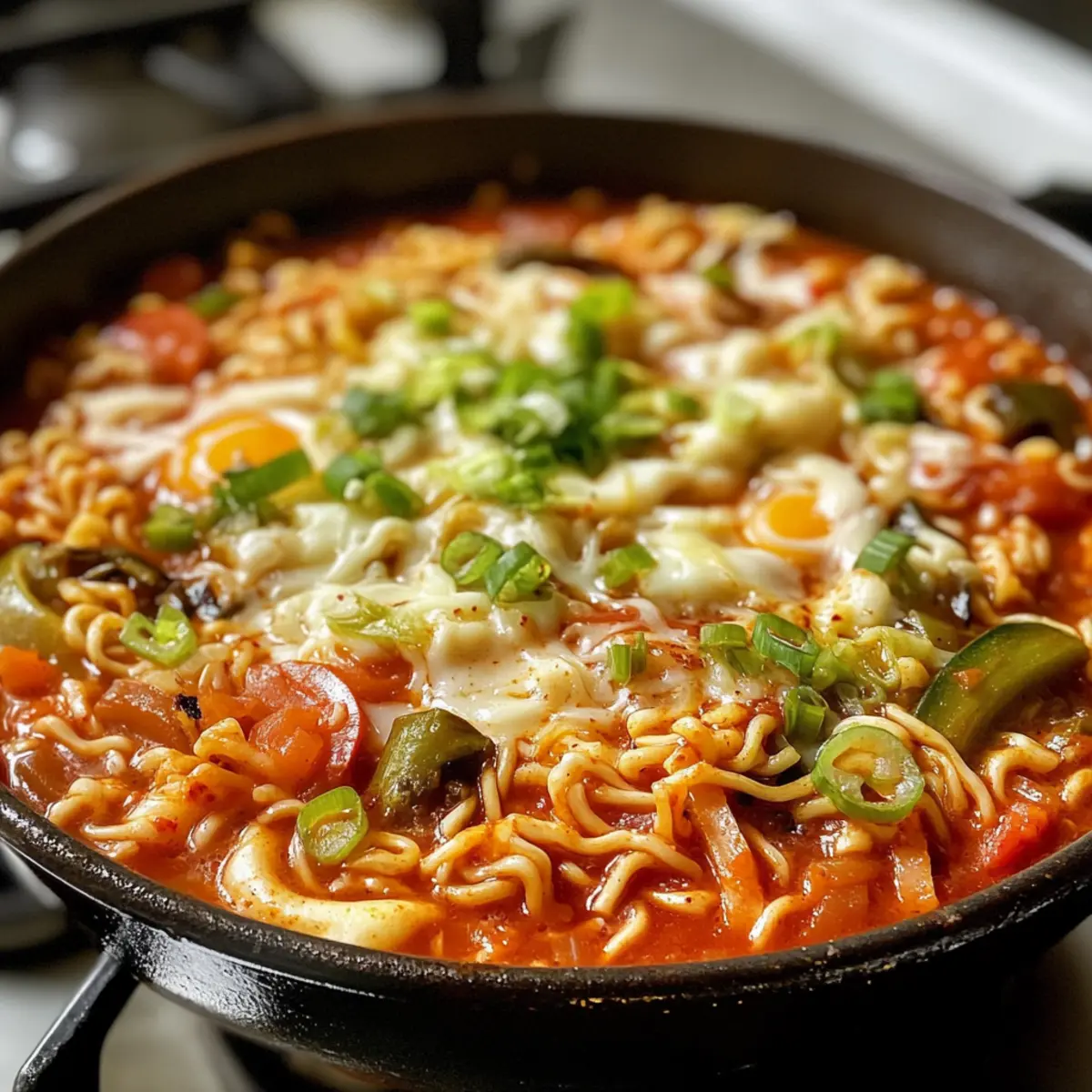
Budae Jjigae (One-Pot Korean Army Stew) Recipe FAQs
How do I choose the right kimchi?
Choosing a well-fermented kimchi is key to getting that tangy depth you want in Budae Jjigae. Look for kimchi that’s vibrant in color and has a strong aroma. If it looks wilted or has dark spots all over, it’s best to skip it. If you can’t find good kimchi, try making your own or using a milder variety if you’re sensitive to spice.
How should I store leftovers?
Leftover Budae Jjigae can be stored in an airtight container in the refrigerator for up to 3 days. Make sure to let it cool completely before sealing it to maintain freshness. When you’re ready to enjoy it again, simply reheat it gently on the stove, adding a splash of broth to restore moisture.
Can I freeze Budae Jjigae?
Absolutely! You can freeze Budae Jjigae for up to 2 months. To do this, use a freezer-safe container or a heavy-duty freezer bag, making sure to leave a little space for expansion as it freezes. When you’re ready to use it, thaw it overnight in the fridge, and then warm it on the stovetop with a touch of broth to revive its comforting flavors.
What should I do if my noodles are mushy?
If you’ve accidentally overcooked your noodles, don’t despair! You can add more liquid, like broth or water, to help loosen the mixture. If you find the stew is too thick, simply add a little more broth while gently stirring. Next time, keep a close eye on the noodles during cooking; they should be slightly chewy when done.
Is there a vegetarian alternative to Spam?
Yes! For a vegetarian-friendly Budae Jjigae, you can substitute Spam with firm tofu or even a variety of hearty vegetables like zucchini and bell peppers. The key is to add depth through your choice of seasonings and enhance flavor with extra mushrooms and vegetable broth to make it equally satisfying.
What spices can I use if I can’t find gochujang or gochugaru?
If you can’t find gochujang or gochugaru, you can use a mix of sriracha and chili powder as a substitute. Start with smaller amounts and adjust to your taste, as these substitutes may not replicate the unique flavor profile of these classic Korean ingredients, but they will still add heat and vibrancy to your stew!
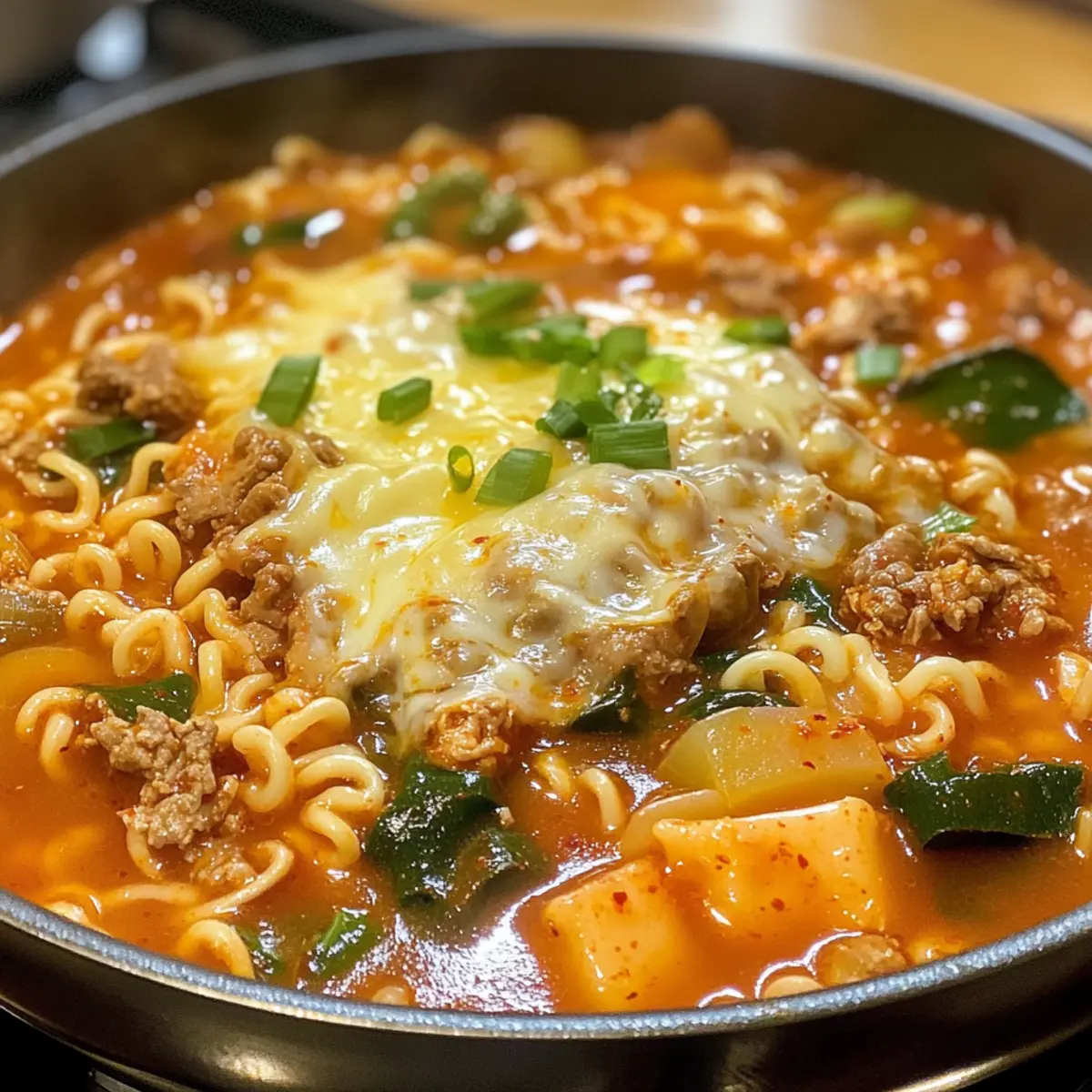
Savor the Flavor: Budae Jjigae One-Pot Korean Army Stew
Ingredients
Equipment
Method
- Prepare the sauce by combining minced garlic, gochugaru, gochujang, soy sauce, mirin, sugar, and black pepper in a mixing bowl. Stir until smooth.
- Layer the prepared Spam, sausage, tofu, rice cakes, onion, enoki mushrooms, and kimchi in a pot.
- Pour the prepared sauce over the layered ingredients and add chicken broth until just submerged.
- Cover and bring to a boil over medium-high heat, about 5–7 minutes.
- Add ramen noodles and cheese, then cover and cook for an additional 4–5 minutes.
- Garnish with chopped green onions before serving hot.
Leave a Reply