
The aroma of simmering soy sauce and the anticipation of a beautifully marinated egg can elevate any meal. Ramen eggs, or ajitama, bring a touch of authentic Japanese flair right to your kitchen. These easy-to-make soy marinated eggs boast a creamy, jammy yolk that’s practically bursting with umami magic. Not only are they a fantastic upgrade to your ramen bowls, but they also make delightful snacks that are sure to impress family and friends. With just a few simple steps, you’ll transform ordinary eggs into a culinary gem that can be enjoyed in countless ways. Ready to dive into the world of homemade ramen eggs and discover a new favorite in your cooking repertoire?

Why Make Ramen Eggs at Home?
Flavor Explosion: Ramen eggs are not just toppings; they are flavor bombs that enhance your dishes with rich umami.
Easy Prep: With a few simple steps, you’ll impress your loved ones without spending hours in the kitchen.
Versatile Use: These eggs are perfect for ramen, salads, or even as a snack! You can easily pair them with rice dishes or enjoy alone with rice crackers.
Meal Prepping Friendly: Marinate ahead of time and store your eggs for quick meal additions throughout the week—up to 3 days in the fridge. If you love convenient meal prep ideas, try pairing them with our Almond Flour Eggs for a nutritious boost!
Culinary Adventure: Dive into Japanese cuisine and enjoy a unique twist on simple ingredients. These eggs will have everyone asking for your secret!
Impressive Presentation: The stunning soft-boiled eggs create a visual delight that elevates any dish you serve—perfect for sharing!
Ramen Eggs Ingredients
Discover the perfect way to create these umami-filled culinary gems at home!
For the Eggs
- Large Eggs – Essential for achieving creamy, jammy yolks; feel free to use medium eggs if needed.
- Vinegar – Optional for boiling eggs, improving the peeling process; use 2 tablespoons per 5-6 cups of water.
For the Marinade
- Soy Sauce – The star of the show, bringing a deep umami flavor that’s key to making delightful ramen eggs.
- Water – Helps to dilute soy sauce, ensuring a balanced marinade.
- Mirin – Adds a sweet touch; if unavailable, you can substitute with 1 tablespoon of sake plus 1 teaspoon of sugar.
- Granulated Sugar – Enhances the overall sweetness of the marinade for that perfect flavor profile.
Step‑by‑Step Instructions for Ramen Eggs
Step 1: Boil the Eggs
Begin by bringing a pot of water to a rapid boil over high heat. If desired, add 2 tablespoons of vinegar to improve the egg peeling process. Gently place large eggs into the boiling water and cook for exactly 6 minutes to achieve that perfect jammy yolk. Once done, remove them promptly to prevent overcooking.
Step 2: Cool the Eggs
Immediately transfer the cooked eggs to an ice bath using a slotted spoon. This will stop the cooking process and make peeling easier. Let them soak for at least 15 minutes, allowing them to chill completely. Once cooled, gently tap each egg on a hard surface to crack the shell and facilitate easier peeling.
Step 3: Prepare the Marinade
While the eggs are chilling, combine 1/2 cup soy sauce, 1/4 cup water, 3 tablespoons of mirin, and 1 tablespoon of granulated sugar in a bowl. Whisk the mixture until the sugar dissolves completely. This flavorful marinade is what makes these Ramen Eggs so delightful, infusing them with rich umami and sweetness.
Step 4: Marinate the Eggs
Once the eggs are peeled, carefully place them in the prepared marinade. Ensure they are fully submerged to absorb all that delicious flavor. If necessary, cover the bowl with cling film to keep the eggs submerged, or you can gently rotate the eggs occasionally for even marination.
Step 5: Final Steps
Allow the Ramen Eggs to marinate in the refrigerator for at least 8 hours, but preferably overnight for optimal flavor. After marinating, the eggs are ready to slice in half and serve over steaming bowls of ramen, or enjoy them as a protein-packed snack. Remember to store any leftover eggs separately from the marinade for continued deliciousness.
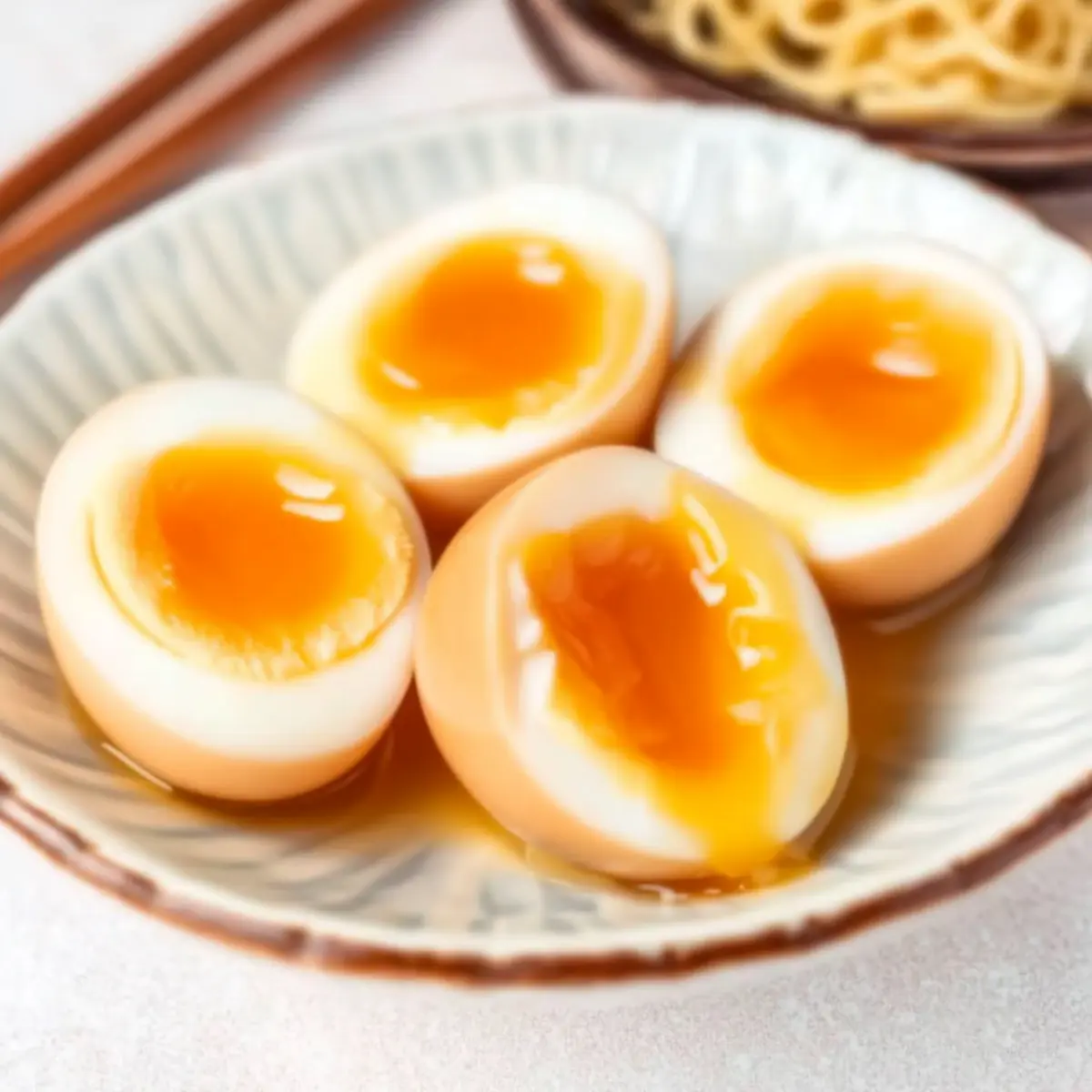
What to Serve with Umami-Packed Ramen Eggs (Ajitama)
Whether you’re creating a cozy family dinner or impressing guests at a gathering, ramen eggs can elevate the atmosphere and flavor of your meal.
- Steaming Ramen Noodles: The classic pairing, with their rich broth and chewy texture, perfectly complement the creamy egg yolks for a delightful experience.
- Fresh Sliced Green Onions: A crisp, aromatic garnish that adds a burst of flavor and color, enhancing the overall dish’s visual appeal.
- Charred Bok Choy: The smoky notes and tender texture of charred bok choy balance beautifully against the soothing flavor of the marinated eggs.
- Spicy Miso Soup: Adding this to your meal offers a warm, spicy kick that matches the savory umami of the ramen eggs and enhances the dining adventure.
- Rice Bowls with Avocado: A creamy avocado dollop draped over rice complements the flavors of the eggs, delivering a nutritious and filling option.
- Sesame Spinach Salad: Bright, fresh greens tossed with sesame oil lend a refreshing crunch, which contrasts deliciously with the tender eggs.
- Chilled Sake: Pairing a glass of chilled sake can elevate the meal, as its light, delicately sweet flavors work harmoniously with the umami notes of the eggs.
- Coconut Milk Rice Pudding: For a sweet ending, this rich dessert provides a delightful contrast, with its creamy texture and sweetness providing balance to the savory meal.
How to Store and Freeze Ramen Eggs
Refrigeration: Store marinated ramen eggs in an airtight container in the fridge for up to 3 days for optimal flavor and texture.
Freezer: These eggs are best enjoyed fresh, but if needed, freeze them for up to 2 months. Wrap them individually in plastic wrap and place them in a freezer bag.
Thawing: To thaw frozen ramen eggs, place them in the refrigerator overnight. Avoid refreezing once thawed to maintain quality.
Reheating: If you prefer to warm them up, gently heat in a bowl of warm water for a few minutes before serving, ensuring you preserve the jammy texture.
Expert Tips for Ramen Eggs
-
Marination Time: Adjust the marination time from 12 to 36 hours based on how much flavor you desire. The longer they soak, the more pronounced the umami in your ramen eggs.
-
Peeling Made Easy: If peeling proves tricky, use slightly older eggs, which tend to peel more easily than fresh ones due to air pocket development inside the shell.
-
Reusing Marinade: Avoid reusing the marinade for a new batch of eggs. It can lose flavor integrity; however, you can use it in stir-fry dishes within a week for additional taste.
-
Cooking Time Check: For jammy yolks, stick with a 6-minute boil. If you prefer hard-boiled eggs, increase the cooking time to 12 minutes to achieve that firm texture.
-
Flavor Variations: Experiment with extra ingredients like garlic, ginger, or a dash of chili for a flavor twist that adds depth to your ramen eggs.
Ramen Eggs Variations & Substitutions
Looking to put your own spin on your ramen eggs? Here are some delightful ideas that will inspire your culinary creativity!
-
Flavor Boost: Add garlic and ginger to the marinade for a fragrant explosion of flavor. The aromatic qualities elevate the overall taste, making each bite an experience.
-
Dairy-Free: Substitute regular soy sauce with tamari for a gluten-free option. This maintains the umami richness while catering to dietary needs.
-
Spicy Kick: Incorporate chili flakes or a dash of sriracha in the marinade for a subtle heat. It adds an exciting dimension, perfect for spice lovers!
-
Sesame Twist: Mix in a teaspoon of sesame oil for a nutty flavor enhancement. This creates a delightful harmony of tastes that can transport your dishes to new heights.
-
Nonalcoholic Mirin: Use nonalcoholic mirin instead of regular mirin for a sweeter kick without the alcohol content. An excellent choice for those avoiding alcohol but still craving that sweet essence.
-
Vegan Option: Try using aquafaba in place of eggs as a marinated snack. Though different, it’s a fun vegan twist that’s equally satisfying!
-
Herbal Additions: Infuse the marinade with fresh herbs like cilantro or green onions for added freshness. This brightens the flavor profile and adds a pop of color.
-
Cooking Time Adjustment: For a softer yolk, reduce boiling time to 5 minutes; for a firmer yolk, extend cooking time to 8 minutes. You can find your ideal texture and enjoy a personalized touch.
Ready to dive deeper into customization? If you’re interested in exploring egg alternatives, consider our guide on Almond Flour Eggs. Enjoy experimenting and making these ramen eggs truly yours!
Make Ahead Options
These Ramen Eggs are perfect for meal prep enthusiasts looking to save time on busy weeknights! You can boil and marinate them up to 3 days in advance to enjoy an umami-packed treat anytime. Start by cooking the eggs and cooling them in an ice bath as directed, then peel and place them in the marinade. Once marinated for at least 8 hours (ideally overnight), store the eggs in the fridge, ensuring they remain fully submerged in the marinade for optimal flavor. To keep them fresh, avoid reusing the marinade for another batch and store any leftovers separately. When you’re ready to serve, simply slice the eggs in half, and you’ll experience the same deliciousness as if they were made that day!

Ramen Eggs Recipe FAQs
How can I ensure my eggs are the perfect ripeness?
Absolutely! For the best results, use fresh large eggs for creamy, jammy yolks. If you find peeling difficult, consider using eggs that are a few days old, as they tend to peel easier due to the air pocket that forms inside the shell over time.
What’s the best way to store leftover ramen eggs?
The marinated ramen eggs should be stored in an airtight container in the refrigerator, where they will stay fresh for about 3 days. If you have any un-marinated eggs left, they can be kept in the fridge for up to 5-7 days after boiling, so don’t worry, they’ll still be delicious for a while!
Can I freeze my ramen eggs?
Very! If you want to freeze your ramen eggs, wrap each one individually in plastic wrap, then place them in a freezer bag. They can be stored in the freezer for up to 2 months. When you’re ready to enjoy them again, thaw them in the refrigerator overnight before enjoying the delightful flavors.
What should I do if my ramen eggs come out too soft or too firm?
No worries! If your eggs are too soft, try boiling them for 6 minutes and then adjusting your cooking time based on your preference for doneness. For firmer eggs, a 12-minute cook time should give you that hard-boiled texture. Remember, it’s all about experimentation until you find your perfect jammy yolk!
Are there any dietary considerations I should be aware of?
Yes! If you’re cooking for someone with soy allergies, consider using gluten-free tamari or a different marinade that aligns with their dietary restrictions. For those concerned about sodium intake, opt for low-sodium soy sauce. Also, please keep ramen eggs out of reach of pets, as some harmful ingredients can be present in the marinade.

Irresistible Ramen Eggs: Perfectly Jammy Soy-Marinated Delights
Ingredients
Equipment
Method
- Boil the Eggs: Bring a pot of water to a rapid boil. Add vinegar if desired. Gently place eggs into boiling water and cook for 6 minutes. Remove promptly.
- Cool the Eggs: Transfer eggs to an ice bath to stop cooking. Let soak for 15 minutes. Tap each egg to crack the shell for easier peeling.
- Prepare the Marinade: Combine soy sauce, water, mirin, and sugar in a bowl. Whisk until sugar dissolves.
- Marinate the Eggs: Place peeled eggs in the marinade, ensuring they are fully submerged. Cover or rotate eggs for even marination.
- Final Steps: Marinate eggs in the fridge for at least 8 hours. Ready to slice and serve over ramen or enjoy as a snack.
Leave a Reply